10 houses in Bucharest built in the Romanian Revival style that take your breath away
- Articles
- 30 APR 26
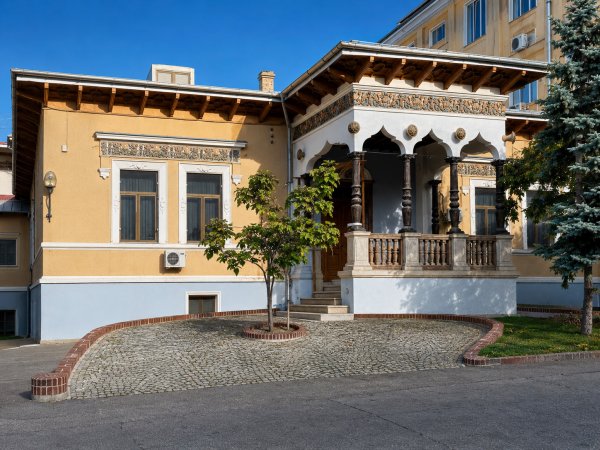
Bucharest is a city of architectural contrasts, where modern buildings coexist with historical monuments of remarkable beauty. Among the most fascinating expressions of urban identity is the Romanian Revival style, a synthesis between local tradition and Western influences, which appeared at the end of the 19th century and developed intensely in the first decades of the 20th century. This style was a form of cultural affirmation, an attempt to define an authentic Romanian architectural language. Houses built in the Romanian Revival style impress through elaborate details: porches with arches, carved columns, windows framed by traditional motifs, and tall roofs, often decorated with elements inspired by Brâncovenesc architecture. In Bucharest, there are numerous such buildings that tell stories about past eras, influential families, and the refinement of a society in full transformation.
What the Romanian Revival style means and how it appeared
The Romanian Revival style appeared as a reaction to the dominant foreign influences, especially French and German ones, which had shaped the architecture of Bucharest in the previous period. Romanian architects wanted to create their own style, inspired by local traditions, medieval architecture, and rural architecture.
Among the promoters of this movement was Ion Mincu, considered the father of the Romanian Revival style. He managed to integrate traditional elements into a modern language, thus providing a clear direction for the next generations of architects. The style spread rapidly, becoming preferred for villas, urban residences, and public buildings.
1. Lahovari House
Address: 5–7 Ion Movilă Street
Architect: Ion Mincu
Built between 1884 and 1886, it is considered the first major achievement of the Romanian Revival style. Today, it is part of the "Dr. I. Cantacuzino" Hospital complex.
2. Central Girls' School, today the "Școala Centrală" National College
Address: 3–5 Icoanei Street
Architect: Ion Mincu
Built around 1890, the building is one of the fundamental landmarks of the style, featuring an inner courtyard, trilobed arches, decorative ceramics, and references to Brâncovenesc architecture.
3. Roadside Buffet – Casa Doina
Address: 4 Kiseleff Boulevard
Architect: Ion Mincu
Built in 1892, the building reinterprets the traditional Romanian house with a porch, gazebo, carved wooden columns, and a large roof.
4. Nicolae Petrașcu House
Address: 1 Piața Romană
Architect: Ion Mincu
A Romanian Revival urban villa built at the beginning of the 20th century, known for its arcaded loggia and rich sculptural decoration. The building is currently in poor condition and has been included in structural rehabilitation programs.
5. Palace of the Ministry of Public Works, today Bucharest City Hall
Address: 47 Regina Elisabeta Boulevard
Architect: Petre Antonescu
Built between 1906 and 1910, it is one of the most monumental expressions of the Romanian Revival style, with influences from the architecture of Brâncovenesc monasteries.
6. Palace of the Higher School of Architecture, today the "Ion Mincu" University of Architecture and Urban Planning
18–20 Academiei Street, with its historic façade facing Biserica Enei Street
Architect: Grigore Cerchez
Built in several stages between 1912 and 1927, it is one of the most spectacular Romanian Revival buildings in the city centre.
7. National Museum of the Romanian Peasant
Address: 3 Kiseleff Boulevard
Architect: Nicolae Ghica-Budești
Construction began in 1912 and was completed only in 1941. The building features exposed brickwork, arches, loggias, and a composition inspired by monastic enclosures.
8. Dr. Nicolae Minovici Villa, today the "Dr. Nicolae Minovici" Folk Art Museum
Address: 1 Dr. Nicolae Minovici Street
Architect: Cristofi Cerchez
Built at the beginning of the 20th century, the villa combines elements of an Oltenian culă (fortified manor house), a manor, and a traditional fortified house. Its side tower is one of its defining features.
9. Oprea Soare House, today part of the La Bohème Hotel and Hanu' Berarilor complex
Address: 2 Poenaru Bordea Street
Architect: Petre Antonescu
Completed in 1914, it is a richly decorated Romanian Revival building, featuring arches, carved columns, rosettes, and a monumental staircase.
9. Headquarters of the Romanian Cultural Institute – former Filipescu/Malaxa Villa
Address: 38 Alexandru Alley
The building is designed in the Romanian Revival style, distinguished by its corner tower, large glazed tile roof, and sculpted façade decoration.
The legacy of the Romanian Revival style in Bucharest
The Romanian Revival style remains one of the most important contributions of Romanian architecture to European heritage. The houses in Bucharest built in this style are not just dwellings, but true works of art that reflect the cultural identity of an era.
Although many of these buildings have gone through difficult periods, they continue to fascinate and inspire. Their restoration and preservation are essential for maintaining the memory of the city and for passing cultural values to future generations.
Walking through the streets of Bucharest, you can discover these architectural jewels at every step. They tell stories about the past, about people, and about the desire to create something lasting and authentic. The Romanian Revival style is not just a stage in the history of architecture, but a living part of Bucharest’s identity.
We also recommend: 10 emblematic buildings of Bucharest from the last century that have disappeared today