Who were the Skoptsy, the coachmen of 19th-century Bucharest who promoted castration as the main path to salvation
- Articles
- 14 JAN 26
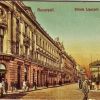
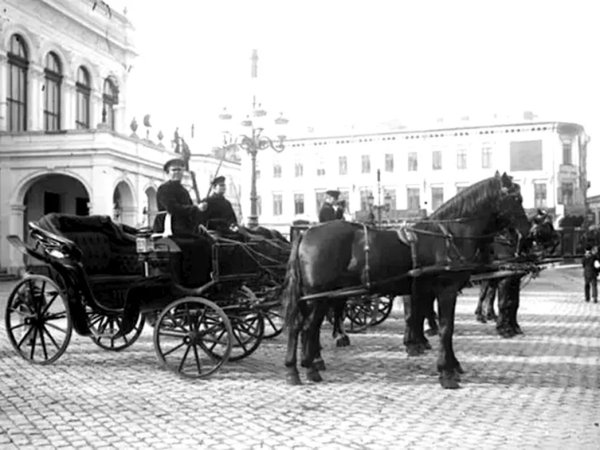
At the end of the 19th century, Bucharest was going through a period of profound transformation, in which Western influences blended with local traditions, and the city began to acquire the air of a modern capital. The streets were animated by luxurious carriages, elegant ladies, and refined gentlemen, and social life unfolded according to well-established rules, in which appearances and social status mattered enormously. In this sophisticated setting appeared the coachmen known as muscali, characters who quickly became indispensable to the Bucharest elite.
Elegant Bucharest and the cult of luxury carriages
Among these coachmen were also the mysterious Skoptsy, members of a Russian religious sect that promoted a radical belief, based on the idea of total renunciation of bodily desires. Although their convictions may seem difficult to understand today, at the time they were respected for their professionalism, seriousness, and impeccable behavior. Their story represents a distinct chapter in the history of Bucharest, in which aristocratic splendor coexisted with extreme asceticism.
At the end of the 19th century, the carriage was not just a means of transportation, but an extension of social prestige. Wealthy families ordered carriages from major European capitals or turned to renowned foreign coachbuilders settled in Bucharest. These vehicles were made from hardwood, fine leather, and silk, and every detail was designed to provide comfort and to impress the eyes of passersby.
The interior of the carriages was lined with velvet or silk, the cushions were soft, and the finishes betrayed the refined taste of the owners. Purebred horses, harnessed with richly ornamented accessories, completed the image of a city aspiring to the elegance of Vienna or Paris. The carriage had become a visible symbol of belonging to high society, and appearing in public in such a vehicle was an act of social affirmation.
Aristocratic life and emblematic figures of the era
One of the emblematic figures of high Bucharest society was Nyka, the daughter of the wealthy landowner Nenciu. A woman known for her elegance and her tumultuous sentimental life, Nyka had been married three times and was often the subject of discussion in fashionable circles. Nevertheless, her refinement and impeccable style turned her into a true fashion reference of the time.
Nyka had at her disposal a coachman and a footman, and her attention to detail was taken to extremes. It is said that she changed the color of her dress daily so that it would perfectly match the upholstery of her carriage. This habit illustrates not only the opulence of the aristocracy, but also the central role that the carriage played in social life. For weddings, baptisms, or funerals, carriages were visually adapted, becoming an integral part of public rituals.
The appearance of the muscali in Bucharest
The muscali appeared in Bucharest in 1828, together with the Russian troops that entered the Principalities. Initially, these coachmen worked exclusively for Russian officers, being appreciated for their skill in handling horses and for their exemplary discipline. Soon, however, their reputation went beyond military circles, and Romanian boyars began to prefer them for their own travels.
Dressed in elegant uniforms, adapted to the fashion of the time, the muscali attracted attention through their well-groomed appearance and sober behavior. They were not simple drivers, but true professionals, who knew the city, the unwritten rules of society, and the importance of discretion. Their constant presence at important events turned them into familiar figures of the Bucharest urban landscape.
The Skoptsy, a religious sect with radical beliefs
Many of the muscali who worked as coachmen in Bucharest were part of the Skoptsy sect, a religious movement founded in Russia by the peasant Kondraty Selivanov. This sect promoted the idea that sin originates in bodily desires, and that the only sure path to salvation was the definitive elimination of these desires. Thus, castration became a sacred act, meant to purify body and soul.
In Russia, the Skoptsy were persecuted and considered dangerous because of their extreme practices. In contrast, in Romania they found a space of tolerance, where the authorities did not persecute them, and the local community accepted them mainly due to their peaceful behavior. Far from trying to impose their beliefs, the Skoptsy lived discreetly, respecting the laws and norms of the host society.
The daily life of the Skoptsy in Bucharest
Most of the Skoptsy lived in an area near what is today Obor, on a street that came to be known as Birjarilor Street. Here a united community had formed, in which members shared the same values and an austere lifestyle. Although they worked in a visible field, such as carriage transport, their personal lives were marked by simplicity and self-control.
The Skoptsy were known as gentle people, who rejected any form of violence. They did not consume alcohol and avoided excesses of any kind, preferring an orderly and disciplined existence. This attitude earned them the respect of clients, who considered them reliable and predictable. In a city undergoing rapid expansion, where temptations were numerous, the Skoptsy represented an atypical but appreciated presence.
The role of the Skoptsy in the history of Bucharest
Although the Skoptsy sect gradually disappeared, along with the social and political changes of the 20th century, their imprint on Bucharest remains visible in history. They contributed to the professionalization of the coachman’s trade and influenced the standards of behavior and elegance associated with this occupation. Through their constant presence at important events, they became silent witnesses to fashionable life and urban transformations.
Today, the story of the Skoptsy is little known, but it offers a fascinating perspective on the cultural and religious diversity of old Bucharest. Behind the glitter of carriages and aristocratic luxury lie unusual destinies, such as those of these ascetic coachmen, who chose an extreme path of faith. Their history completes the complex picture of a city at the crossroads between tradition, modernity, and influences coming from all corners of Europe.
We also recommend: Bazaca street, lost in the fog of time. How the liveliest artery of interwar Bucharest disappeared