Who Was the Scientist Johannes Kepler and Why Does a Street in Bucharest Bear His Name?
- Articles
- 09 JUN 26
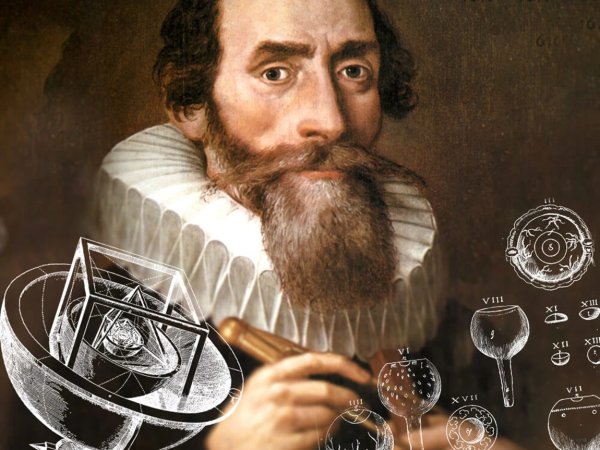
Few scientists have influenced the way we understand the Universe as profoundly as Johannes Kepler. A German mathematician, astronomer, physicist, and naturalist, Kepler was one of the most important representatives of the Scientific Revolution of the 16th and 17th centuries and the man who demonstrated, through rigorous calculations and observations, that planets do not move on perfect circular orbits, as had previously been believed, but on elliptical paths around the Sun. His discoveries fundamentally changed astronomy and laid the foundations of modern physics. Without Kepler’s contributions, Isaac Newton’s theories of gravitation would have been much more difficult to formulate, and our current understanding of the Solar System would have emerged much later. His importance to the history of science is so great that his name appears in numerous cities around the world, including Bucharest, where a street bears his name as a tribute to his exceptional contributions to the advancement of human knowledge.
Childhood and the Road to Science
Johannes Kepler was born on December 27, 1571, in the town of Weil der Stadt, Germany. From childhood, he faced health problems that affected him throughout his life. Despite this, his remarkable intelligence and passion for study helped him overcome numerous difficulties.
Initially, Kepler wished to pursue a religious career. He studied theology and intended to become a Protestant minister. During his studies, however, he came into contact with the revolutionary ideas of the Polish astronomer Nicolaus Copernicus, who argued that the Sun, rather than the Earth, was at the center of the Solar System.
This theory, considered controversial and even dangerous at the time, deeply fascinated him. In 1594, his destiny took a new direction when he accepted a position as a mathematics teacher at the Lutheran school in Graz, Austria.
There, he began developing his own astronomical theories and searching for mathematical explanations for the distances between the planets known at the time: Mercury, Venus, Earth, Mars, Jupiter, and Saturn.
An Era in Which Science Clashed with Religion
Kepler’s work took place during a period when scientific research was often viewed with suspicion. Many ideas that contradicted dominant religious interpretations were considered heretical and could attract severe punishment.
Despite these obstacles, Kepler continued to support his theories based on observations and mathematical calculations. He was convinced that the Universe operated according to precise rules established by the Creator and considered the study of nature a way to better understand divine creation.
One of his bold ideas was that the force exerted by the Sun on the planets decreases as the distance between them and the central star increases. This intuition would, to some extent, anticipate concepts later developed by Isaac Newton.
Religious pressures and the conflicts of the era eventually forced him to leave the city of Graz and continue his work in other European centers.
Collaboration with Tycho Brahe and the Great Discoveries
In 1600, Johannes Kepler arrived in Prague, where he began working alongside the famous Danish astronomer Tycho Brahe. Brahe was considered one of the greatest astronomical observers of his time and had accumulated an impressive amount of data about the movement of celestial bodies.
The collaboration between the two proved decisive for the development of astronomy. After Brahe’s death in 1601, Kepler became the imperial court’s mathematician and astronomer, gaining access to all of his predecessor’s observations.
By analyzing this information, he reached conclusions that would revolutionize the understanding of the Solar System.
In 1604, he published the work De Stella Nova, dedicated to the appearance of a new star observed in the sky. Five years later, in 1609, he published the famous Astronomia Nova, one of the most important books in the history of astronomy.
This work contains the formulation of the first two laws of planetary motion.
The Three Laws That Changed Astronomy
Kepler’s first law states that planets move around the Sun on elliptical orbits, with the Sun occupying one of the ellipse’s focal points.
This discovery contradicted the dominant idea that celestial motions had to be perfectly circular. For the first time, the structure of the Solar System was described with remarkable mathematical precision.
The second law, also known as the law of equal areas, states that an imaginary line connecting a planet to the Sun sweeps out equal areas during equal intervals of time.
The practical consequence of this law is that planets move faster when they are closer to the Sun and more slowly when they are farther away.
Kepler summarized this idea in a simple statement:
“The closer a planet is to the Sun, the faster it moves.”
The third law was published in 1619 in the work Harmonices Mundi (“The Harmony of the World”). It establishes the relationship between a planet’s orbital period and its average distance from the Sun.
According to the law of harmony:
“The square of the orbital period is proportional to the cube of the average distance between a planet and the Sun.”
These three principles formed the foundation upon which Isaac Newton would later formulate the law of universal gravitation.
Other Important Contributions of Kepler
Johannes Kepler’s activity was not limited to the study of planetary motion. He conducted research in the field of optics and invented what is now known as the Keplerian Telescope.
This monocular optical instrument, consisting of an objective lens and an eyepiece, represented an important step in the development of modern telescopes.
Kepler also distinguished himself through his studies of the symmetry of snowflakes. By analyzing the geometric structure of ice crystals, he formulated observations that would later influence the development of crystallography.
In 1627, he published Tabulae Rudolphinae, a monumental work containing precise tables regarding the positions and motions of the planets. For nearly two centuries, European astronomers used these calculations for astronomical observations and predictions.
Personal Life Marked by Tragedy
Behind his scientific achievements stood an extremely difficult personal life. Kepler lost three of his six children and was widowed after the death of his first wife.
One of the most dramatic experiences was the trial brought against his mother, Katharina Guldenmann. In 1620, she was arrested and accused of witchcraft during a period when such trials were common throughout Europe.
Kepler made enormous efforts to defend her and ultimately succeeded in securing her release. Nevertheless, the torture she endured during her imprisonment severely damaged her health, and she died shortly after being freed.
Some historians have suggested that suspicions against his mother may have been indirectly fueled by the manuscript Somnium (“The Dream”), considered by many specialists to be one of the earliest works of science fiction in history.
The work featured fantastical characters and descriptions of an imaginary journey to the Moon, elements that were misinterpreted by contemporaries in an era dominated by superstition.
The Legacy of a Genius Who Changed the World
Johannes Kepler died on November 15, 1630, in Regensburg, Germany, at the age of 58. The exact cause of his death remains unknown to this day.
Although he faced numerous personal and professional hardships, Kepler never abandoned his convictions. He remained a deeply religious man and believed that scientific research was a way of discovering the order and harmony created by God in the Universe.
Humble by nature, he stated:
“I want my name to be forgotten and only the name of God the Father to be exalted.”
Today, however, his name is far from forgotten. The laws he formulated are studied throughout the world, and his contributions are regarded as essential to the development of modern astronomy.
Where Is Johannes Kepler Street Located in Bucharest?
In Bucharest, there is a street named after the German scholar as recognition of his exceptional contribution to the progress of science. Johannes Kepler Street is located in Sector 2 of the Romanian capital, in the Armenian Quarter, a central area containing numerous streets named after important cultural and scientific personalities.
The presence of Johannes Kepler’s name on the map of Bucharest represents a tribute to one of the greatest astronomers in history, the man who succeeded in deciphering the mechanisms of planetary motion and forever changed the way humanity views the Universe.
We also recommend: Gheorghe Țițeica, the greatest mathematician in the history of Romania, has a street named after him in Bucharest