Who was Elena Clucereasa and why does she have a street named after her in Sector 1, Bucharest
- Articles
- 22 JUN 26
Elena Clucereasa, also known as Elena Dudeasca, is one of those female historical figures who do not frequently appear in history textbooks, but who are part of the social and cultural structure of the Romanian boyar class from the 18th–19th centuries. Coming from the Dudescu family, one of the long-established boyar families in Wallachia, she lived during a period in which social status, marital alliances, and personal correspondence were essential elements of elite life.
A lesser-known boyar figure of Romanian history
Although she did not hold a political office or a public function in the modern sense, Elena Clucereasa remained in the attention of historians through the documents of the era, especially through her correspondence and her family ties with other important names of the time. Her figure is particularly important because it offers a perspective on the daily life of the Romanian boyar class, including the role of women in maintaining family relations and social heritage.
Today, her name is known mainly due to a street in Bucharest, which makes her historical memory present in a discreet but constant way within the urban space of the Capital.
Origin and belonging to the Dudescu family
Elena Clucereasa was born into the Dudescu family, an old boyar family with deep roots in Wallachia. Families of this type played an essential role in the social and political organization of the era, being involved in administration, diplomacy, and economic life.
Belonging to such a family gave Elena a privileged status, but also a specific social responsibility typical of the era. In the boyar world, marital alliances were often instruments for consolidating social position, and marriage represented not only a personal relationship, but also one with economic and political implications.
In this context, Elena Dudeasca became part of a network of aristocratic relations that included some of the most well-known families of the time.
Marriage to Alecu Văcărescu and connections with the Văcărescu family
An important moment in Elena Clucereasa’s life was her marriage in 1784 to Alecu Văcărescu, the son of Ienăchiță Văcărescu, one of the most important figures of Romanian culture in the 18th century.
The Văcărescu family is known for its contribution to the development of the Romanian language and literature, and Ienăchiță Văcărescu is considered one of the precursors of modern Romanian poetry. In this context, Elena’s marriage to Alecu Văcărescu united two important boyar families, strengthening social and cultural ties relevant to the era.
However, Elena Clucereasa’s marital life was not peaceful or typical by the standards of the time. Historical sources indicate that she lived much of her life separated from her husband, while continuing to raise their two children. This situation reflects the complexity of family relationships in the boyar environment, where physical separation was not unusual, especially in cases of conflicts or different social obligations.
Although the personal details of this separation are not fully documented, the fact itself shows that Elena Clucereasa had an active role in managing her own family life and raising her children, in a period when women often had a limited position in the public sphere.
Presence in historical documents and boyar correspondence
One of the reasons why Elena Clucereasa remained known in history is her presence in the documents of the era, especially in private correspondence. This was later studied by historians, including Nicolae Iorga, who analyzed the life of boyars and merchants in Wallachia.
In these documents, Elena appears under the signature “Clucereasca Elena Dudeasca,” which confirms both her identity and her social status. Correspondence of this type is extremely important for understanding the era, as it provides details about family relations, estate management, and how communication functioned between members of the elite.
Although she was not a public figure in the modern sense, the very existence of these documents shows that Elena Clucereasa was part of an active social environment, in which boyar women played an important role in maintaining family and social connections.
For historians, such sources are valuable because they complete the image of a society in which private and public life were closely interconnected, and correspondence was one of the main means of communication.
The historical context of the period in which she lived
Elena Clucereasa lived during a transitional period for Wallachia, at the end of the 18th century and the beginning of the 19th century. This period was characterized by important political, social, and economic changes, including external influences and gradual transformations of traditional structures.
The boyar class, to which the Dudescu family also belonged, played a central role in governing the country and maintaining social order. At the same time, relations between boyar families were complex, and marital alliances were essential for maintaining influence.
Within this framework, Elena Clucereasa’s life reflects not only an individual biography, but also the way boyar society functioned as a whole. The role of women in these families was often linked to household management, raising children, and maintaining social relations through correspondence and visits.
Clucereasa Elena Street in Bucharest and urban memory
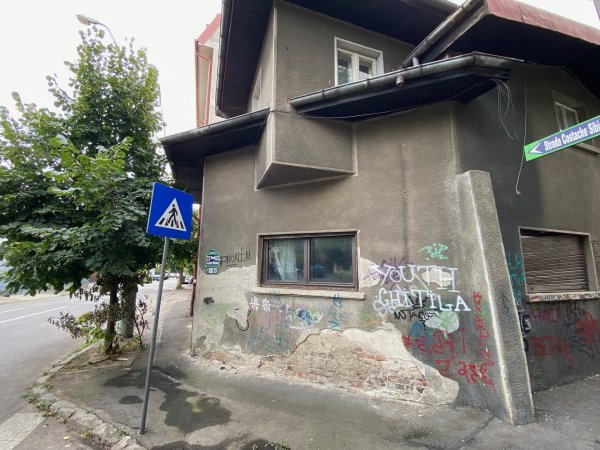
Today, Elena Clucereasa’s name is much better known to the general public due to a street in Bucharest that bears her name: Clucereasa Elena Street, located in Sector 1 of the Capital, in the Ion Mihalache Boulevard – Grivița area.
This street was officially named in 1923, during a period when Bucharest was undergoing a major urban reorganization process and the naming of new streets created through historical land subdivisions. The choice of name reflects a common practice of the interwar period, namely honoring historical figures or boyar families who played a role in local or national history.
Although Elena Clucereasa is not a widely known figure, the inclusion of her name in Bucharest’s street system represents a form of preservation of historical memory. Symbolically, the city integrates fragments of the past into its urban structure, transforming historical names into everyday geographical landmarks.
For residents of the area, the street is today a common element of urban life, but few know the origin of its name and the story behind it.
The historical significance of a discreet figure
Elena Clucereasa is not a major historical figure in the classical sense, but her importance lies in her representativeness. She belongs to a category of historical characters who did not hold political or military positions, but who contributed to shaping society through their social and family roles.
Through her belonging to the Dudescu family, her marriage to Alecu Văcărescu, and her presence in documents analyzed by historians, Elena Clucereasa becomes a piece of a broader puzzle of Romanian boyar history.
The street that bears her name in Bucharest functions as a form of continuity of memory, even if the general public no longer knows her biography in detail. Thus, personal history transforms into urban history, and the identity of an 18th-century person continues to exist in the landscape of a modern city.
In this way, Elena Clucereasa remains present both in historical documents and in the everyday life of Bucharest, as a discreet bridge between the boyar past and the urban present of the Capital.
We also recommend: Who was General Henri Mathias Berthelot and why a street in Bucharest bears his name