Who built the Zodiac Fountain, one of Bucharest’s most popular monuments
- Articles
- 18 SEP 26
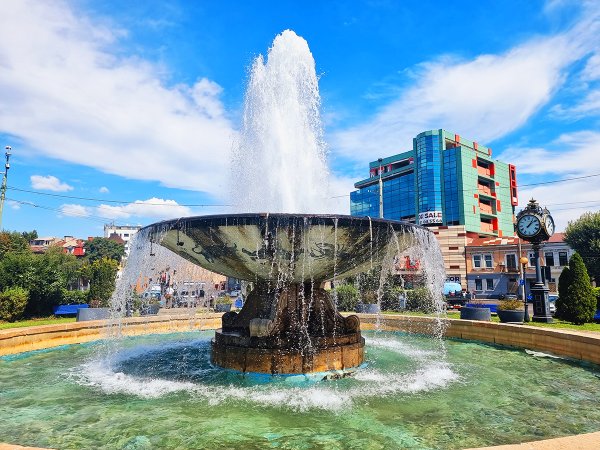
At the main entrance to Carol I Park, in what is now Liberty Square, stands one of the Bucharest landmarks that has become a defining feature of the city: the Zodiac Fountain. Its circular silhouette, dominated by a monumental stone bowl, is easily recognizable, while the 12 zodiac signs rendered in mosaic give it a distinctive character. The fountain was built in 1935 as part of the first edition of “Bucharest Month”, a major event dedicated to the capital and organized under the patronage of King Carol II. The architectural design was created by Octav Doicescu, one of the most important Romanian architects of the interwar period, while the conception and execution of the zodiac mosaics are attributed to sculptor Mac Constantinescu. The construction work was carried out by architects August Schmiedigen and Dorin Pavel. The story of the fountain, however, is more complex than it might initially appear. It is connected to the urban transformations of interwar Bucharest, to the authorities’ ambition to present the capital as a modern city, and to one of the most spectacular public events organized in Bucharest during the 1930s.
The Zodiac Fountain was created at the entrance to Carol I Park
The Zodiac Fountain is located in Liberty Square, directly in front of the main entrance to Carol I Park, in Sector 4. The area has an important urban history, as the park had already been associated with major public events before the fountain appeared. In 1906, the Romanian General Exhibition, organized to mark the 40th anniversary of King Carol I’s reign, was held in the grounds of Carol Park.
During the interwar period, the authorities sought to modernize and redesign several areas of the capital, and the entrance to Carol Park became one of the key elements of the new urban project. The square in front of the park was then known as Marshal Joffre Square and was to be transformed to host the events of the first edition of “Bucharest Month”.
It was in this context that the Zodiac Fountain was conceived. The National Library of Romania explicitly mentions the fountain among the important urban projects carried out in 1935 for the “Bucharest Month” events, noting that the project was designed by architect Octav Doicescu, while the zodiac mosaics were created by sculptor Mac Constantinescu.
The structure thus became not merely a decorative feature of a square, but also one of the defining images of interwar Bucharest.
Octav Doicescu, the architect behind the project
The most important name associated with the design of the Zodiac Fountain is that of Octav Doicescu. Born in 1902, the architect would become one of the leading figures of Romanian architecture in the 20th century. His work included a wide range of projects, from private houses and public buildings to urban planning schemes and structures associated with major events in the capital.
The Zodiac Fountain was created in 1935, at a time when Doicescu was already deeply involved in the modernization of Bucharest’s urban environment. That same year, the architect also worked on the design of the urban planning exhibition held as part of “Bucharest Month” in Carol I Park. Documents relating to his career identify him as the designer of the fountain erected in front of the park.
His design combined the simplified geometry of modernism with decorative elements intended to make the structure accessible and visually appealing to the public. The fountain consists of a large circular basin, at the center of which rises a broad stone bowl. Its monumental yet relatively restrained form reflects the architectural atmosphere of the 1930s.
Sources dedicated to the monument describe it as an Art Deco work with certain historicist accents. This combination explains its distinctive appearance: the geometric and sober volume is complemented by a clearly defined decorative program represented by the 12 signs of the zodiac.
Mac Constantinescu and the 12 zodiac signs
While Octav Doicescu is the name associated with the architectural design, the fountain’s visual identity is closely connected with sculptor Mac Constantinescu. He created the mosaics depicting the 12 zodiac signs, transforming the exterior surface of the bowl into a distinctive decorative composition.
The mosaics are made in shades of black and gray, with the zodiac figures standing out against the surface through simplified designs. These representations soon became so closely associated with the monument that they gave it the name by which it is still known today: the Zodiac Fountain. Both AGERPRES and the National Library of Romania explicitly attribute these mosaics to Mac Constantinescu.
Mac Constantinescu, one of the important figures in Romanian decorative art during the interwar period, thus collaborated with Doicescu on one of the emblematic public works of 1930s Bucharest. The relationship between architecture and decoration is essential to understanding the monument: without Doicescu’s geometric design, the mosaics would not have had the same impact, while without Mac Constantinescu’s zodiac representations, the fountain would have been far less recognizable.
As for the construction itself, historical sources mention architects August Schmiedigen and Dorin Pavel. The work should therefore not be attributed to a single person. The monument resulted from a collaboration between the architect who designed it, the artist who created its decorative elements and the architects involved in its actual construction.
The inauguration on May 9, 1935
The Zodiac Fountain was inaugurated on May 9, 1935, at the opening of the first edition of “Bucharest Month”. The event took place from May 9 to June 9 and transformed Bucharest into a vast stage for exhibitions, demonstrations, cultural events and urban modernization projects.
King Carol II attended the inauguration and formally opened the fountain. Period photographs preserved in the photographic collections of the Bucharest City Hall document the moment when the monarch inaugurated the Zodiac Fountain on May 9, 1935.
Its location was not accidental. The fountain stood at the access point to the urban planning exhibition organized in Carol Park, while the square itself had been specially redesigned for the event. In this way, the monument became one of the first landmarks encountered by visitors entering the exhibition grounds.
“Bucharest Month” also had an important role in presenting the capital to the public. The exhibition in Carol Park included pavilions devoted to administration, public services and urban development, as well as areas presenting the city’s past, present and plans for the future.
A monument of interwar Bucharest
The fountain should also be viewed within the political and cultural climate of the 1930s. “Bucharest Month” was an official event supported by the authorities and by King Carol II, and its organization formed part of a broader project to promote the image of the capital and assert national identity.
At the same time, this was a period in which authoritarian European regimes were exerting increasing influence on political and cultural life in Romania. Some of the forms of organization and public representation used for Bucharest’s official events have been compared by historians with the urban spectacles and exhibitions organized in other European countries during the period. It is nevertheless important to distinguish the Zodiac Fountain from these broader interpretations: architecturally, the monument remains a representative example of interwar Romanian modernism.
The fountain was part of a larger urban setting. In 1935, Carol Park became the central venue of the exhibition, while Marshal Joffre Square was arranged to provide access to the event. The fountain therefore functioned both as a decorative object and as an urban landmark.
How it survived Bucharest’s transformations
One of the reasons the Zodiac Fountain is so significant today is that the monument survived the radical transformations Bucharest underwent during the following decades.
The capital was affected by war, by the political change after 1945 and by the extensive urban redevelopment carried out during the communist period. Numerous buildings and monuments were demolished or altered, and some of the city’s most important historic ensembles disappeared. The Zodiac Fountain, however, remained at the entrance to Carol Park.
The monument is included in the List of Historic Monuments under code LMI B-III-m-A-20003, confirming its heritage status.
Its survival is particularly noteworthy because the fountain belongs to an architectural period that was strongly represented in interwar Bucharest but suffered major losses after the establishment of the communist regime. Today, it still allows visitors to read part of the visual history of the Bucharest that was being built during the 1930s.
The fountain that became a landmark for generations of Bucharest residents
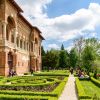
More than nine decades after its inauguration, the Zodiac Fountain remains one of the most recognizable visual landmarks around Carol Park. For visitors entering the park from Liberty Square, the monument effectively marks the transition between the urban environment and the historic garden.
Its significance lies precisely in the meeting of several artistic contributions. Octav Doicescu created the architectural form, Mac Constantinescu designed the decorative universe of the 12 zodiac signs, while August Schmiedigen and Dorin Pavel were involved in the execution of the construction. Together, their contributions produced one of Bucharest’s most recognizable monumental fountains.
Ultimately, the Zodiac Fountain is more than a decorative structure. It preserves the memory of a Bucharest that, in 1935, presented its ambitions for modernization through a major urban celebration. Located in a place that had already hosted the Romanian General Exhibition of 1906, the fountain itself became a testimony to another era.
Today, the stone bowl and its 12 zodiac representations continue to dominate Liberty Square at the entrance to Carol I Park. And the answer to the question “who built the Zodiac Fountain?” cannot be reduced to a single name: Octav Doicescu designed the project, Mac Constantinescu created the zodiac mosaics, while architects August Schmiedigen and Dorin Pavel contributed to the construction of the monument. Together, they left Bucharest one of its emblematic public works from the interwar period.
We also recommend: Who sculpted the Broken Violin Fountain. The history of one of Bucharest’s most spectacular monuments