What you can do in Bucharest for Pentecost if you are not leaving the city. Quiet places, old churches and urban traditions to rediscover
By Raluca Ogaru
- Articles
- 31 MAY 26
For many Bucharest residents, Pentecost is one of those holidays that bring a day off, a mini-break and the temptation of a quick trip out of the city. But if you are not going to the seaside, the mountains or visiting relatives, Bucharest can be rediscovered differently: more quietly, more slowly, through old churches, hidden courtyards, historic streets and places where the city still keeps part of its old memory.
Pentecost, known in the Orthodox calendar as the Descent of the Holy Spirit or the Fiftieth Day, is celebrated 50 days after Easter. According to the news agency of the Romanian Patriarchate, Basilica.ro, Pentecost marks the Descent of the Holy Spirit and is also considered the moment when the Christian Church was founded. This is why a Pentecost day spent in Bucharest can be more than just a day off: it can become a cultural and religious route through the city.
What Pentecost means and why it can be rediscovered in the city
In the Orthodox tradition, Pentecost marks the Descent of the Holy Spirit upon the Apostles, 50 days after the Resurrection of Christ. The holiday is also known as Great Sunday, and the following day is dedicated to the Holy Trinity. In churches, the day has a special liturgical significance, and for believers it can be a moment of prayer, reflection and participation in the service.
In Bucharest, Pentecost can also be experienced as a way to rediscover the old city. The capital has historic churches, monasteries, inner courtyards and walking routes that can turn a day off into a calm experience. Instead of a crowded mall visit or a tiring road trip, a walk between old churches, historic streets and parks can be a better choice for those who remain in the city.
Popular traditions linked to Pentecost include walnut or linden branches, prayers for the departed, avoiding heavy work and respecting customs passed down from generation to generation. Besides the religious meaning, there is also a folklore layer, connected to the Iele and beliefs about protection. However, it is important for these traditions to be presented separately from the religious meaning of the holiday, so as not to mix liturgical explanations with folk customs.
Old churches in Bucharest where you can go on Pentecost
A suitable Pentecost route can begin in the Old Town, at Stavropoleos Monastery. Located at 4 Stavropoleos Street, the church is one of Bucharest’s best-known architectural jewels. According to the history published on the official website of Stavropoleos Monastery, the establishment was founded in 1724 by Archimandrite Ioanichie. The small courtyard, the quiet atmosphere and the Brâncovenesc architecture make Stavropoleos one of the most suitable places for a Pentecost stop.
From Stavropoleos, the route can continue toward Saint Anthony Church - Old Court, one of the oldest churches in Bucharest. According to the history published on the website of Saint Anthony Church - Old Court, the church was built on the site of an older wooden church and served as a chapel for the Royal Court. For those interested in the city’s history, the Old Court area remains one of the best stops, especially on a day when the city’s rhythm is slower.
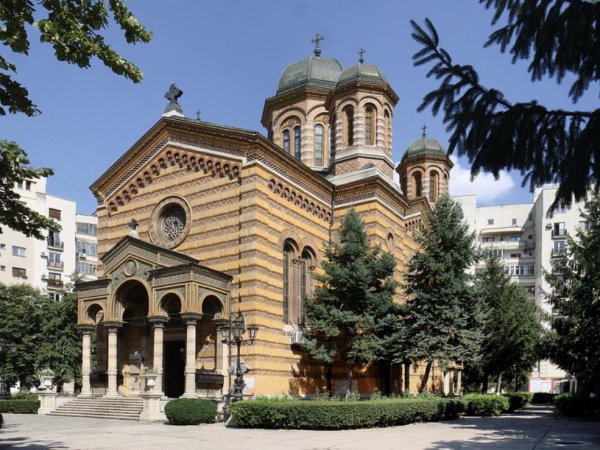
Another important point is Kretzulescu Church, located near Calea Victoriei, close to Revolution Square. It is one of Bucharest’s historic churches and can easily be included in a walking route through the centre. After the visit, you can continue toward Calea Victoriei, the Romanian Athenaeum or Cișmigiu Garden, on a walk that combines religious heritage with the capital’s urban landmarks.
Antim Monastery, Domnița Bălașa and Saint Spyridon the New
For those who want a more settled route in the area of the Patriarchate and old Bucharest, Antim Monastery is one of the best choices. According to the official website of Antim Monastery, the establishment was built between 1713 and 1715 by Saint Metropolitan Antim Ivireanul. The monastery is located at 29 Mitropolit Antim Ivireanul Street, in an area that still preserves a special atmosphere, away from the bustle of the main boulevards.
From Antim, you can walk toward Domnița Bălașa Church, another important landmark of old Bucharest. The church is connected to the history of the Brâncoveanu family and to one of the best-known female figures in the city’s history, Domnița Bălașa. The area is suitable for a quiet walk, especially if you want to continue toward Dealul Mitropoliei, Carol Park or Piața Unirii.
Saint Spyridon the New Church can be included in the same route, especially for those who want to connect the Unirii area with the Patriarchate and Carol Park. It is one of the most imposing Orthodox churches in Bucharest and can work as a stop on a half-day route. Depending on the service schedule, it is best to check access hours in advance and respect the rules of the place, especially on holidays, when churches may be more crowded.
A Pentecost route through old Bucharest
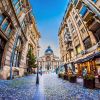
A simple route for those who want to spend Pentecost in the city can start at Stavropoleos, continue to the Old Court and Saint Anthony Church, then to Manuc’s Inn, Piața Unirii, the Patriarchate and Carol Park. It is a suitable option for those who want to combine church service or a church visit with a walk through historic areas.
This route has the advantage that it can be done on foot, without a car, and the distances are not very long. Depending on your pace, it can take a few hours, especially if you include breaks for coffee, lunch or rest. For a holiday, it is best to choose comfortable shoes and check the programme of the churches or places you want to visit.
Another option is the Kretzulescu – Calea Victoriei – Cișmigiu Garden – Schitul Măgureanu route. It is more suitable for those who want a more urban walk, with more architecture and less religious crowding. Calea Victoriei can be rediscovered as a heritage route, while Cișmigiu can become the ideal place for a quiet break.
Quiet places after church or a walk
If you go to church on Pentecost, the day can continue in a park or in a calmer area of the city. Carol Park is a natural choice if you included the Patriarchate, Antim or Saint Spyridon the New in your route. It has wide alleys, shaded areas and enough space for an unhurried walk.
Cișmigiu Garden remains a suitable option for those choosing the Calea Victoriei – Kretzulescu route. It is one of Bucharest’s oldest parks and can offer exactly the pause you need after a morning spent in the centre. On days off it can be crowded, but in the morning or toward evening the atmosphere is more pleasant.
For those who prefer less central areas, Tineretului Park, Ioanid Park, Kiseleff Park or the Cotroceni area can be good alternatives. The idea is not to tick off as many places as possible, but to choose a route that matches your rhythm. Pentecost can be a good opportunity for a slower, quieter Bucharest, more attentive to details.
Urban Pentecost traditions
In many churches, walnut or linden branches are brought on Pentecost, blessed and given to believers. The tradition is symbolically linked to the Descent of the Holy Spirit. Doxologia explains, in an article about walnut and linden branches at Pentecost, that on Pentecost Sunday, at the end of the Divine Liturgy, the special service known as the “Kneeling Vespers” is also performed.
In urban settings, many traditions are no longer preserved as they were in villages, but some gestures remain: going to church, remembering the departed, keeping blessed branches, avoiding heavy work and spending the day with family. Bucharest may seem like a city too fast for such customs, but holidays are precisely the moments when the city can be lived closer to older rhythms.
There are also folk traditions connected to the Iele, protection and the fear of breaking certain prohibitions during Pentecost days. These belong more to folklore and popular imagination than to the religious explanation of the holiday. In an article for a general audience, they can be mentioned as part of Romanian tradition, but should not be presented as religious rules.
What to remember
If you stay in Bucharest for Pentecost, the city can be discovered through a quiet route linking old churches, historic places and parks. Stavropoleos, Saint Anthony Church - Old Court, Kretzulescu Church, Antim Monastery, Domnița Bălașa and Saint Spyridon the New can form a cultural and religious route suitable for a holiday.
Pentecost should not be seen only as a day off or the beginning of a mini-break. For those who remain in the city, it can become an opportunity to see Bucharest differently: calmer, more attentive to heritage, closer to traditions and to the places that preserve the capital’s old memory.
It is best to check the churches’ schedules in advance, choose a realistic route and leave time for breaks. A Pentecost day in Bucharest does not need to be crowded. It can be simple, quiet and connected to that part of the city we notice less often on ordinary days.
READ ALSO:
June 1st, 2026 in Bucharest: what to do with kids on Children's Day weekend