What did street advertisements look like in Bucharest in the early 1900s
By Bucharest Team
- Articles
- 14 JUL 26
At the beginning of the 20th century, Bucharest was going through one of the most spectacular periods in its history. Romania's capital was modernizing at a rapid pace, and new buildings, elegant shops, hotels, and cafés were transforming the city's appearance. In this context, street advertising also began to take on an increasingly organized and sophisticated form. Advertisements no longer served only to indicate the existence of a shop, but had become a means through which merchants sought to attract the attention of passers-by and promote their products in an increasingly crowded and competitive city. Along the major commercial thoroughfares, such as Calea Victoriei, Lipscani, Gabroveni, Smârdan, and Calea Moșilor, shop signs, colorful posters, and carefully arranged display windows contributed to the image of a Bucharest undergoing profound transformation. Advertising was becoming a natural part of the urban landscape, inspired by Western models while adapted to local particularities.
Commercial signs, the first contact between the merchant and the customer
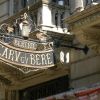
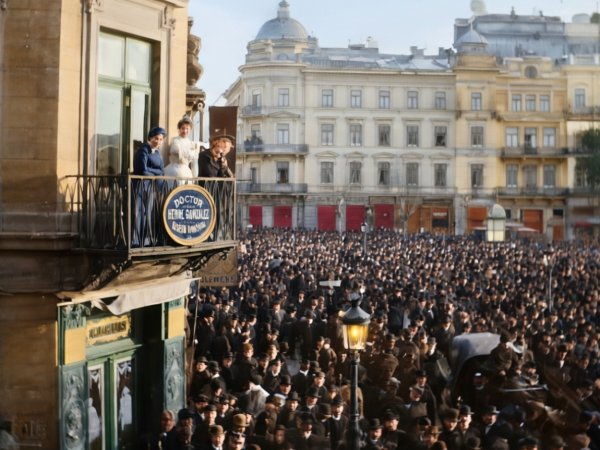
In 1900, the most widespread form of street advertising was the sign placed above the entrance to a shop. These signs had both a practical and an aesthetic role. They helped passers-by quickly identify the type of business while also serving as the shop owner's calling card.
Most signs were handmade by painters specializing in decorating commercial premises. The support was generally made of wood, although more elegant shops also used glass or painted metal panels. The letters were carefully painted in styles inspired by the typography of the time and were sometimes highlighted with gold leaf or contrasting colors. However, gilding was not the rule, being found mainly on luxury shops, pharmacies, jewelry stores, and hotels.
In addition to the merchant's name, many signs also included graphic representations of the products being sold. A shoemaker might display a large boot, a hatter could illustrate his trade with an elegant top hat, while a watchmaker would feature the image of a pocket watch. These symbols played an important role in a society where literacy was not yet universal, making the visual identification of a shop often more effective than simply reading its name.
Sometimes the representative objects were not only painted but also mounted in relief above the entrance. Giant scissors indicated tailoring workshops, metal keys marked locksmiths, while ornamental bottles announced the presence of a pharmacy or a beverage merchant.
Shop windows became genuine promotional tools
At the turn of the century, shop windows began to play an increasingly important role in the commercial strategy of Bucharest's stores. Merchants understood that simply displaying their goods could persuade passers-by to enter the shop.
Stores located on Calea Victoriei and in the city's commercial center invested in clean, well-lit, and carefully arranged display windows. Products were arranged symmetrically, while the most valuable items occupied central positions. In the case of jewelry, watches, fine fabrics, or fashion items, the display window became almost a stage set designed to suggest refinement and prosperity.
In the evening, electric lighting, gradually introduced into the capital during the final decades of the 19th century, enabled some shops to showcase their products even after nightfall. Although not every part of the city benefited from the same level of illumination, the major commercial streets already offered the image of a modern city comparable to the great European capitals.
Printed advertisements began to conquer urban space
With the development of printing houses, the illustrated poster became one of the most effective forms of promotion. These posters were produced using lithographic or typographic techniques and featured vivid colors, decorative lettering, and eye-catching illustrations.
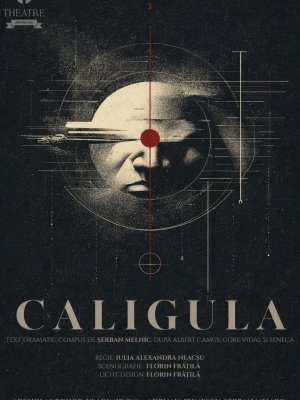
In Bucharest around 1900, posters advertised theatre performances, opera productions, concerts, traveling circuses, exhibitions, pharmaceutical products, and various imported goods. They were pasted onto fences, walls, temporary construction hoardings, and specially designated advertising boards.
During periods when the city hosted major events, certain areas became genuine galleries of colorful posters. These competed for public attention through their large size, spectacular illustrations, and short, memorable texts.
Their appearance was influenced by European graphic trends of the period, including the Art Nouveau movement, which was beginning to make its presence felt in commercial illustration. However, it would be an exaggeration to claim that the entire street advertising scene in Bucharest was dominated by this style. In reality, many advertisements still retained eclectic decorative elements and traditional typography.
Enamel signs and permanent advertising
In addition to painted signs, enamel-coated metal advertising panels also began to appear in Bucharest. They were appreciated for their resistance to rain, dust, and temperature changes. These advertisements could be found on the façades of shops or near commercial premises and promoted both local products and international brands.
The Singer company, renowned for its sewing machines, is one of the best-documented examples of a business using such advertisements in Romania. Its advertisements emphasized the reliability of its products and the advantages of using them in households or workshops.
Enamel signs had the advantage of being far more durable than paper posters and could remain on display for years without losing their appearance.
Mobile advertising and sandwich men
A less common but nevertheless present method of advertising in early 20th-century Bucharest involved the use of advertising carriers, commonly known as "sandwich men." They wore two advertising boards attached over their shoulders and walked through the city's busy streets.
Their purpose was to promote the opening of a new shop, the launch of a new product, or the staging of a performance. They could mainly be seen in heavily trafficked commercial areas such as Calea Victoriei or around the Old Town, where the flow of pedestrians was large enough for the advertising message to reach as many people as possible.
Although this method is documented in period newspapers and photographs, there is no evidence that it represented the most widespread form of street advertising. Rather, it remained a striking solution used for specific promotional campaigns.
Newspapers complemented street advertising
At the beginning of the 20th century, newspapers had become an important partner for merchants. Publications such as Universul and Dimineața devoted substantial space to commercial advertisements, many of which were illustrated and printed with remarkable graphic quality for the period.
Readers found advertisements for clothing stores, pharmacies, hotels, restaurants, food products, household appliances, medical services, and newly published books. In many cases, the same businesses promoted themselves through both street posters and newspaper advertisements, using the same visual identity.
This combination of print and street advertising contributed to the development of a modern commercial culture and to strengthening the image of well-known brands.
A city that was beginning to speak through images
Street advertising in Bucharest in 1900 reflected the profound transformations the capital was undergoing. Painted signs, elegant shop windows, illustrated posters, and the first permanent advertising panels were not merely commercial tools, but also expressions of the modernization of a city eager to approach the great European capitals.
Unlike today's illuminated advertisements and digital billboards, the advertising messages of more than a century ago emphasized artistic craftsmanship and manual execution. Every sign was, to a certain extent, a unique work, while every display window reflected the personality of the merchant.
Many of these advertisements disappeared as a result of demolitions, fires, successive modernization projects, or changes in the function of buildings. Nevertheless, period photographs, postcards, newspapers, and archival documents make it possible to reconstruct a world in which advertising was beginning to shape urban life and consumer behavior.
Viewed today, these signs and posters represent more than simple promotional tools. They are testimonies to an era in which Bucharest was building its identity as a modern capital, where commerce, graphic design, and architecture came together to create an urban landscape full of color and elegance.
We also recommend: Aristocracy and High Society in Belle Époque Bucharest: How the Upper Class Entertained Itself at the Beginning of the 20th Century