Three Decades of ARCUB: How the Cultural Center of the Municipality of Bucharest Came into Being
- Articles
- 16 SEP 26
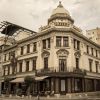
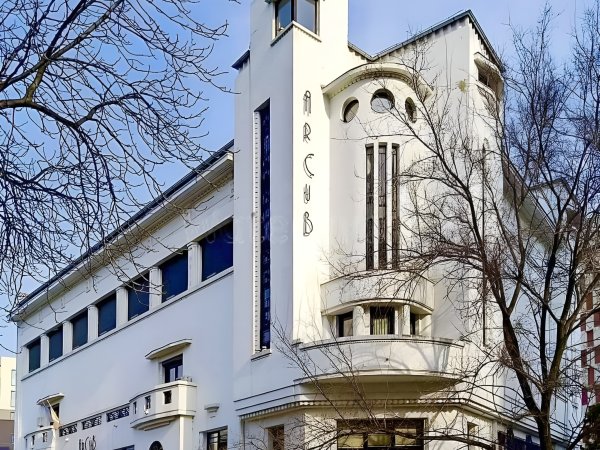
In 1996, Bucharest needed new spaces where artists, the public, and the city could meet. At a time when the capital was searching for its cultural identity after the profound changes of the 1990s, ARCUB – the Cultural Center of the Municipality of Bucharest was established. Three decades later, the institution has become one of the important presences in Bucharest’s cultural life, associated with festivals, performances, projects for children, visual arts, support for the independent cultural sector, and the recovery of heritage spaces. The story of ARCUB begins on Batiște Street, in the Art Deco building known as the former “Palatul Arta”. From here, the institution would gradually expand its activity beyond the boundaries of a performance hall. Culture moved into the streets, reached parks and neighborhoods, appeared on building facades and in historic spaces, while Bucharest increasingly became the setting and stage for its own cultural events.
1996, the beginning of a cultural institution for Bucharest
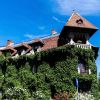
ARCUB was established in 1996, through Decision No. 91/1996 of the General Council of the Municipality of Bucharest, subsequently amended by HCGMB No. 70/1997. The municipal administration documents define it as a local public cultural service of interest to the Municipality of Bucharest, with legal personality. In its initial form, the institution established its headquarters in the Art Deco building on Batiște Street, the former “Palatul Arta”.
The building on Batiște quickly became more than an administrative headquarters. The Main Hall hosted performances, concerts, and meetings, while ARCUB began building a direct relationship with the Bucharest public. Instead of limiting itself to a single artistic field, the institution developed cultural, social, and educational projects, attempting to cover as many as possible of the ways in which culture could reach the city’s inhabitants.
An important first signal came in 1997, when ARCUB organized “A Month in the History of Bucharest”. The event recovered the atmosphere of 1930s Bucharest and transformed public spaces into places for street performances, theater, and concerts. The concept would form the basis for the subsequent development of events dedicated to the city.
An important historical nuance must nevertheless be mentioned. According to ARCUB, “Bucharest Days” has older origins, with the celebration being officially organized as early as 1994 to mark the anniversary of the city and its first documentary attestation in 1459. ARCUB later played a major role in developing the concept, and in 2006 it organized the first edition of the event within its own institutional trajectory.
From jazz and theater to culture for children
In 1999, ARCUB consolidated its profile through two projects that would mark its early period. The International Jazz Festival brought diverse names and styles to Bucharest, while the ARCUB Live series proposed jazz, blues, and classic-rock concerts in the Main Hall on Batiște. In the same year, the institution produced its first theater play, “Bizarmonia”, directed by Alexandru Tocilescu, presented as part of the National Theater Festival.
ARCUB’s activity also turned toward young audiences. In 2001, “Children’s Cișmigiu” debuted, together with the winter show “I Believe in Santa Claus”. The festival in Cișmigiu Park would become ARCUB’s longest-running event dedicated to children, annually transforming the green space into a place for performances, games, and stories.
A year later, in 2002, Bucharest entered a European circuit of urban music events through “Fête de la Musique”, brought to Romania by ARCUB in partnership with the French Institute and the Municipality of Bucharest. The city’s streets became stages for live music, and the institution demonstrated that a cultural event did not necessarily have to take place within the walls of a hall. Also in 2002, “The Week of Magical Stories” was launched, a book fair for children.
This focus on public space would become one of ARCUB’s defining characteristics. Culture was no longer viewed only as a performance to which the public bought a ticket, but also as an urban experience that could appear in a park, a square, or on a street.
Bucharest Days, White Night, and the shows that changed the city
The year 2006 was an important one for the cultural identity of the capital. “Mozart Fest”, organized in partnership with the City of Vienna, would become “Bucharest Music Film Festival” in 2010, combining classical music and outdoor screenings. Also in 2006, ARCUB organized the first edition of “Bucharest Days” within its own institutional trajectory and launched “George Enescu Festival Square”, bringing the general public closer to symphonic music through outdoor performances.
In 2007, this direction expanded. ARCUB introduced the “White Night” concept, with street performances, artistic installations, and visual interventions. As part of the “Urban Art” project, the first videomapping in Romania was created on the Palace of Parliament, a project presented by ARCUB as, at the time, the largest projection of its kind ever made on a building. Architectural projections subsequently became one of the spectacular components of events dedicated to the city.
In 2008, it was street theater’s turn to receive its own platform, through the first edition of the International Street Theater Festival – B-FIT in the Street! Companies from several countries, parades, and large-scale installations transformed the center of the capital into an open-air stage. A year later, through “Summer Neighborhood”, ARCUB began bringing performances and concerts closer to communities in the neighborhoods, using parks as temporary cultural spaces.
In 2010, the institution supported the launch of the first edition of the “Les Films de Cannes à Bucarest” festival, initiated by director Cristian Mungiu. The festival brought films appreciated at Cannes before Bucharest audiences and subsequently became one of the important events dedicated to international cinema in the capital. In the same year, ARCUB participated in Bookfest and launched the album “Bucharest – 550 Years Since the First Documentary Attestation”.
Hanul Gabroveni, from ruin to the new home of ARCUB
A new chapter began around heritage. Hanul Gabroveni, one of the historic buildings in the Old Town, had behind it a history of almost three centuries, but also decades of deterioration. ARCUB documents show that the inn was mentioned in documents in 1739, was affected by the great fire of 1847, was later transformed into a commercial passage, and, after nationalization during the communist period, entered a long process of deterioration. A fire in 1999 further worsened the building’s condition.
The restoration process that began in 2009 radically transformed the building’s fate. Between 2009 and 2014, Hanul Gabroveni was restored, consolidated, and extended, with the project financed through the Financial Mechanism of the European Economic Area and implemented through an institutional partnership that included the Ministry of Culture and National Heritage and the Municipality of Bucharest through ARCUB. In 2014, the building reopened as a cultural space, and in 2015 it became ARCUB’s new headquarters.
The change was significant. Hanul Gabroveni was not restored merely as an architectural object, but was given a new cultural function. Today, the complex includes halls for performances, exhibitions, conferences, workshops, and multidisciplinary events. The Main Hall has 160 seats, while the Studio Hall has 60 seats, alongside other spaces that can host exhibitions, workshops, and meetings.
In the first year after becoming ARCUB’s new headquarters, Hanul Gabroveni attracted more than 150,000 visitors. Also in 2015, Bucharest reached the final four among the 14 candidate cities for the title of European Capital of Culture 2021. ARCUB was involved in preparing the candidacy, and during the same period it launched Spotlight – the International Light Festival and the Generator micro-grant program.
ARCUB and support for the independent cultural scene
After moving to Hanul Gabroveni, the institution’s activity increasingly expanded toward independent culture and community projects. In 2016, ARCUB supported 58 independent cultural projects through the “Bucharest – The In-visible City” funding session, while the Generator program financed civic projects in neighborhoods. In 2017, the “Bucharest – Participatory City” program supported 87 projects belonging to the independent cultural sector.
At the same time, the institution continued producing performances, festivals, and contemporary art projects. In 2018, ARCUB organized events dedicated to the Centenary of the Great Union, combining performances, concerts, and exhibitions. In 2019, Spotlight and B-FIT in the Street! were part of the Romania-France Season, and Bucharest once again became the stage for international projects involving light and street theater.
The pandemic in 2020 represented another challenge. Under the restrictions, ARCUB organized the “Caragiale’s Bucharest Festival” outdoors, in Cișmigiu Park. In 2021, the institution launched the “Bucharest – Open City” funding program and the first edition of “Open Streets – Bucharest, Urban Promenade”, through which Calea Victoriei and other central arteries were transformed, on weekends, into spaces for performances, exhibitions, workshops, and cultural activities.
From city projects to international exhibitions
Another important chapter of the last decade has been the development of visual arts programs. Beginning in 2016, Hanul Gabroveni became an important space for contemporary art, hosting exhibitions, multimedia projects, conferences, and meetings with artists. The program included both established artists and emerging creators.
One of the most visible recent projects was “The Universe of Salvador Dalí”, opened in December 2023. The exhibition, organized by the Municipality of Bucharest through ARCUB in partnership with HADRAN Events, presented more than 170 works, including sculptures, graphics, engravings, lithographs, and objects made from precious materials. According to ARCUB’s 2024 annual report, the exhibition had more than 100,000 beneficiaries throughout its program.
The event also demonstrated the transformation of Hanul Gabroveni into a space capable of hosting exhibitions of international scale. A historic monument that had once been close to disappearing had become, three decades after ARCUB was established, the place where Bucharest audiences could discover works by one of the best-known artists of the 20th century.
At the same time, ARCUB continued the projects that had already become landmarks of Bucharest’s cultural life. Bucharest Jazz Festival remained one of the main platforms dedicated to jazz, while Bucharest Music Film Festival once again brought classical music and cinema into the capital’s public spaces. Festivals, exhibitions, theater projects, and funding programs for the independent sector continued to form a program in which institutional culture and independent initiatives meet.
30 years in which the city became a stage
In 2026, ARCUB marks three decades of activity. The institution views this period not merely as a succession of festivals and events, but as a history connected to the cultural transformation of Bucharest. From the Main Hall on Batiște to Hanul Gabroveni, ARCUB’s trajectory also follows the transformation of the spaces in which Bucharest residents meet art.
Over these 30 years, culture has been taken out of conventional spaces and brought into streets, parks, and neighborhoods. Jazz, street theater, and light festivals have appeared, along with projects for children, funding programs, exhibitions of contemporary art, and events dedicated to the history of the city. Some became traditions, while others existed for only one edition, but together they contributed to shaping a Bucharest in which the urban space can become, for several hours or several days, a cultural space.
The story of ARCUB is therefore connected to the story of Bucharest after 1990: a city undergoing constant change, where heritage and contemporary culture have come to coexist in increasingly diverse forms. From the Art Deco building on Batiște to Hanul Gabroveni, from jazz in performance halls to videomapping on the Palace of Parliament, and from events for children to major international exhibitions, ARCUB has built, over three decades, an institution whose workplace is, ultimately, the whole of Bucharest.