The war against road traffic: How to save time by using alternative routes through Bucharest
- Articles
- 07 MAY 26
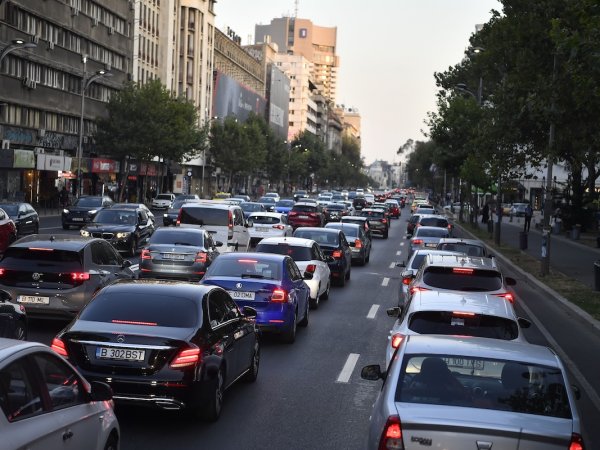
Traffic in Bucharest has become, in recent years, one of the biggest problems for the residents of the Capital. Whether it is about the road to work, going to school, solving administrative matters or simply crossing the city, the time spent in traffic has turned into a constant source of stress for drivers. In 2026, road congestion continues to affect the rhythm of everyday life, and many Bucharest residents spend even two or three hours daily in their cars. The increase in the number of automobiles, permanent infrastructure works, the accelerated development of certain neighborhoods and the lack of quick solutions for easing traffic have made Bucharest remain one of the most congested cities in Europe. In this context, using alternative routes has become almost a necessity for those who want to save time and avoid blockages on the major boulevards. Many drivers continue to use the same routes daily, even though these are already known for the huge traffic jams during rush hours. In reality, the Capital has numerous secondary streets, less crowded connections and bypass variants that can significantly reduce the time spent in traffic. The difference between a 90-minute trip and a 40-minute one can often be made only by the inspired choice of route.
Why traffic in Bucharest seems increasingly difficult to endure
Every year, the number of cars circulating through Bucharest constantly increases. Besides the automobiles registered in the Capital, the city is transited daily by tens of thousands of vehicles coming from Ilfov and other counties. Many people work in Bucharest but live in the surrounding localities, which generates a huge traffic flow at the entrances and exits of the city.
The problem is amplified by the fact that the road infrastructure has not evolved at the same pace as urban development. Many important arteries have remained almost unchanged for decades, while the number of cars has multiplied considerably.
To all this are added the permanent construction sites, works on the heating networks, modernization of tram lines and infrastructure projects that frequently block circulation. In certain areas, a simple construction work can completely transform traffic for entire months.
Rush hours have also become more extended. If in the past congestion was concentrated in the morning and evening, at present there are areas in Bucharest where circulation is difficult almost throughout the entire day.
The importance of alternative routes in everyday life
In such a crowded city, choosing the correct route can mean important savings of time, fuel and energy. Alternative routes no longer represent only an emergency solution when an accident or a major blockage appears, but a daily strategy for many experienced drivers.
Most of the time, major boulevards such as Șoseaua Colentina, Calea Dorobanți, Bulevardul Iuliu Maniu, Șoseaua Ștefan cel Mare or Splaiul Independenței become almost impossible to cross during crowded hours. Instead, secondary streets and connections between neighborhoods can offer faster variants.
Many drivers have started preferring routes that are longer in distance but more fluid from the point of view of circulation. In Bucharest, a shorter road does not always mean a faster one as well.
In addition, using alternative routes reduces the stress associated with driving in intense traffic. A more relaxed and more constant trip can make the difference for those who spend a lot of time in the car daily.
How modern navigation applications help you
In 2026, navigation applications have become essential for drivers in Bucharest. Waze, Google Maps and other similar platforms offer real-time updates about traffic, accidents, construction works or traffic restrictions.
These applications permanently analyze the movement speed of vehicles and can suggest alternative routes depending on traffic conditions. Many times, changing the route at the right moment can save tens of minutes.
However, there is also a problem. In certain areas, very many drivers receive the same recommendation for an alternative route, and secondary streets quickly become crowded as well. For this reason, personal experience and knowledge of the city remain extremely important.
Drivers who know Bucharest well combine the information from applications with their own observations about traffic. Sometimes, a street apparently free on the map can become difficult to cross because of traffic lights or illegally parked cars.
The most useful alternative routes for crossing the Capital
Bucharest has numerous secondary routes that can significantly reduce the time spent in traffic. For example, for those who avoid the congestion on Șoseaua Mihai Bravu, the streets in the Vatra Luminoasă area or Bd. Basarabia can represent useful variants during certain time intervals.
For crossing the northern area, many drivers choose secondary streets in the Floreasca and Aviației neighborhoods in order to avoid the blockages on Barbu Văcărescu or DN1.
In the western part of the city, the routes through Militari Residence, Drumul Osiei or the Chiajna area are frequently used for avoiding the traffic jams on Iuliu Maniu. However, these variants also become crowded at certain moments of the day.
In the center of the Capital, the streets parallel to the major boulevards can save a lot of time. For example, many drivers use the small streets between Calea Victoriei and Bd. Magheru in order to avoid traffic lights and intense traffic.
There are also situations in which crossing a residential neighborhood can be more efficient than using a main artery. However, it is important that drivers respect traffic rules and avoid excessive speed on narrow streets.
The hours when you can avoid major blockages
The departure moment enormously influences the duration of a trip through Bucharest. In general, the intervals 07:30 - 09:30 and 16:30 - 19:00 remain the most crowded.
Many Bucharest residents have started adapting their schedules in order to avoid these hours. Leaving 30-40 minutes earlier can significantly reduce the time spent in traffic.
In certain areas of the city, even a 15-minute difference can completely change traffic conditions. For example, the entrances into Bucharest from Pipera, Militari or Berceni become extremely crowded after 08:00.
Drivers who have the possibility to work remotely a few days per week or to have a flexible schedule manage to avoid much of the traffic stress.
Also, during weekends, certain arteries that appear free can become very crowded because of shopping centers or events organized in the city.
Public transport and intelligent route combinations
For many Bucharest residents, the solution is no longer the exclusive use of the personal car. More and more people choose combinations between automobile, subway, tram or electric scooters in order to save time.
The Park & Ride system begins to be used more frequently, especially by those coming from Ilfov. Many drivers prefer to leave the car near a subway station and continue the trip by public transport.
The subway remains the fastest method of crossing the city in many situations, especially during rush hours. Instead, modern trams and dedicated public transport lines can represent efficient alternatives on certain routes.
In certain central areas, walking can even be faster than traveling by car. Bucharest gradually begins to adapt also for the use of bicycles or electric scooters, although the infrastructure still remains insufficiently developed.
How construction works in the city influence the choice of routes
In 2026, Bucharest is permanently affected by infrastructure works. The modernization of heating networks, construction sites for overpasses, works on tram lines and real estate projects frequently change circulation.
For this reason, routes efficient during a certain period can become completely impracticable a few weeks later. Drivers must permanently pay attention to changes in traffic and quickly adapt their routes.
Some of the biggest problems appear when construction works are started simultaneously in several nearby areas. In such situations, traffic moves onto secondary streets and creates blockages even in residential neighborhoods. Constant information about traffic restrictions becomes essential for those who cross the city daily.
Bucharest residents increasingly change their travel habits
In recent years, many residents of the Capital have completely changed the way they travel through the city. If in the past the personal car was considered the only comfortable solution, at present more and more people are looking for faster and more efficient alternatives.
Some choose to combine public transport with walking, others use motorcycles or scooters, and many try to completely avoid traveling during crowded hours.
Companies have also started adapting employees’ schedules, and hybrid work has partially reduced the pressure on traffic. However, the congestion problem remains one of the most difficult for Bucharest.
In a city in continuous development, the ability to quickly find alternative routes and adapt to traffic conditions becomes an essential skill for everyday life.
The fight with traffic will continue in the coming years
Traffic in Bucharest will not disappear too soon, and road congestion will continue to be part of the daily reality of the Capital. However, the intelligent use of alternative routes, schedule adaptation and combining different means of transport can considerably reduce the time lost on the road.
For many drivers, the real challenge is no longer only to reach the destination, but to find the most efficient and least stressful variant. In a Bucharest where every minute counts, knowledge of the city and flexibility in choosing routes can completely transform the experience of a daily trip.
We also recommend: How the city center of Bucharest changed in 100 years: from carriages to gridlock