The vanished architectural jewel of Bucharest: The Marghiloman House, the villa of the “Wallachian Lord” who signed the peace with the Central Powers in 1918, demolished to build the ARO Patria Building
- Articles
- 27 APR 26
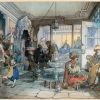
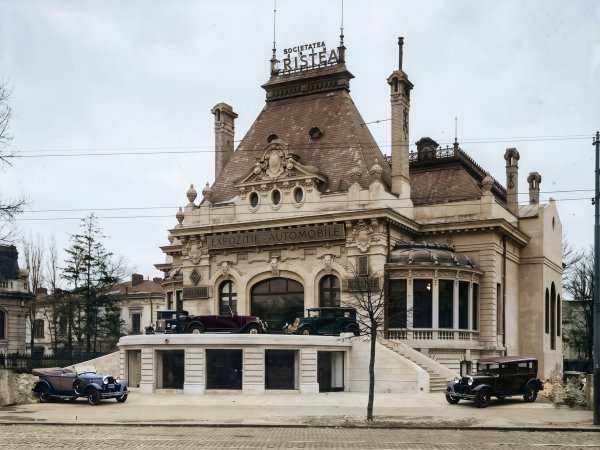
Few buildings of old Bucharest concentrated in one single place as much elegance, political power, worldly refinement, and history as the Marghiloman House, the sumptuous residence of Alexandru Marghiloman, one of the most influential political figures of Romania at the beginning of the 20th century. The villa, built in an eclectic architecture of Beaux-Arts inspiration, was for decades one of the most spectacular architectural presences of the Capital, but also a space where the political elite, the aristocracy, and the high society of Bucharest met. Today, few still remember that on the place where the imposing ARO Patria Building rises, on Magheru Boulevard, there once stood this famous residence, demolished in 1931 to make room for the new urban vision of the city. The Marghiloman House disappeared, but its story remains one of the most fascinating pages in the history of Bucharest.
A spectacular residence at the intersection between old Bucharest and the modern city
The Alexandru Marghiloman Villa was designed in 1890 by the French architect Paul Gottereau, one of the important names who shaped the image of aristocratic Bucharest at the end of the 19th century. The construction was located on the land at the intersection of Mercur Street, today Pictor Verona Street, with the new Take Ionescu Boulevard, today Magheru Boulevard.
The building impressed through its eclectic architecture of Beaux-Arts style, a style that dominated the great residences of the era and which conveyed status, elegance, and prestige. It was not only a house, but a true declaration of social power. The villa was surrounded by annexes, auxiliary spaces, and even sheds for horses, a clear sign of the owner’s passion for horse riding and of the aristocratic lifestyle that he cultivated.
In 1906, the house was transformed and extended by the architect Petre Antonescu, one of the most important representatives of Romanian architecture. His intervention brought a new dimension to the residence, preserving the initial monumentality, but integrating influences and architectural solutions closer to the refinement of the beginning of the 20th century.
The remodeling of the Marghiloman House is considered one of the first important creations of Petre Antonescu, during a period in which he explored both the spirit of classical architecture and Art Nouveau influences. According to the information offered by the Museum of the School of Architecture, this intervention represented a relevant example of his creative beginnings.
Petre Antonescu and the transformation of an emblematic house
Architect Petre Antonescu, one of the fundamental figures of Romanian architecture, attended the prestigious Ecole des Beaux-Arts in Paris, which he graduated from in 1899, under the guidance of Julien Gaudet, the professor of Ion Mincu. His French education was to decisively influence his style and professional vision.
After obtaining his diploma, Petre Antonescu spent his first years traveling through Muntenia, Oltenia, and Moldova, studying Romanian historical monuments with an almost archaeological rigor. He sketched, analyzed, and researched old constructions, seeking to deeply understand the specificity of local architecture.
Grigore Ionescu noted about this period that the young architect researched “with the zeal of an archaeologist all our historical monuments,” an experience that was to define him professionally. His first attempt at an urban residence in Romanian style was the C. A. Mavrodin Villa, today the headquarters of the Hungarian Institute, designed in 1904.
Later, he was to sign monumental projects such as the Administrative Palace in Craiova, built between 1907 and 1913. But the remodeling and extension of the Marghiloman House remain an important moment in his artistic evolution, a bridge between Western classical architecture and the Romanian sensitivity that he would later develop.
Alexandru Marghiloman, the elegant politician of the conservatives
The house was the perfect expression of the personality of its owner. Alexandru Marghiloman, born in 1854 into a family of great landowners from the Buzău area, was one of the most important figures of the Conservative Party and one of the most influential political men of the time.
He studied Law in Paris and, in 1879, graduated from the Higher School of Political Sciences in the capital of France, being formed in an elite intellectual environment. His Western education, personal refinement, and social position transformed him into a remarkable presence in Romanian public life.
In 1918, in a dramatic moment for Romania, Alexandru Marghiloman held the position of Prime Minister, between March and November. In this capacity, he signed the peace with the Central Powers, on April 24, 1918, in an extremely difficult context for the Romanian state, under the pressure of occupation and the military realities of the First World War.
This decision definitively shaped his historical image, being viewed over time both critically and as a compromise solution in an almost impossible period for the leadership of the country.
The “Wallachian Lord” and the passion for thoroughbred horses
Beyond politics, Alexandru Marghiloman was known for his aristocratic lifestyle and for his extraordinary passion for horses. He was vice-president of the Romanian Jockey Club from 1903 and remained in this position until his death, in 1925.
An importer of thoroughbred horses and a passionate breeder, he won 26 major competitions and remained in history as the father of Romanian equestrianism. He managed to place Romania in a leading position in the world of horse racing, our country being considered immediately after England and France in this field.
At his manor in Buzău, known as the Albatros Villa, he established a famous stable of thoroughbred horses and organized the first betting races at the Floreasca and Băneasa hippodromes. For Marghiloman, horses represented not only a passion, but a symbol of prestige and aristocratic elegance.
This dimension of his personality perfectly explained the organization of the Bucharest residence as well, where the sheds for horses were naturally part of the house ensemble.
How Queen Marie saw him
Few contemporaries captured Alexandru Marghiloman’s personality better than Queen Marie, who described him with charm and sincerity in the memoir volume “The Story of My Life.”
“Alexandru Marghiloman was rich, kept race horses and had a house arranged with abundance. He liked to receive guests and his receptions showed great extravagance and a certain desire to amaze,” Queen Marie wrote.
His portrait continues with the image of an elegant man, well dressed, smiling, approachable, and pleasant in social relations. For Queen Marie, Marghiloman was the representative of the light and refined side of life, a man for whom politics sometimes seemed less important than derby winners, Paris, or the elegances of fashion.
Visits to Albatros Villa near Buzău were for the royal family true moments of relaxation. The Queen remembered with pleasure the superb garden, the roses, the cultivated strawberries, and the impressive stable. A day spent there was, she said, always a pleasant day.
This atmosphere of refinement and hospitality was also found in the house in Bucharest, where Marghiloman received guests generously and with the obvious desire to impress.
From aristocratic villa to car showroom
After the death of Alexandru Marghiloman, in 1925, the villa was put up for sale. The disappearance of the owner also marked the beginning of the end for this emblematic residence.
The house was first bought by Petre Cristea, through the Cristea Society, and later it came into the possession of Constantin Mihăescu, the owner of well-known car garages in Bucharest. Thus, the destination of the place changed radically.
Beginning with 1928, the company “Mihăescu Garages” displayed its imported automobiles on the former Marghiloman property at Take Ionescu Boulevard no. 10, as art historian Oana Marinache recalls. The image of the old aristocratic residence was already beginning to be replaced by the symbols of the new era: the automobile, accelerated modernization, and urban transformation.
Bucharest was entering another stage of development, and the old boyar houses were gradually becoming victims of the new urban plans.
The demolition of 1931 and the appearance of the ARO Patria Building
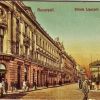
On April 22, 1931, the Marghiloman House was demolished, together with its annexes, for the widening of Take Ionescu Boulevard, the future Magheru Boulevard. It was a symbolic moment for the disappearance of old aristocratic Bucharest and the beginning of the affirmation of the modernist Capital.
On this land, the ARO building was later erected, one of the most spectacular modernist constructions in Bucharest, an avant-garde project signed by architect Horia Creangă. Today known as the ARO Patria Building, the edifice represents one of the emblematic images of Magheru Boulevard.
The Marghiloman House was not the only victim of this transformation. For the widening of the boulevard, the houses of Titu Maiorescu and Dimitrie A. Sturdza were also demolished, other important landmarks of the old Romanian political elite.
The modernization works continued in 1936, when I. C. Brătianu Boulevard was traced up to Unirii Square, the former Halls Square. Bucharest was redefining itself urbanistically, and the sacrifice of historical heritage was considered the inevitable price of progress.
Thus disappeared the Marghiloman House, one of the most elegant and history-laden residences of the Capital. Today, few passersby who look at the modernist façade of the Patria Building know that there once stood there the villa of the “Wallachian Lord,” the place where politics, aristocracy, and one of the most spectacular stories of old Bucharest met.
We also recommend: