The story of the Romanian Maria Fărcășanu, the true victim of the crime on the Orient Express
- Articles
- 05 FEB 26
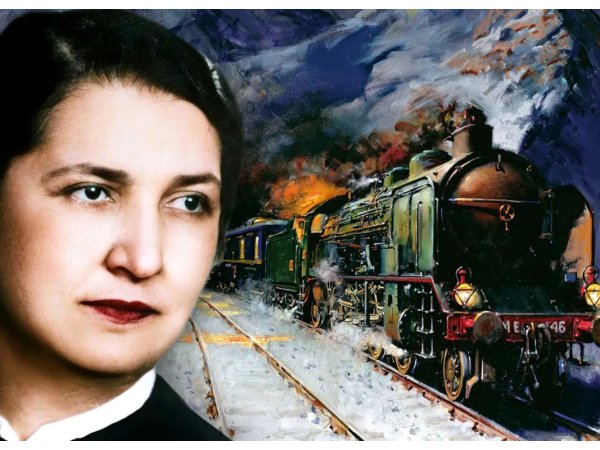
The Orient Express, one of the most famous trains in the world, has long been associated with luxury, adventure, and mystery. Yet for Romania, this legendary train is tied to a tragic story: that of Maria Fărcășanu, a Romanian woman whose life ended violently during a journey on this iconic route. Maria Fărcășanu was a young woman of Romanian origin, born into a wealthy and respected family.
Who was Maria Fărcășanu
Raised in Bucharest, Maria Fărcășanu received a refined education and quickly became known for her beauty, intelligence, and elegance. Though information about her personal life before the tragic event is relatively scarce, it is known that Maria was highly regarded in interwar Bucharest’s social circles and had built a reputation as a talented fashion designer.
She opened a private school in the Capital dedicated to Romanian folk art, with a branch in Rucăr, developing it into an Academy of Applied Romanian Art. In recognition of her contributions to education, the Ministry of Public Instruction awarded her in 1926 the medal “Work Reward for School Constructions – First Class.”
At the Athénée Palace, she opened the country’s first craft store and organized solo exhibitions in Paris, Vienna, New York, and Cairo. On a personal level, Maria Fărcășanu was married to reserve officer Nicolae Fărcășanu, who had reached the rank of colonel and had served for a period as Romania’s military attaché in France.
At the time of her disappearance, the designer was 50 years old, leaving behind a 13-year-old daughter.
The fatal journey on the Orient Express
In 1935, Maria Fărcășanu boarded the famous Orient Express, traveling the route between Paris and Istanbul, passing through numerous European capitals, including Bucharest. The train was a symbol of luxury travel, chosen by Europe’s elite for its comfort and exceptional services. Maria was traveling to Istanbul to meet a close friend. This route was familiar to her, as she frequently traveled on the train for her family’s business matters.
At that time, the Orient Express was recognized not only for its luxury but also for the discretion and safety it offered to passengers. However, what began as a routine journey would turn into a nightmare. One night in June 1935, while the train was passing through Bulgaria, it was discovered that Maria Fărcășanu had been murdered in her compartment. The death of the young Romanian shocked all of Europe, particularly because the Orient Express was considered a symbol of security and luxury.
Her lifeless body was discovered by a conductor, who noticed that the door to her compartment was slightly ajar. Bulgarian authorities were promptly alerted, and the train was stopped for investigation. Initial reports indicated that Maria had been attacked and strangled, with no clear signs of robbery. The mystery surrounding her murder captured public attention, and international press outlets covered the story extensively.
The investigation and the challenges faced by authorities
Authorities launched a complex investigation involving both Bulgarian and Romanian officials. As the case concerned an international train and a victim from a prominent family, the pressure to solve the crime was immense. Nevertheless, the investigation faced significant obstacles, including a lack of direct witnesses and the inherent difficulty of collecting evidence on a moving train.
Furthermore, the fact that Maria had apparently not been robbed raised even more questions. Numerous passengers and crew members were questioned, yet no one was ever officially charged, and the case remains unsolved to this day.
Speculations and theories about the motive
Speculation about the motive for the crime varied widely. Some suggested it could have been a crime of passion, given Maria’s social status and relationships. Others proposed political or economic motives, considering the influence of her family. However, the lack of concrete evidence prevented authorities from identifying a perpetrator.
The impact on public opinion and legacy
The case of Maria Fărcășanu had a profound effect on public opinion in both Romania and Europe. Her murder shook confidence in the Orient Express, which until then had been synonymous with safety and luxury. It also raised serious questions about passenger security on international trains.
The press covered the case extensively, turning it into a topic of international interest. In Romania, the event sent shockwaves through high society, where Maria was well-known. Her family, devastated by the loss, made repeated appeals for justice but never received the answers they sought.
Even 90 years after Maria Fărcășanu’s tragic death, her story remains a symbol of mystery and tragedy. The unsolved murder on the Orient Express has become one of the most famous and debated enigmas in the history of train travel. Maria’s story is often compared to the plot of Agatha Christie’s famous novel Murder on the Orient Express, although the reality of this tragedy is far darker. Unlike fiction, this was a real-life event, marked by brutality and unresolved questions.
Maria Fărcășanu: a life cut short
Maria Fărcășanu was a promising woman whose life was cruelly and inexplicably cut short. She was a pioneer in promoting Romanian folk art and crafts, an accomplished designer, and a respected figure in international cultural circles. Her achievements and social standing made the tragedy all the more poignant, as it robbed her family and society of a talented and influential personality.
Her murder on a train that represented elegance and security underscores the vulnerability of even the most privileged individuals to acts of violence. The Orient Express, celebrated for decades as the pinnacle of safe and luxurious travel, became the scene of a shocking crime that exposed the fragility of human life, regardless of wealth or status.
Remembering Maria Fărcășanu
The story of Maria Fărcășanu remains a dark chapter in the history of the Orient Express. It is a tale that reminds us of the human vulnerability behind the glamour of luxury travel and of the unresolved tragedies that linger in collective memory. Though the crime has never been solved, Maria’s life and work continue to be remembered as symbols of creativity, elegance, and cultural contribution.
Her legacy also serves as a cautionary tale about the importance of justice and the challenges of securing safety in public spaces, even those considered the most elite and secure. The fascination with her story endures, attracting historians, mystery enthusiasts, and those captivated by the intersection of history, culture, and human drama.
Maria Fărcășanu’s life, work, and tragic death continue to inspire curiosity and reflection, serving as a reminder that behind the allure of iconic journeys like the Orient Express, real lives and stories—sometimes tragic—have shaped the history of modern Europe.
Her name lives on as the true victim of the Orient Express crime, a woman whose brilliance and contributions to art, culture, and society were silenced too early, leaving behind a legacy of unresolved questions and enduring fascination.
Even decades later, Maria Fărcășanu’s story stands as a testament to both human achievement and human fragility, a narrative that continues to captivate imaginations and provoke speculation. It is a story of talent, ambition, and tragedy intertwined, forever linked to the legend of the Orient Express.
Her memory reminds us that behind every historic journey, beyond the grandeur and the tales of luxury, there can be deeply human stories—of creativity, love, and loss—that demand to be remembered. Maria Fărcășanu, through her life and untimely death, embodies both the heights of cultural achievement and the shadow of human vulnerability, leaving an indelible mark on Romanian history and the history of European travel.
We also recommend: The past of Gara de Nord: from Europe’s gateway to an overburdened hub