The story of the famous Club A, the longest-lasting student club in Romania. The dream of the future architects, “extinguished” shortly after Colectiv
- Articles
- 28 NOV 25
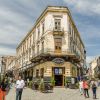
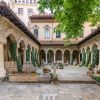
Club A, born in the heart of Bucharest in the year 1969, was never only a venue for entertainment, but a true enclave of freedom in a period in which freedom was almost impossible. Hidden in the basement of a Mediterranean-style building on Lipscani Street, the club quickly became a refuge for young intellectuals, for future architects, for artists and students who increasingly felt the cultural control of the communist regime.
The origins of a space that redefined freedom in the middle of dictatorship
In an era in which cultural directions were set by the Party, Club A imposed itself as a living and vibrant alternative to the “normality” imposed by the authorities. Here took place multimedia performances, debates on forbidden topics, launches of artistic materials, and the bohemian atmosphere loaded with ideas and enthusiasm made this place a laboratory of pure creativity.
The symbolic foundation of the club was laid by the architect Mac Popescu, in a moment of relative political opening, which appeared after the visit of Charles de Gaulle to Romania. In the effervescent context of the year 1968 – with the European student movements and the appearance of the Woodstock phenomenon in the United States – young Romanians felt the need for a space of their own, where they could breathe and speak freely. Club A became exactly this place: a meeting point of generations that were searching for their cultural identity in a world that tried to control every step.
The atmosphere of the basement on Lipscani and the artistic effervescence
The modest décor of the basement — simple walls, improvised furniture, discreet lights — hid a special creative universe. In that unpretentious space, ideas were born, friendships were tied, and the future important voices of Romanian culture took shape.
Here took place conferences with surprisingly courageous themes for that epoch. One of the most well-known was dedicated to Japanese tradition in architecture and music, an exotic theme, far from the aesthetic dogmas officially promoted.
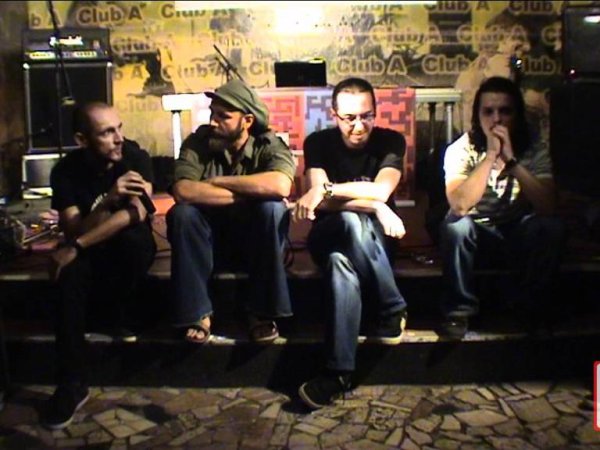
Also, the club’s stage became a launching ramp for numerous pop, rock and folk bands. Among the artists who sang in Club A were Florian Pittiș, Șuie Paparude, Timpuri Noi, Travka, Metrock, Sarmalele Reci and many other formations that would mark the urban culture of Romania.
More than music, Club A offered a profound feeling of belonging. It was the place where young people felt protected from the vigilant eyes of the regime, where they could talk about taboo subjects, where the exchange of ideas became natural. The freedom breathed there was, in itself, an act of cultural and civic resistance.
The role of the club in the post-communist period and the rebirth of the rock scene
After the fall of communism, Club A did not lose its identity, but on the contrary: it strengthened its status as a free cultural space. The already famous basement on Lipscani continued to host events that shaped the artistic scene of Bucharest in the ’90s.
The club became again an important hub for rock music and for the young people who were rediscovering their voice in a society undergoing reconstruction. In this period, Club A was associated with major events, such as the “TimRock” Festival in Timișoara, considered the direct successor of the “Club A” Festival organized since 1981.
These festivals contributed essentially to defining a modern Romanian musical identity. For many artists, concerts in Club A represented a decisive step in their career. Here communities were formed, new styles were tested, experimentation was free.
The closing of the club after the Colectiv tragedy and the impact on the cultural community
The tragedy in Club Colectiv, in October 2015, radically changed the cultural and entertainment landscape of Bucharest. After the wave of inspections and strict regulations that followed the fire, numerous cultural spaces were closed, and among them was Club A, which was permanently shut down.
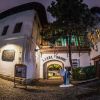
The building on Lipscani entered a rehabilitation process, and the basement that for decades had breathed freedom and culture suddenly became a silent place, locked with a padlock. The closing of the club represented not only the loss of a physical space, but also the extinguishing of a tradition that had passed through political regimes, cultural eras and entire generations of students.
For the architects at the beginning of their path, Club A remained not only a place for socializing, but a part of their professional identity. Here the community was formed, the foundations of future collaborations were laid, things beyond the university were learned. The closing of the club, shortly after Colectiv, painfully struck a generation living its university years in that period.
The spirit of Club A and its legacy in contemporary urban culture
Although the physical space was closed, the spirit of Club A did not disappear. Its story remained deeply imprinted in the memory of the capital and of those who grew up around it. The club is still perceived as an essential institution in the evolution of urban culture in Romania.
For many young people, it meant the first encounter with free debate, with alternative culture, with art that did not deviate from the official line. It was a laboratory in which generations of artists, architects, cultural people and promoters of freedom of expression were formed.
Symbolically, Club A continues to live through the stories of those who frequented it, through the cultural style it promoted and through the extremely powerful idea that freedom cannot be suppressed, no matter how oppressive an epoch may be.
Club A as a symbol of resistance and of the dream of a generation
Altogether, Club A was not only a meeting place, but a true cultural institution. Throughout its existence, it functioned as a mechanism of resistance and a landmark of creativity in a Bucharest often deprived of alternative spaces. It represented an environment in which young people learned to think freely, to create, to ask questions, to formulate ideals.
The legacy of Club A consists not only in the legendary concerts or in the heated discussions, but in the way it influenced the intellectual and artistic formation of modern Romania. What started as a student initiative in the basement of an old building became, in time, a unique cultural phenomenon.
Today, even if its doors are closed, Club A continues to be perceived as a symbol of freedom in the middle of constraints, a place that dared to dream and to inspire, regardless of context. The generations of students and artists who crossed its threshold keep in their soul a part of its bohemian atmosphere, of the courage with which it challenged the limits of the era and of its rebellious spirit.
Club A remains, despite its physical disappearance, a fundamental page in the history of Bucharest and a landmark for everything that means freedom of expression, creativity and cultural solidarity. In the memory of all those who lived unforgettable evenings there, it continues to be “home”, a mythical space of youth, dreams and resistance through culture.
We also recommend: Colectiv, 10 years since Romania’s most tragic fire: 64 young lives lost to eternity, a national mourning without end