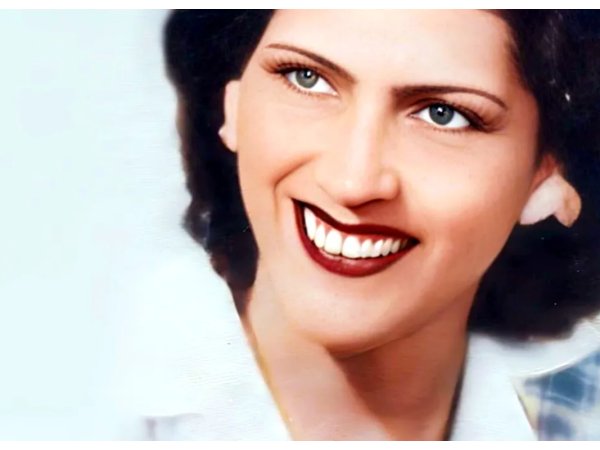
The stars of interwar Bucharest: Artist Elena Zamora sang to Romanian soldiers on the front during the First World War
- Articles
- 13 JAN 26
Interwar Bucharest was a space of artistic brilliance, lavish performances, and personalities who defined a golden age of Romanian culture. Among these emblematic figures is Elena Zamora, one of the most appreciated operetta singers of the time. With a splendid voice, a magnetic stage presence, and extraordinary determination, the artist managed to conquer not only audiences in Romania, but also the great stages of Europe. Beyond her artistic success, her story is marked by patriotism, courage, and devotion, as she was one of the artists who sang to Romanian soldiers on the front during the First World War.
Childhood and the first signs of an exceptional talent
Elena Zamora, whose real name was Elena Stănescu, was born in 1897 in Ploiești, a city recognized for its dynamism and cultural life. However, she spent the first years of her childhood in the commune of Cucuruz, near Giurgiu, where she came into early contact with music and Romanian traditions. The environment in which she grew up contributed to shaping her artistic sensitivity, and her vocal talent became evident from a very young age.
At only 17 years old, Elena Stănescu was already stepping onto the stage of the National Theatre in Iași, a remarkable achievement for a young woman at the beginning of her career. Her soprano voice and the naturalness of her interpretation immediately attracted the attention of audiences and critics alike. Her debut took place in the operetta M-zelle Nitouche, where she had the opportunity to perform alongside the great Constantin Tănase, an artistic encounter that would mark her entire career.
The birth of a stage name and early recognition
An interesting episode from Elena Zamora’s debut is linked to the change of her stage name. Actor Niculescu-Buzău, who later recounted this moment in the volume Theatrical Souvenirs, decided that the name Stănescu was too common for an artist destined for something exceptional. Thus, he chose to present her to the public under the name “Zamora,” an inspired choice that contributed to the creation of a memorable artistic identity.
Under this name, Elena Zamora began to be increasingly noticed, and success came quickly. Her appearances on stage were appreciated not only for her vocal qualities, but also for her personal charm and elegance. In an era when audiences were extremely demanding, the young artist managed to establish herself as a distinctive and promising presence.
The war and the voice that brought hope to the front
The First World War radically changed the destinies of many artists, and Elena Zamora did not remain indifferent to the suffering of Romanian soldiers. During the war, she lived for a time in Bârlad, where she joined a group of artists who performed for soldiers on the front and for the wounded in hospitals.
The artist would later recount these defining experiences, recalling that she sang alongside great personalities such as George Enescu and Zavaidoc. Their presence on the front played an essential role in raising soldiers’ morale, and Elena Zamora’s voice became a symbol of hope in times of hardship.
During one of these performances, Elena Zamora personally met Ecaterina Teodoroiu, the Heroine of the Jiu, who had come to Bârlad to be decorated after being hospitalized at the Drăghici Hospital in Vaslui. This encounter remained a memorable one for the artist, deeply shaping her perception of sacrifice and courage.
The consolidation of her career and collaboration with Constantin Tănase
After the dramatic experiences of the war, Elena Zamora continued her artistic journey with newly acquired maturity and depth. During this same period, she truly debuted in theatre in Iași, performing in a production alongside Constantin Tănase. Their collaboration proved to be extremely fruitful, with the two returning over the years to the same stage in numerous productions.
Tănase appreciated Elena Zamora’s talent and discipline, and her presence added refinement to his performances. Documents and testimonies from the time confirm her active involvement in supporting soldiers’ morale, strengthening her image as an artist devoted not only to the stage, but also to the national cause.
The Parisian dream and the conquest of great stages
After the end of the war, Elena Zamora felt the call of a greater dream: achieving success on major international stages. With remarkable ambition, she left for Paris carrying only two essential suitcases: one with Romanian national costumes and another with scores of Romanian songs.
Upon arriving in the French capital, the artist made a vow to herself that she would succeed. Her debut at the prestigious Palace Theatre was a true triumph. Her interpretation of the Romanian song “S-a dus cucul de pe-aici” impressed the French audience, and success was immediate. Elena Zamora was hired on the spot, with a considerable salary for that time.
The artist later humorously recounted her ingenuity, admitting that, not being fully confident in the text, she had glued it to the bottom of her flower basket, from which she discreetly glanced. This “Romanian trick,” as she called it, only emphasized her charm and scenic intelligence.
The peak of her international career and her return home
The success in Paris was followed by appearances at Folies Bergère and extensive tours across Europe, Africa, and Asia. By 1930, Elena Zamora had already become a star of the Parisian stage. During this period, she reunited with Constantin Tănase, who was in Paris to purchase costumes and sets for the “Cărăbuș” Theatre in Bucharest.
Tănase immediately proposed that she return to Romania to perform in the summer season, and the artist accepted enthusiastically, although contractual obligations delayed her return. The promise was fulfilled in 1932, when Elena Zamora took the stage of the Cărăbuș Theatre in the revues Ura Cărăbuș and La lozul Cărăbușului, alongside Constantin Tănase and Alexandru Giugaru.
The artistic legacy of a great artist
In 1936, Elena Zamora returned once again to the stage of the Cărăbuș Theatre, in the operetta Trei fete cucuiete, a translation made by herself after a production in which she had previously sung and acted in France. This return confirmed her status as a complete artist, capable of blending international experience with the spirit of the Romanian stage.
Elena Zamora passed away in 1974, leaving behind an impressive artistic legacy. At the age of 67, she published her memoirs, I Served the Song, an emotional testimony of a life dedicated to art, marked by sacrifices, triumphs, and a deep love for Romania.
Although today her name is less known to the general public, Elena Zamora’s contribution to the development of Romanian operetta and to the promotion of national culture internationally remains undeniable. Through her exceptional talent and her devotion to the stage and to her country, Elena Zamora earned a place of honor in the history of Romanian music, being one of the great ambassadors of the Romanian artistic spirit on the international stage.
We also recommend: Stars of Interwar Bucharest: Elvira Popescu, the actress who played in Hollywood with Alain Delon and Claudia Cardinale