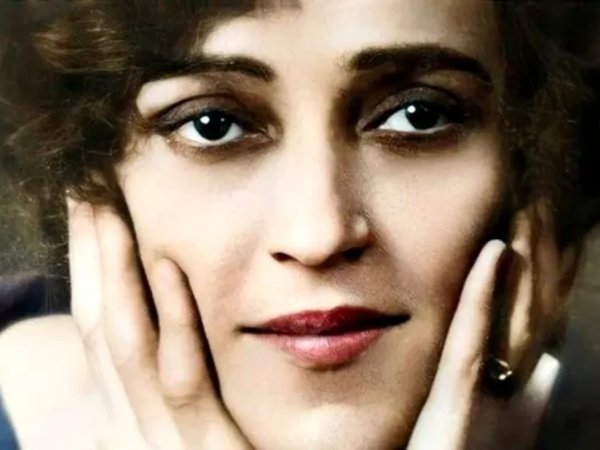
The orphan girl rejected by the Conservatory became the greatest actress on the stages of Paris. The story of the brilliant Maria Ventura
- Articles
- 12 JAN 26
The history of European theatre knows spectacular destinies, but few are as dramatic and impressive as that of Maria Ventura. Born into a famous family, raised among backstage corridors, spotlights, and great artistic spirits, yet struck early by loss and rejection, Maria Ventura managed to establish herself on some of the most prestigious stages in the world. Her life was a succession of triumphs, trials, forced withdrawals, and spectacular returns, shaping the portrait of a genius artist who carried the name of Romania into the heart of French culture.
Childhood in a theatrical universe and the first losses
Maria Ventura was born on July 13, 1886, being the daughter of the writer Grigore Ventura, a prominent figure of Romanian cultural life, and of the actress of Jewish origin Lea Fanchetta Vermont. The environment in which she grew up was profoundly artistic, marked by rehearsals, performances, and discussions about literature and theatre, all of which contributed decisively to her early formation.
Her destiny, however, was harsh from her first years. Orphaned at a young age, Maria Ventura was forced to mature quickly and to find her own path in a competitive and often compassionless world. Although theatre was familiar to her, her beginnings were far from easy, and the road to recognition was strewn with obstacles.
Rejected and ambitious: the road to Paris
Paradoxically, although she came from a famous family and had a solid artistic education, Maria Ventura was initially rejected by the Conservatory. This blow did not discourage her, but rather strengthened her determination to succeed. She chose Paris, the cultural capital of Europe, where she enrolled at the Paris Conservatory, completing her studies with private lessons.
She had the chance to be guided by first-rate masters, such as Eugène Silvain and Paul Mounet, who refined her technique, diction, and expressive strength. Under their influence, Maria Ventura built her own style, characterized by emotional intensity, classical rigor, and a magnetic stage presence.
Decisive encounters with the great legends of the stage
From the very beginnings of her artistic career, Maria Ventura had exceptional opportunities. She acted alongside Sarah Bernhardt, considered one of the greatest actresses in the history of world theatre, as well as alongside Eduard de Max, the famous French actor of Romanian origin. These encounters had a profound impact on her artistic formation.
Eduard de Max, an internationally renowned tragedian, had interpreted more than 300 roles throughout his life and was admired on stages all over the world. The professional relationship between him and Maria Ventura gradually turned into a deep personal bond, which was to decisively influence her artistic and existential path.
Eduard de Max and consecration at the Comédie Française
The connection with Eduard de Max represented a true turning point in Maria Ventura’s career. Through him, she entered the prestigious stage of the Comédie Française, a space reserved only for the greatest artists of the time. Here, Maria Ventura interpreted leading roles in plays signed by Racine, Molière, Chekhov, Shaw, and Pirandello.
Her stage presence, doubled by an impressive voice and a rare artistic intelligence, conquered the Parisian audience. The collaboration with the Comédie Française was one of the most prolific and influential stages of her career, consolidating her status as a great European actress.
Theatre and film: a complex career
Maria Ventura’s success was not limited only to the stage. In parallel with her theatrical activity, she was also involved in cinematography, participating in the first Romanian fiction film, Romania’s Independence. In this production, she played the role of Queen Elisabeth, acting alongside Constantin Nottara, another legendary name of Romanian theatre.
Her cinematic experience was complemented by her relationship with André Antoine, a theatre and film director known for his modern vision. This collaboration contributed to the diversification of her means of artistic expression and offered her a broader perspective on the art of performance.
Pressures, discrimination, and forced withdrawal
Despite her impressive success, Maria Ventura’s life was marked by major difficulties. Her Jewish origin became a burden in the troubled context of the Second World War. During the years of occupation and institutionalized antisemitism, she was close to being permanently excluded from the Comédie Française.
In 1941, she was forced to leave the stage and temporarily withdraw from artistic life. This painful rupture determined her to devote herself to teaching, becoming a professor. Only in 1951, after a decade of absence, did she manage to return to the stage, proving a remarkable inner strength.
The legacy of Eduard de Max and the echo of injustice
The relationship with Eduard de Max continued to mark her even after his death, in 1924. De Max was considered by Le Figaro to be one of the most important artists of his generation, but his disappearance was followed by a profound injustice. The newspaper Rampa wrote, in 1925, about the oblivion and hypocrisy that surrounded the memory of the great actor.
The article denounced the fact that, although praised after death, Eduard de Max was left without a worthy monument, his ashes being deposited anonymously in a Parisian columbarium. Official promises regarding the construction of a monument were not honored, and the moral duty toward the great artist remained unfulfilled.
Maria Ventura’s imprint on European culture
Despite all the trials, Maria Ventura left a deep imprint on European theatre and film. She was a bridge between Romanian and French culture, an artist who carried with dignity and talent the heritage of an illustrious family and of an exceptional generation.
From the orphan girl rejected by the Conservatory to the great lady of the Parisian stage, Maria Ventura’s story remains one of courage, perseverance, and artistic genius. It is living proof that true value finds, sooner or later, its place on the great stages of the world.
We also recommend: The Stars of Interwar Bucharest: Leni Caler, The Artist and the Mirror, the Star of the Maria Ventura Theatre