The National Technical Museum in Bucharest, a century of history: The School of Electricians and Mechanics and the dream of engineer Dimitrie Leonida
- Articles
- 18 MAR 26
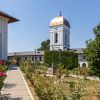
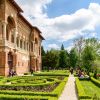
In the heart of Bucharest, in the picturesque Carol I Park, stands one of the most valuable cultural and scientific institutions in Romania: the National Technical Museum “Prof. Eng. Dimitrie Leonida”. The story of this museum is not only the history of an impressive collection of objects, but also of an extraordinary vision — the dream of a passionate engineer, Dimitrie Leonida, who understood early that technical progress must be preserved, explained, and transmitted to future generations. From a modest collection gathered by an enthusiastic student to the most important technical museum in the country, the institution’s path reflects the transformations of modern Romania, as well as the perseverance of a man who refused to abandon his ideal.
Inspiration from Europe and the beginning of a mission
In an article published in 1964 in the Museum Review, Dimitrie Leonida recalled the moment that changed his life. As a student at the Polytechnic School in Charlottenburg, he witnessed the enthusiasm generated by the inauguration of the famous Deutsches Museum in Munich, in 1905. There he discovered not only the scale of Europe’s technical heritage, but also the presence of Romanian inventions presented as historical landmarks.
Among the exhibits was a traditional Romanian mill, considered the ancestor of modern hydraulic turbines, as well as a wooden mining wagon associated with Wallachian workers from the Apuseni Mountains, to whom the invention of the railway switch was attributed. For the young student, these international recognitions were a source of pride and, at the same time, a revelation: Romania had a valuable technical history, but one insufficiently known at home.
In 1908, after completing his studies, Leonida founded in Bucharest an evening school for workers — the School of Electricians and Mechanics. At the same time, together with his students, he began to gather old equipment, dismantled installations, and objects with historical and didactic value. These were to form the nucleus of the first Romanian technical museum.
The first exhibits and the opening of the museum
The initial collection consisted of pieces that today are considered true treasures of technical heritage. Among them were the cylinder from Gh. Assan’s “fire mill” — the first steam mill in Wallachia, Brush dynamos from the first permanent electrical power plants in the country, and the electrical installation of the National Theatre of Bucharest, installed in 1884 by a collaborator of the great inventor Thomas Alva Edison.
The museum officially opened in 1909, operating in the same building as the school on Primăverii Street (today Mendeleev Street), near Amzei Square. The space was ideal: classes were held upstairs, while the museum was arranged on the ground floor and in the basement. On weekends, students presented experiments and explanations to the public, turning the institution into a lively, interactive place long before this concept became popular.
Unfortunately, this happy period lasted only three years. The City Hall decided to change the destination of the building, and Leonida was forced to move to a much smaller space on Magheru Boulevard. There, lack of room became a major problem: many industrial machines were displayed outdoors, in an unsuitable courtyard.
Relocation to Carol I Park and consolidation of the museum
An unexpected opportunity appeared in 1928, when several pavilions in Carol I Park were available for organizing the first national electricity exhibition. The generous space allowed Leonida to install not only the technical museum but also a museum dedicated to Romania’s natural resources. Visitors could thus observe both the country’s riches and the way technology harnesses them.
The pavilion hosted the museum until 1935, when an advantageous exchange was made for a new building in the park, designed by architect Traianescu and engineer P. Ganea. Built on a reinforced concrete structure and covering approximately 3,000 square meters, it offered excellent exhibition conditions. From that moment until today, the museum has operated in the same building.
War, nationalization, and ideological transformations
The period of the Second World War brought major interruptions. Between 1944 and 1947 the museum was closed, and extensive restoration work was later required. In 1950, the building was transferred to the Ministry of Electric Energy, and Dimitrie Leonida realized that the only way to save the institution was to donate it to the state.
The gesture was completed in 1951, yet the professor continued to organize the museum until the end of his life. Between 1951 and 1954 the institution underwent an intense process of reorganization and politicization, being forced to align with Soviet models. Exhibitions had to highlight especially the achievements of the Soviet Union and socialist Romania.
In 1954, the museum reopened under the name “Museum of Electrification.” Only in 1957 did it return to the name Technical Museum, later becoming a documentation center. After the founder’s death, in 1965, the institution officially received his name, and since 2004 it has held its current status as a national museum.
Unique collections and masterpieces of technology
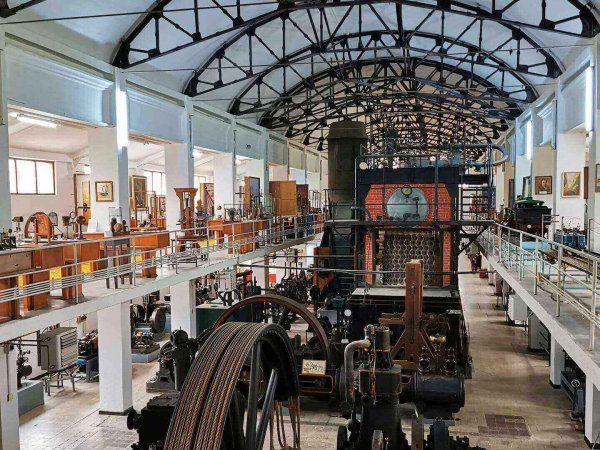
Today, the museum houses over 5,000 exhibits, of which about 300 are considered pieces of exceptional value, some unique worldwide. The collections are organized by scientific and technical fields: mechanics, electricity, energy, transport, telecommunications, optics, aviation, computing, metallurgy, and many others.
Among the most spectacular objects are the first type of telephone used in Romania, the Edison dynamo that illuminated the National Theatre, the rotor from the first documented hydroelectric plant in Wallachia, the motor of the electric tram from 1894, the aerodynamic automobile created by Aurel Persu — considered the first of its kind in the world — and the engine of the submarine “Delfinul.”
The National Technical Museum also holds modern inventions, such as the individual flying device built by Justin Capră and the laser created by Ion Agârbiceanu in 1962, the first of its kind in Romania.
The cultural and educational role of the museum
The institution’s functions go beyond simple preservation of objects. The museum aims to continuously enrich its heritage, restore existing pieces, and capitalize on this treasure through exhibitions, conferences, symposia, and national and international cultural projects.
Its activity is also supported by prestigious awards. The “Dimitrie Leonida” Prize rewards contributions to the history of technology and the promotion of Romanian inventions. The Eliza Leonida Zamfirescu Prize honors women in engineering and science, while the Ion Basgan Prize recognizes merits in the petroleum field and deep drilling.
The museum also publishes specialized materials, guides, and the journal “Memoriae ingenii,” contributing to the dissemination of technical and scientific knowledge.
A living legacy of Romanian ingenuity
Over the decades, the museum has been visited by inventors, academics, political leaders, and personalities from around the world, all impressed by the ingenuity of the exhibits and Romania’s contributions to global technical progress.
By testament, Dimitrie Leonida left the museum his own library, today a valuable memorial collection. Even after he was temporarily removed from the institution during the communist regime, he was allowed to remain close to his “child” until near the end of his life.
The National Technical Museum is not merely a collection of old objects, but a living chronology of human creativity. It shows how natural resources, intelligence, and perseverance can transform a society and how bold ideas can change the world.
More than a century after its founding, Dimitrie Leonida’s dream continues to inspire. The institution remains a bridge between past and future, demonstrating that the history of technology belongs not only to textbooks, but is part of a nation’s identity and heritage.
We also recommend: The National Military Museum “King Ferdinand I”, a century of history and honor. The story of one of the most beautiful museums in Bucharest