The National Museum of Contemporary Art, short history: schedule, exhibitions, tickets
- Articles
- 23 APR 26
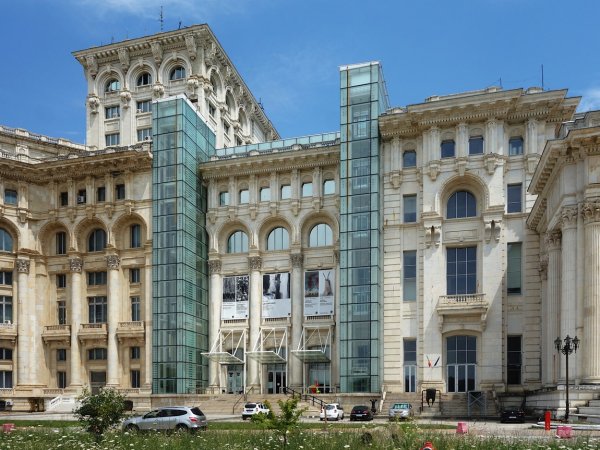
The National Museum of Contemporary Art, known to the general public under the acronym MNAC, represents one of the most important cultural institutions dedicated to contemporary art in Romania. Located in a place with major symbolic significance, in the E wing of the Palace of the Parliament, the museum offers not only valuable exhibitions, but also a special experience, in which monumental architecture meets the artistic expressions of the present.
A modern museum in a space with strong history
MNAC was officially inaugurated in 2004, but the idea of a national museum dedicated exclusively to contemporary art had been circulating since the 1990s, during a period in which Romania was trying to redefine its cultural identity after the political changes of 1989. There was a need for a space that would reflect new art, visual experimentation, multimedia installations, performance, and the new directions of Romanian and international art.
The choice of the Palace of the Parliament as headquarters was a strongly symbolic one. A building associated for a long time with political power and with the communist past thus became the host of a museum dedicated to freedom of artistic expression. This transformation was seen as an important cultural gesture, through which the rigid space of a historical institution was reinterpreted through dialogue with contemporary art.
Over time, MNAC became more than a simple museum. It was and remains a meeting place for artists, curators, students, researchers, and the public interested in new forms of visual expression. Temporary exhibitions, international projects, and interdisciplinary events have strengthened the museum’s position in the Romanian cultural landscape.
Short history and the evolution of the collections
The museum’s collection mainly reflects the evolution of Romanian art after 1945, with emphasis on the post-war period and on the radical transformations produced after 1989. Here, works signed by established artists can be found, as well as projects by the new generation of creators, which offers visitors a broad image of the development of Romanian contemporary art.
MNAC does not function according to the model of the classic museum, in which the emphasis falls exclusively on permanent heritage. On the contrary, the dynamics of the institution are given by temporary exhibitions, international collaborations, and experimental events. Multimedia installations, video art, contemporary sculpture, conceptual photography, and performance have become central elements of the museum program.
Over time, the museum has hosted numerous important exhibitions dedicated to Romanian and foreign artists, biennials, urban art festivals, and curatorial projects that attracted a diverse public. This living and changing character makes every visit to MNAC different.
A special element is the panoramic terrace of the museum, which has become one of the most appreciated visiting areas. From here, one of the most spectacular views over Bucharest opens up, and many visitors choose to include this experience in their cultural route. The museum thus offers not only art, but also a new perspective on the city.
Visiting schedule and access
MNAC is located on 13 September Avenue, inside the Palace of the Parliament, with access through the entrance from the Marriott Hotel area, gate B3 / entrance E1, wing E4. Its positioning makes it easily accessible both for tourists and for the residents of the Capital interested in the contemporary cultural offer.
The visiting schedule is organized so that the public can explore the museum especially in the second part of the week. On Monday and Tuesday the museum is closed, and from Wednesday to Sunday the schedule is between 11:00 and 18:30. The last access is at 18:00, and the institution is closed on legal holidays.
The museum library has a separate schedule, from Monday to Friday, between 10:00 and 16:00, but access is made by appointment. It is frequently used by students, art historians, and researchers interested in documentation in the field of contemporary art.
For those visiting the museum for the first time, it is recommended to allocate at least two to three hours for the complete experience. The spaces are large, the exhibitions require time for understanding and contemplation, and the panoramic terrace also deserves a longer stop.
Temporary exhibitions and special events
One of the most important reasons why the public constantly returns to MNAC is the rich program of temporary exhibitions. Unlike traditional museums, where permanent heritage dominates the visiting experience, here the emphasis falls on change, current relevance, and artistic dialogue.
The exhibitions may include contemporary painting, large-scale installations, experimental sculpture, digital art, video art, and international curatorial projects. Many times, the works are provocative and invite the public to reflect on current themes such as identity, memory, politics, the city, technology, or social changes.
The National Museum of Contemporary Art also frequently organizes related events: guided tours, educational workshops, film screenings, performances, debates, and editorial launches. These activities transform the museum into an active space of cultural dialogue, not only into a place of exhibition.
For the updated exhibition schedule, visitors usually consult the official museum website or cultural ticketing platforms. Some special events have limited access and require prior reservation, especially in the case of openings or exhibitions with a large public flow.
Tickets and facilities for visitors
The price of tickets may vary depending on the active exhibitions and the type of event, but MNAC generally maintains an accessible policy for the general public. There are standard rates for adults, discounts for pupils, students, and pensioners, as well as free access for certain special categories.
An important advantage is the fact that entry is free on the first Wednesday of each month, which encourages public access to contemporary art and attracts numerous visitors who choose to discover the museum without additional costs.
Tickets can be purchased directly from the museum or through online platforms dedicated to cultural events, depending on the exhibition taking place. For special events, online reservation is often recommended, especially on weekends or during periods with very popular exhibitions.
In addition to the exhibition spaces, visitors can benefit from a café, relaxation areas, and access to the panoramic terrace. This combination between museum, social space, and urban observation point contributes to the institution’s growing popularity among the young public.
Why MNAC is worth visiting
In a city dominated by history, classical buildings, and traditional museums, MNAC offers a different perspective: that of the present and the future. It is the place where art is not only admired, but also challenges, disturbs, and asks questions.
The visit to the National Museum of Contemporary Art is not always a comfortable one, and precisely this is its charm. The works do not always offer simple answers, but invite interpretation and dialogue. For some visitors, the experience can be surprising, for others challenging, but it rarely remains indifferent.
Its positioning inside the Palace of the Parliament adds an additional dimension to the experience. The contrast between the monumentality of the building and the freedom of contemporary expression creates one of the most interesting cultural tensions in Bucharest.
MNAC is, in essence, a museum of the present. It does not speak only about art, but also about the society in which we live, about our changes, and about the way culture can transform spaces and mentalities. Precisely for this reason, it remains one of the most important cultural destinations of the Capital for anyone who wants to understand today’s Bucharest.
We also recommend: The Romanit Palace, one of the oldest buildings of the Capital: from the Princely Chancellery to the Museum of Art Collections