The Legend of Dragobete, Son of Baba Dochia, the Proud Passionate Youth Who Spread Love Among Village Young People
- Articles
- 24 FEB 26
At the boundary between seasons, when the cold begins to soften and the first signs of nature’s rebirth make themselves felt, Romanians celebrate love in a very special way. While patches of snow still remain here and there, and the sun gains strength and lengthens the days, people in the old times welcomed the new season through a celebration full of joy and hope. This is the story of Dragobete, the mythical young man who brought love into the hearts of the young and into the life of Romanian villages.
Dragobete, the Young Man of Love and the Beginning of the Agricultural Year
Dragobete is a legendary figure in Romanian folk culture, described as a handsome, energetic, and passionate youth who wandered through villages to teach young people the secrets of love. Tradition says that he was not only a symbolic character, but even the son of the famous Baba Dochia, the mysterious old woman about whom stories say that she wore nine sheepskin coats and symbolized the passing between seasons. As her son, Dragobete was associated with the beginning of spring and with the renewal of nature, being regarded as a protective spirit of love and fertility.
In old folk beliefs, the day of February 24 had a special importance, being considered the beginning of the agricultural year. This date symbolically marked the awakening of nature after the long and harsh winter, and people looked with hope toward the harvests that would come. On this special day, Dragobete was seen as a true officiant of weddings in the animal world, the one who united pairs and gave the start to the cycle of life.
It was said that, on Dragobete’s day, animals found their mates and birds began to build their nests. It was the moment when life was reborn, and love became the force that set the world in motion. People observed nature and believed that everything that happened on this day influenced the rest of the year. Thus, if the weather was beautiful and calm, it was said that spring would be fertile and households would have abundance.
Young lovers arranged to meet also on February 24, convinced that the love begun on this day would last at least a year, like the bonds between animals. For them, Dragobete was not only a symbolic celebration, but a real opportunity to declare their feelings and strengthen their bond. Many of these love stories had a happy ending, because the young people often came to marry.
The character Dragobete is not unique in the mythologies of the world. In different cultures there are similar figures, charming youths who symbolize love and attraction between people. However, Dragobete preserves a deeply Romanian character, being connected with the rhythms of nature and with the life of the traditional village.
The Origin of the Name and the Names of the Celebration
The origin of the name Dragobete remains surrounded by mystery, and specialists have tried over time to find explanations for its appearance. Some etymologists have linked the name to a celebration from the Orthodox Christian calendar, celebrated also on February 24 – the Finding of the Head of Saint John the Baptist. It is possible that, over time, pagan traditions and religious ones became intertwined, giving birth to the celebration known today.
In the Slavic language, this celebration was known under the name “Glavo-Obretenia.” In the Middle Ages, Romanians adapted the term and used forms such as “Vobritenia,” “Rogobete,” “Bragobete,” or “Bragovete.” The name Dragobete appeared later, being attested only toward the end of the eighteenth century, especially in the regions of Muntenia and Oltenia.
Depending on the region of the country, Dragobete was known under different names, each reflecting the connection with the beginning of spring. Among the most widespread names are “Head of Spring,” “Granguru,” “The Impetuous One,” or “Saint John of Spring.” These variants underline the role of the celebration as a moment of transition between seasons and as a symbol of the rebirth of nature.
The fact that Dragobete has so many names shows how deeply rooted it was in Romanian folk culture. In each region, people adapted the celebration according to their own traditions, but its meaning remained the same: the celebration of love and life.
The Customs of Young People on Dragobete
On the morning of Dragobete’s day, girls observed rituals meant to bring them beauty and luck in love. One of the most widespread traditions was washing the face with unmelted snow. It was believed that this clean and cold water would keep their complexion bright and make them more attractive in the eyes of the young men.
After this ritual, the young women dressed in their most beautiful clothes and went to church. There they met the boys from the village, and after the service they set off together toward the forest or the fields to gather the first flowers of spring. These flowers were considered symbols of love and good fortune.
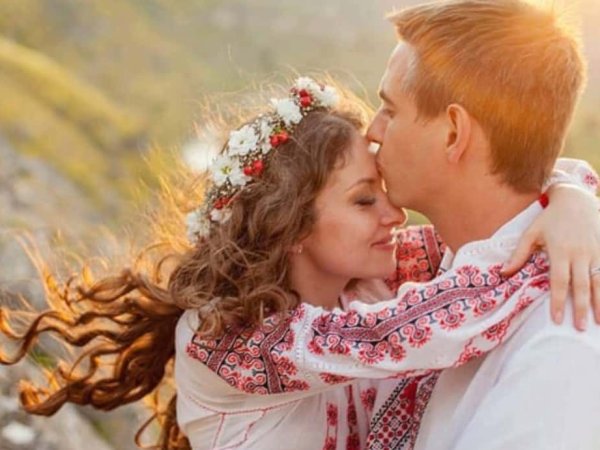
The most awaited moment of the day was, however, the return from the forest, when the custom called “the flying” took place. Each boy chose the girl who was dear to him and chased her through the village. If the girl shared the same feelings, she allowed herself to be caught, and the young people kissed in front of everyone. This gesture represented a promise of love and marked the beginning of a relationship.
From this tradition was also born the saying “Dragobete kisses the girls,” an expression that has remained until today the symbol of the celebration. For many young people, this moment was the first step toward a serious relationship and, sometimes, even toward marriage.
Beliefs and Superstitions Connected to Dragobete
Dragobete’s day was surrounded by numerous folk beliefs meant to bring luck and happiness. The elders said that it was not good to cry on this day, because sadness would continue throughout the entire year. Those who did not respect this rule risked remaining unhappy until the next Dragobete.
Also, boys were advised not to upset the girls and not to tease them, because this could bring bad luck in love. It was believed that the respect and kindness shown on this day would be rewarded with luck and harmony.
In households there were also special rules. Field works were forbidden, because the day was dedicated to love and rest. However, for prosperity and abundance, the mistress of the house had to tidy the yard and put things in order. Only this light activity was allowed, while sewing, washing, or other heavier household chores were forbidden.
It was said that nature also had to be respected on this day. Domestic birds received better food than usual, and their sacrifice was strictly forbidden. People believed that in this way they would have luck and prosperity in the household.
Dragobete and the Rebirth of Nature
Dragobete was closely connected with the cycles of nature and with the signs of spring. In popular belief, migratory birds began to return during this period, and their chirping was seen as good news for people. The building of nests symbolized stability and the continuity of life.
The first flowers gathered on Dragobete’s day had a special meaning. They were brought home and placed at the icon, being considered bearers of luck and blessing. People believed that these flowers protected the family and brought harmony into the house.
In the world of the traditional village, Dragobete was not only a celebration of love between people, but also a celebration of the bond between man and nature. Everything that happened on this day was interpreted as a sign for the future.
Through its rituals and customs, Dragobete symbolized the beginning of a new stage. After the cold months of winter, people needed hope, and the celebration offered them exactly this: the promise that life goes on.
Dragobete, the Symbol of Romanian Love
Over time, Dragobete has remained one of the most beautiful celebrations of Romanian tradition. It represents not only the love between young people, but also the joy of rebirth and the optimism of the beginning of spring.
The figure of the handsome young man, considered the son of Baba Dochia, illustrates the connection between generations and the continuity of traditions. Dragobete is the symbol of youthful energy, passion, and the desire to live intensely.
Compared to other celebrations of love, Dragobete preserves an authentic character deeply connected to rural life. It reminds of the times when the community was united and traditions had an essential role in people’s lives.
Today, even if many of the old customs are no longer respected exactly, Dragobete continues to be celebrated as a day of Romanian love. His story remains alive, reminding that, beyond time and changes, love remains one of the strongest forces that unite people.
We also recommend: Dragobete in Bucharest: 6 Romantic Places Most People Don't Know About