The history of the Giulești district in Bucharest: Boyar Giulea, the Calvinist cemetery and the two villages that merged
- Articles
- 10 MAR 26
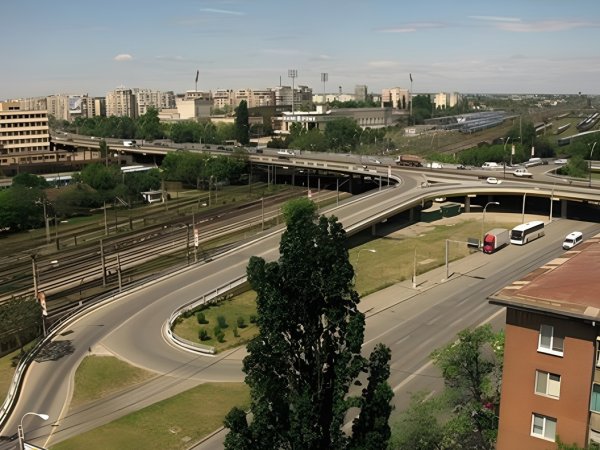
The Giulești district is today one of the best-known neighborhoods in the western part of Bucharest, located in Sector 6, in an area oriented from northwest to southeast. For many residents of the capital, Giulești is associated with the Rapid stadium, the railway depots, or the working-class atmosphere of the neighborhood. Few people know, however, that the history of this place is much older and more complex than the modern image of the district.
One of Bucharest's most controversial neighborhoods
Over the centuries, the territory on which Giulești stands today has gone through numerous administrative, economic and social transformations. Before becoming part of Bucharest, the area was made up of several distinct villages, each with its own evolution.
The name of the place is linked to a medieval boyar, and the lands belonged for a long time to an important monastery. Later, the appearance of the railway and industrial development radically changed the social structure of the area.
The history of Giulești is, in fact, a story about how a boyar estate and several peripheral villages gradually turned into an important urban district of the capital.
Traces of habitation more than five millennia old
Although the first documentary attestation of the name Giulești appears only in the 16th century, archaeological research shows that this area had been inhabited long before that time. Discoveries made in the second half of the twentieth century indicate the existence of human communities in the region as early as the first half of the third millennium BCE.
Archaeologists discovered in this area artifacts belonging to the Boian culture, one of the most important Neolithic civilizations in southeastern Europe. The discoveries were so significant that the archaeologist Eugen Comșa even identified a cultural phase called the “Giulești phase,” part of this prehistoric culture.
The archaeological remains include fragments of pottery, tools and other objects that demonstrate that stable communities of farmers and craftsmen once existed here. These populations lived in organized settlements, and the proximity to water sources and fertile land made the area suitable for agriculture.
During the interwar period, other traces of habitation were also discovered, including coins and plaques from the Roman period. These discoveries suggest that the area was not abandoned even in antiquity. Researchers also identified traces of habitation from the 4th and 10th centuries, which indicates a continuity of population in this space for many centuries.
Thus, before the appearance of medieval villages and boyar estates, Giulești was already a place where people lived and organized communities since prehistoric times.
The origin of the name Giulești and the boyar estate
The first documentary mention of the name Giulești dates from April 2, 1548. The document was issued by Mircea Vodă and represents an important act for the history of the area, as it confirms the existence of the Giulești estate and offers clues about the origin of the name.
According to historians’ interpretations, the name of the locality comes from a boyar named Giulea, the original owner of these lands. In the medieval era, many villages and estates received the names of their owners, and Giulești is no exception.
The Giulești estate was, at that time, an agricultural area located on the outskirts of Bucharest but situated in fertile land and relatively close to trade routes. Like many boyar properties, the lands were worked by dependent peasants who ensured the agricultural production needed by the owners.
At the end of the 16th century, the Giulești estate went through an important change. Prince Mihai Viteazul decided to donate these lands to the Sărindar Monastery, one of the most important monasteries in Bucharest at that time.
The rule of the Sărindar Monastery
Once it entered the property of the Sărindar Monastery, the Giulești estate became part of an economic system specific to the era. Monasteries often owned large land properties that provided the resources necessary to maintain religious life and charitable activities.
For several centuries, the lands of Giulești were administered by the monks of the monastery. The peasants in the area worked the fields and paid various obligations to the monastic owners. This system was characteristic of feudal society in the Romanian Principalities.
The situation changed radically in the 19th century, during the modernization reforms of the Romanian state. One of the most important decisions was the secularization of monastic estates, through which the state confiscated the large properties belonging to monasteries.
After this reform, the lands in Giulești were redistributed. Former serfs received land, but other social categories were also granted property. Among the new owners were workers, railway laborers and railway station employees.
The emergence of the villages Giulești-Sârbi and Giulești-Țigănia
After the redistribution of land, the Giulești area began to organize itself into several distinct villages. Among the most important were Giulești-Sârbi and Giulești-Țigănia.
Giulești-Țigănia was a village known for its numerous community and for the church built there in 1798. The place of worship represented the center of spiritual life for the inhabitants of the village.
At the same time, Giulești-Sârbi had a different administrative evolution. According to the Great Geographical Dictionary of Romania, the two villages belonged to different communes. Giulești-Sârbi belonged to the commune of Chiajna, while the village of Costeasca was included in the commune of Roșu.
Around the year 1885, part of the former lands of the Giulești estate were purchased by Alexandru Costescu. After this acquisition, the Giulești-Țigănia area began to be known under the name Costeasca.
This locality stretched on both sides of the railway and reached as far as Calea Griviței. The presence of the railway would decisively influence the development of the area.
The railway and the transformation of the area
An essential moment in the evolution of Giulești was the construction of the North Railway Station between 1868 and 1872. This infrastructure radically changed the economic life of the area.
Due to the proximity to Bucharest’s main railway station and to the city’s railway depots, many inhabitants of the area began working in the transport sector. Railway workers became one of the most numerous social categories in the district.
At the same time, the area began to attract workers and families employed in railway workshops or in other industrial activities related to transport.
This transformation led to the development of a neighborhood with a strong working-class identity, different from the aristocratic or commercial areas of Bucharest.
The gradual integration into Bucharest
In the first decades of the twentieth century, the Giulești area went through a series of administrative reorganizations. In 1912, the villages of Giulești-Sârbi and Costeasca were included in the commune of Roșu.
In 1920, the borders of Bucharest were extended as far as the Calvinist cemetery, which meant that part of the territory of today’s district officially entered the composition of the capital.
The process of integration continued in 1926, when the commune of Costeasca was transformed into a suburban commune. It included the villages Giulești-Țigănie and Crângași.
The area then received the name of the commune “Prince Carol.” A few years later, in 1929, the name was changed to “Urban Commune King Michael.” After the return to the throne of Carol II, the locality was renamed “Urban Commune Grand Voivode Michael.”
These changes reflected the political context of the time and the authorities’ attempts to administratively reorganize the metropolitan area of Bucharest.
Educational institutions and the railway identity
The railway heritage of Giulești is also reflected in the educational institutions located in the district. The proximity to the North Railway Station and to the railway depots led to the emergence of high schools specialized in the transport field.
Two of the most important are the “Dinicu Golescu” Technical College and the “Mihai I” Railway Technical College. These institutions prepare students for careers in the railway field and in related industries.
In addition to these, the district also hosts other educational institutions, such as the “Marin Preda” High School and several general schools. Through these institutions, Giulești continues to play an important role in the technical and professional education of young people in Bucharest.
Monuments, culture and the life of the district
Besides its educational and industrial infrastructure, Giulești also has several important cultural and religious landmarks.
The best-known place of worship in the area is the Chiajna Monastery. Located near the railway line toward Videle, this monastery was reopened in the second decade of the 21st century. Although the ruins of the old monastery are better known in the history of Bucharest, the new monastic settlement brings back into attention the religious tradition of the place.
The district is also known for its sporting and cultural activity. Here are located the stadium and the sports hall of the CS Rapid club, one of the most important sports teams in Romania.
Giulești also hosts the Comic Opera for Children, a unique cultural institution in the Romanian artistic landscape dedicated to musical performances for young audiences.
A district born from history and transformations
The history of Giulești reflects the evolution of Bucharest itself. From a medieval estate belonging to a boyar and later to a monastery, the area went through profound social, economic and administrative transformations.
The villages of Giulești-Sârbi and Giulești-Țigănia, together with the locality of Costeasca, gradually merged into an urban community. The development of the railway and the proximity to the North Railway Station changed the social structure of the area, transforming it into an important working-class district.
Today, Giulești is an integral part of modern Bucharest, but traces of the past can still be discovered in the history of the place, in the names of the streets, in its institutions and in the memory of the community. Its story is one of adaptation, transformation and continuity, from prehistoric civilizations to the urban life of the contemporary capital.
We also recommend: The Story of the Crângași Neighborhood: Inhabitants of the Vlăsia Forest, Bucharest’s “Black Sector,” and the Dâmbovița Floods