The history of Casa Albă Restaurant, the venue in the heart of Băneasa Forest
By Bucharest Team
- Articles
- 03 JUL 26
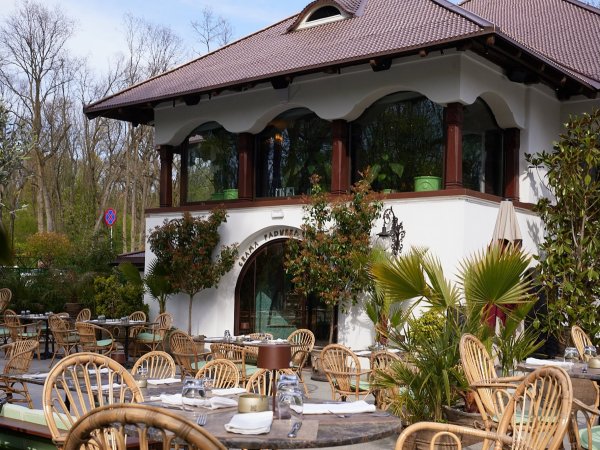
Few restaurants in Bucharest can boast a history that began during the interwar period and continues to this day. Casa Albă, located on Aleea Privighetorilor, in the middle of Băneasa Forest, is one of these special places. Over the course of almost a century, the building has gone through political, economic, and social changes, yet it has maintained its status as a landmark in the northern area of the Romanian capital. Today, Casa Albă Restaurant is known both for its privileged location surrounded by nature and for its elegant architecture and peaceful atmosphere, just a few minutes away from the hustle and bustle of the city. However, the story of this place began long before Bucharest expanded to the edge of Băneasa Forest.
A building constructed during Bucharest's modernization period
During the first decades of the 20th century, Bucharest was undergoing an intense period of urban development. The city was expanding its neighborhoods, new boulevards were being built, and Romanian architects sought to combine Western influences with local architectural traditions.
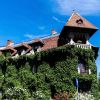
It was in this context that the building now housing Casa Albă Restaurant was constructed. The building dates back to 1930 and was designed by architect Octav Doicescu, one of the most important Romanian architects of the 20th century. This information is documented both in the official presentation of the complex and in several sources covering the history of the restaurant.
Octav Doicescu was one of the leading representatives of modern Romanian architecture. Throughout his career, he designed numerous public and private buildings, becoming renowned for the elegance of his architectural volumes, functionality, and the harmonious integration of his buildings into their natural surroundings.
Casa Albă perfectly reflects this philosophy. The building does not dominate the surrounding landscape but instead appears to be an integral part of it, standing in a natural setting that enhances its architectural lines.
Located in Băneasa Forest, one of Bucharest's largest green spaces
The restaurant's location is one of its greatest advantages. Casa Albă is situated on Aleea Privighetorilor, adjacent to Băneasa Forest, one of the last extensive woodland areas remaining in northern Bucharest.
Băneasa Forest is part of the former Vlăsia Forests, the vast woodlands that once covered much of southern Romania. Throughout the centuries, these forests served both as natural refuges and as important hunting grounds for the rulers and noble families of Wallachia.
Although urban development has significantly transformed the landscape, the area has preserved its natural charm. Cleaner air, mature vegetation, and the tranquility offered by the forest create a striking contrast with the fast-paced rhythm of the capital.
This natural setting explains why leisure and recreational venues began to be developed here as early as the interwar period.
A restaurant that has survived historical changes
The history of Casa Albă cannot be separated from the history of Bucharest itself. The building was constructed during a period of prosperity, but only a few years later Romania entered the Second World War.
According to information provided by the administrators of the complex, in 1939 the building became one of the attractions presented at the New York World's Fair, demonstrating the architectural value it had already gained during that period.
Later, following the establishment of the communist regime, many restaurants and privately owned buildings were nationalized. Casa Albă was no exception, and after the political changes of 1989, it entered a new stage of reorganization.
In 1992, the Casa Albă tourist complex was taken over by the company that currently operates the restaurant, marking one of the most important milestones in its recent history. A few years later, in 2000, the nearby camping site was modernized and reopened.
Architecture that has endured for nearly a century
One of Casa Albă's defining characteristics is its architecture.
Although the restaurant has undergone several stages of renovation and modernization, its owners have preserved the building's original character. The structure continues to convey the elegance typical of interwar architecture, while recent interventions have focused on conserving this distinctive spirit.
As part of an extensive restoration project carried out in recent years, the interior spaces were reinterpreted in a contemporary manner without losing the building's historic identity. The current design combines classical elements with modern finishes and natural materials, resulting in a restaurant that respects its past without remaining exclusively anchored in it.
This approach is commonly found in numerous European restoration projects, where architectural heritage is adapted to contemporary requirements without compromising its historical value.
From a classic restaurant to an event destination
Today, Casa Albă operates as much more than just a restaurant.
The complex includes the main restaurant, a rustic-style wine cellar, terraces, a summer garden, and dedicated spaces for private and corporate events. Its total capacity exceeds 800 seats, making it one of the largest hospitality venues of its kind in northern Bucharest.
Over the years, the venue has hosted weddings, christenings, receptions, private celebrations, and corporate events, with its greatest advantage being the natural setting provided by the forest.
The summer garden remains one of the complex's most appreciated spaces, as it allows events to take place in a lush green environment, away from the noise of urban traffic.
A place where gastronomy completes the experience
Casa Albă's culinary profile has evolved alongside the preferences of its guests.
Today, the menu combines traditional Romanian cuisine with international dishes, aiming to satisfy the tastes of a broad and diverse clientele.
Romanian specialties continue to occupy an important place on the menu, complemented by a selection of Romanian and international wines.
This combination of gastronomy, nature, and architecture is one of the reasons why the restaurant continues to attract both Bucharest residents and tourists looking for an alternative to the restaurants located in the city center.
The recent renovation and Casa Albă's new identity
The past few years have brought one of the most significant transformations in the restaurant's history.
The building underwent an extensive renovation process, during which both the interior and exterior spaces were restored while preserving the property's historic character. According to information published by the project's representatives, the new concept aims to combine the elegance of interwar architecture with today's hospitality standards.
The restaurant has therefore redefined its identity, becoming not only a place to enjoy a meal but also a destination for gastronomic experiences, business meetings, and special events.
This direction reflects current trends in the hospitality industry, where increasing emphasis is placed on delivering a complete customer experience.
Why Casa Albă remains a Bucharest landmark
In a city that is constantly evolving, very few restaurants have managed to maintain such a strong connection with the history of the place where they operate. Casa Albă is one of these remarkable examples, combining architectural heritage, nature, and hospitality in a way that is rarely encountered in the Romanian capital.
The fact that the building designed by Octav Doicescu has survived for almost a century and continues to serve the purpose for which it was originally created is a testament to its architectural and cultural value. Its location in the heart of Băneasa Forest gives it a unique advantage, transforming every visit into an experience unlike that offered by conventional urban restaurants.
Today, Casa Albă continues to be a destination for those who appreciate Bucharest's history, interwar architecture, and high-quality cuisine. Its evolution demonstrates that a place with tradition can remain relevant in the present by respecting its past while adapting to contemporary expectations. The restaurant therefore represents far more than a dining destination—it is a part of Bucharest's collective memory and an example of continuity in a city that is constantly changing.
We also recommend: The history of the Perla Restaurant in Bucharest, the venue where “Little Prince” Nicu Ceaușescu had fun away from curious eyes