The grand Alhambra. The history of the first summer theater in interwar Bucharest
By Bucharest Team
- Articles
- 22 DEC 25
At the beginning of the 20th century, Bucharest was living through one of the most intense periods of urban and cultural development. The city was shaping its identity as the “Little Paris,” and entertainment, art, and social life were becoming essential components of everyday existence. In this favorable context, the year 1916 marked a landmark moment: the inauguration of the “Alhambra” Summer Garden, the first large-scale summer theater in Bucharest.
The birth of a temple of art in the heart of the Capital
The official opening of Alhambra was celebrated with the screening of the French film “Voyage dans la lune,” a symbolic choice for the era, highlighting the public’s fascination with cinema, an art form that was then in its early stages.
From its very first events, the Alhambra Garden was conceived not merely as a screening venue, but as a true sanctuary of art, a place where theater, music, and film met under the open sky.
Eclectic architecture and artistic vision
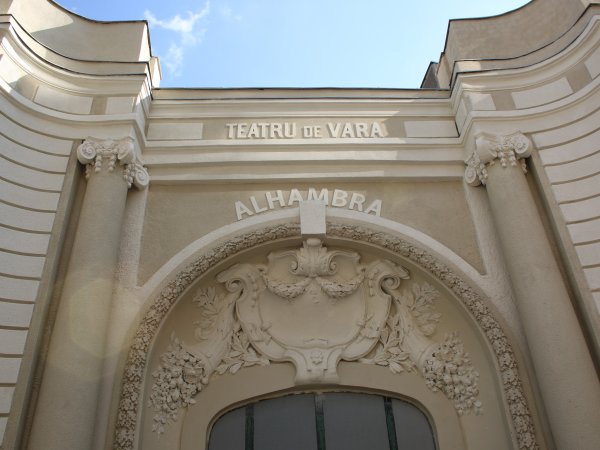
The “Alhambra” Summer Garden was built in an eclectic style, based on the plans of architect Nicolae Nenciulescu, a prominent figure in Romanian interwar architecture. He would later work on major projects such as the Royal Palace, a fact that underscores the prestige and ambition behind the construction of Alhambra.
The space was designed as a genuine temple of art, where architecture complemented the cultural experience. The decorative elements made of plaster were created by sculptor Spiridon Georgescu, who played a decisive role in shaping the elegant and sophisticated atmosphere of the garden. The ornaments, sculptural details, and harmonious proportions transformed Alhambra into a spectacular place that impressed both through its aesthetics and its functionality.
Alhambra in the interwar period, the epicenter of entertainment
During the interwar years, the Alhambra Garden quickly became one of the most popular meeting places for the people of Bucharest. It was more than an open-air cinema; it was a space for socializing, spectacle, and artistic affirmation. People from all social backgrounds gathered here, drawn by the magic of performances and the vibrant atmosphere of summer evenings.
Some of the greatest stars of the era performed on the Alhambra stage. Names such as Lisette Verea, Silly Vasiliu, Ion Vasilescu, Nora Piacentini, and Nicolae Vlădoianu became closely linked to the history of this place. These artists brought revue shows, musical comedies, and concerts to the public, defining the spirit of interwar Bucharest, a city full of life, creativity, and a desire for modernity.
Nationalization and the changes brought by the communist regime
The year 1948 brought a major rupture in the history of the Alhambra Garden. With the establishment of the communist regime, the space was nationalized, like many other cultural institutions and emblematic buildings in Romania. The garden continued to function under the name Cinema Capitol and Alhambra Garden, adapting to the new political and ideological realities.
Although the context was different, Alhambra remained a meeting place for the public, hosting film screenings and cultural events. However, the former charm gradually faded, and the emphasis on the free and refined entertainment of the interwar period was replaced by a more rigid approach, controlled by the state.
The degradation and closure of a cultural symbol
The passage of time and the lack of investment inevitably led to the degradation of the Alhambra Garden. In 1968, due to its advanced state of deterioration, the garden was closed. This moment marked the beginning of a long period of decline for a space that had once been a landmark of Bucharest’s cultural life.
After 1990, hopes for revitalization were short-lived. In 1991, Cinema Capitol and the Alhambra Summer Garden entered the administration of the Autonomous Authority for Film Distribution and Exploitation “RomâniaFilm.” Shortly thereafter, both spaces were closed, and from that moment on, no significant investments were made. For almost three decades, Alhambra remained abandoned, exposed to decay and oblivion.
Three decades of ruin and silence
The period between 1991 and 2021 was one of the saddest in Alhambra’s history. The building and the garden reached an advanced state of ruin, and a space that once pulsed with life became inaccessible to the public. Although classified as a historical monument, the Alhambra Garden was left without the protection and investments necessary for its preservation.
This abandonment symbolically reflected the difficulties of the post-communist transition and the lack of a coherent strategy to save cultural heritage. For many generations, Alhambra became merely a name found in history books or in the memories of older people.
The rebirth of Alhambra and the beginning of a new chapter
Change came in 2021, when Teatrul Elisabeta took the initiative to revitalize the Alhambra Garden. After extensive cleaning and safety works, the garden was reopened to the public in August 2021. Although the complete rehabilitation of the former Cinema Capitol is a long-term process, carried out in partnership with the Romanian state, the reopening of the garden represented an essential step.
Starting in 2023, the Alhambra Garden truly rose from its own ashes, ready once again to welcome its guests at the highest standards. The space was reimagined as a modern venue for entertainment and culture, without losing its historical identity.
Alhambra today, tradition and modernity
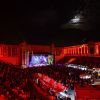
Today, the Alhambra Garden is once again a vibrant space that blends its glorious past with the demands of contemporary audiences. The current concept includes a diversified and carefully crafted menu, a wide range of cultural events, from theater performances and film screenings to concerts by both established artists and newcomers.
The Eat-Drink-Dance concept, weekend brunches with live music, and a fairytale-like atmosphere turn Alhambra into a meeting place for all generations. It is a space that not only revives the memory of a golden age but reintegrates it into Bucharest’s present-day cultural life.
A recovered symbol of Bucharest’s cultural identity
The history of the Alhambra Garden is a story of glory, decline, and rebirth. From its inauguration in 1916 as the first summer theater in Bucharest, to its reopening in the 21st century, Alhambra has reflected the social, political, and cultural transformations of the city.
Today, its return to the cultural circuit represents not only the saving of a historical monument, but also the recovery of a symbol of Bucharest’s identity. The grand Alhambra resumes its role as a space of art and encounter, proving that heritage can be brought back to life when there is vision, respect for history, and the desire to build bridges between past and present.
We also recommend: Boema Garden, the Summer Theater in Bucharest Where Romances and Light Music Were “Born”