The first children’s hospital in Bucharest was founded in the Mahalaua de Piatră, in the house of doctor Iulius Barasch
- Articles
- 22 DEC 25
In the first half of the 19th century, Wallachia was facing an extremely difficult sanitary situation, and Bucharest was no exception. The city was undergoing a slow process of modernization, yet hygiene conditions were poor, medical infrastructure was underdeveloped, and access to healthcare was limited for most of the population. In this context, children represented the most vulnerable category, with infant mortality reaching alarming levels.
The sanitary context of Bucharest in the first half of the 19th century
Infectious diseases, the lack of vaccines, poor nutrition, and unsanitary conditions in the city’s outskirts meant that many illnesses, which were treatable in other parts of Europe, became fatal. Although several general hospitals existed, they were not specialized in treating children, and young patients were hospitalized together with adults, without therapies adapted to their age.
This dramatic reality led, as early as the 1830s, to the first discussions about the necessity of establishing a hospital dedicated exclusively to children.
The first initiatives and the postponement of a vital project
In 1834, the idea of building a children’s hospital in Bucharest was formulated for the first time, using funds from the Pantelimon Hospital. The initiative reflected an early awareness of the severity of infant mortality, but the lack of financial resources and the political priorities of the time caused the project to be postponed for more than two decades.
Only by the middle of the century did the pressure generated by the constant increase in child deaths force the authorities to seek concrete solutions. In the absence of sufficient funds to construct a new building, the option of renting an existing space that could temporarily function as a pediatric hospital was considered. At this critical moment for public health in Bucharest, the providential figure of doctor Iulius Barasch emerged.
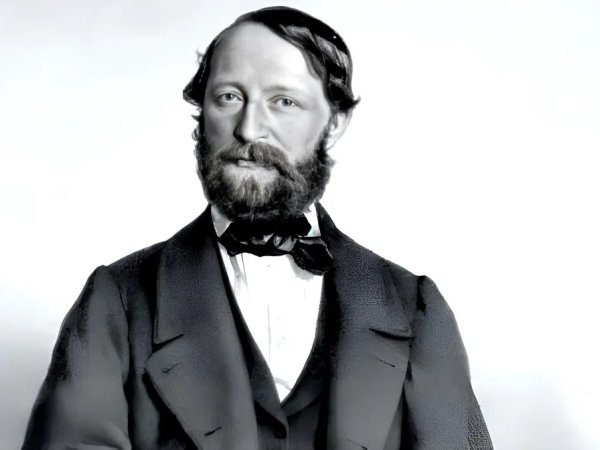
Iulius Barasch, the doctor who placed the child at the center of medicine
Iulius Barasch was born in 1815 in Brody, Galicia, into a Jewish family, in a multicultural and intellectually vibrant environment. He studied medicine at the University of Berlin, one of the most prestigious institutions of the time, obtaining his diploma in 1841.
Trained in a modern spirit, Barasch was deeply influenced by progressive ideas regarding hygiene, prevention, and the social role of medicine. After settling in Bucharest, he received permission from Prince Barbu Știrbei to practice medicine and became actively involved in the city’s medical and intellectual life.
Convinced that children’s health was the foundation of a society’s future, Barasch became one of the most vocal advocates for the establishment of a pediatric hospital. In a context in which the state lacked sufficient resources, he chose to act concretely, offering his own home for the founding of the first children’s hospital in Bucharest.
The hospital in the Crucea de Piatră neighborhood, a modest but essential beginning
Thus, in 1858, the first children’s hospital in Bucharest began operating in the house of doctor Iulius Barasch, located in the Crucea de Piatră neighborhood, in the Dudești area, also known as Mahalaua de Piatră. For the space he provided, the doctor received a modest rent, but his motivation was profoundly humanitarian.
The hospital initially had 40 beds and an outpatient department for consultations. The facilities were simple, but the essentials were ensured: medical care dedicated exclusively to children. Iulius Barasch did not limit himself to medical treatment alone; he also offered consultations and medicines free of charge, without discrimination based on ethnicity, religion, or social status. This approach was revolutionary for the time and decisively contributed to his reputation as a doctor devoted to the community.
Rapid results and confirmation of a real need
A report drawn up in December 1858 highlights the hospital’s immediate impact. In just a few months of operation, 481 children were treated. Of these, 336 recovered completely, 102 remained under observation, 32 did not respond to treatment, and 11 died. Although the number of deaths remained painful, the statistics clearly demonstrated the effectiveness of the medical care provided and the necessity of such an institution.
Between 1858 and 1860, more than 2,000 children benefited from medical services, either through hospitalization or outpatient consultations. These results attracted the attention of the authorities and strengthened the idea that the hospital needed to be expanded and relocated to a more suitable space, allowing for the development of pediatric services.
The relocation of the hospital and the continuity of a mission
In 1864, one year after the death of Iulius Barasch, the hospital was moved to a larger building located on Diaconeselor Street, in the Popa Tatu area. The new location had 90 beds and a staff of two physicians, which made it possible to treat a larger number of patients and to improve the quality of medical services provided to children.
Unfortunately, the founder of the hospital did not live to see this progress. Iulius Barasch passed away on March 31, 1863, at only 48 years of age. His premature death was a major loss for Romanian medicine, but the project he initiated continued to exist and develop, confirming the soundness of his vision.
The legacy of Iulius Barasch and the development of Romanian pediatrics
After his death, Iulius Barasch was initially buried in the Jewish cemetery on Sevastopol Street, and later his remains were transferred to the Filantropia Cemetery. His legacy, however, went far beyond the limits of an individual biography. The children’s hospital he founded represented a turning point in pediatric medicine in Romania, demonstrating the importance of medical institutions dedicated exclusively to children.
Over the following decades, pediatrics developed significantly in Bucharest, and Barasch’s initiative inspired the creation of new hospitals and specialized departments. Today, institutions such as the “Grigore Alexandrescu” Emergency Clinical Hospital for Children and the “Marie Curie” Emergency Clinical Hospital for Children continue the mission begun in the 19th century, providing complex medical care to thousands of children each year.
An example of altruism and social progress
The contribution of Iulius Barasch was not limited to founding the first pediatric hospital. He was also a prominent intellectual, the author of numerous articles and scientific works in the fields of medicine, hygiene, and health education. He consistently advocated for prevention, public awareness, and social responsibility, at a time when these concepts were still in their infancy.
The establishment of the first children’s hospital in Bucharest was an essential step in the development of Romania’s healthcare system. Although the beginnings were modest and resources limited, the dedication and perseverance of doctor Iulius Barasch demonstrated that significant changes can be achieved through individual initiatives driven by humanism and responsibility. The impact of his work is still felt today, in every child who receives medical care in a modern Romanian hospital.
We also recommend: The Story of the Brâncovenesc Hospital: The Legacy and the Curse of Safta Brâncoveanu That May Have Brought About Ceaușescu’s Fall