The economic crisis of 1929 and its impact on the inhabitants of Bucharest
- Articles
- 16 APR 26
The economic crisis triggered in 1929 represented one of the most dramatic moments of the 20th century, with effects felt on a global scale. Romania, although located on the periphery of the major financial centers, was not spared by this devastating wave. In Bucharest, the capital of the country and the main economic, social, and cultural hub, the consequences of the Great Depression were acutely felt, affecting all social categories, from workers and clerks to merchants and elites.
The causes of the crisis and its transmission to Romania
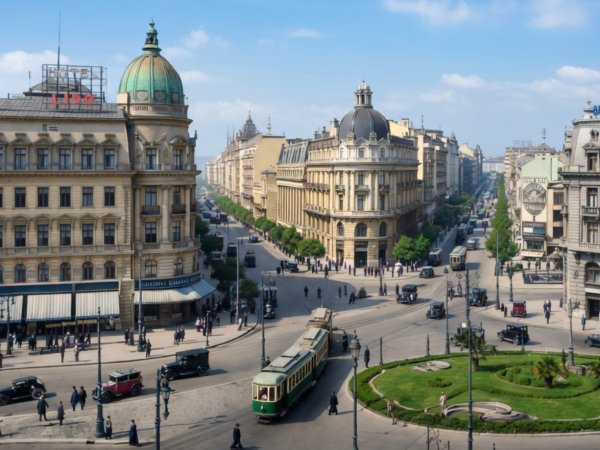
The city, which in the 1920s had experienced a period of effervescence and modernization, was faced with a harsh reality: bankruptcies, unemployment, poverty, and a profound change in lifestyle. Interwar Bucharest, nicknamed “Little Paris,” had to adapt its rhythm and aspirations to the new economic conditions.
The global economic crisis broke out with the collapse of the Wall Street stock exchange in October 1929, an event that triggered a chain reaction in the global economy. Financial systems were interconnected, and the drastic decline in investments and consumption quickly affected European states as well.
Romania, with a predominantly agrarian economy, depended largely on exports of agricultural products. The drop in prices on international markets led to a decrease in revenues, which affected both the rural environment and the cities. Bucharest, being the administrative and economic center of the country, felt these effects through the reduction of commercial and industrial activities.
At the same time, the Romanian banking system was severely affected. Numerous financial institutions encountered difficulties or went bankrupt, which led to the loss of savings for many citizens. The lack of liquidity blocked investments and deepened the economic decline.
The increase of unemployment and everyday difficulties
One of the most visible consequences of the crisis in Bucharest was the rapid increase in unemployment. Factories and workshops reduced their activity or closed down, and thousands of workers were left without jobs. Public servants were not spared either, with salaries being reduced or paid with delays.
For many inhabitants of Bucharest, daily life became a struggle for survival. Expenses were drastically reduced, and consumption was limited to the bare necessities. Luxury goods disappeared from shopping baskets, and restaurants and cafés, once lively, began to empty.
In working-class neighborhoods and in the outskirts, the situation was even more severe. Entire families lived in precarious conditions, and state aid was limited. Community solidarity became essential, neighbors helping each other to cope with difficulties.
The impact on trade and businesses
The economic crisis profoundly affected the business environment in Bucharest. Shops recorded drastic drops in sales, and many merchants were forced to close their businesses. Bankruptcies became frequent, and the market was marked by instability.
Small entrepreneurs were among the most vulnerable. The lack of access to credit and the decrease in demand made it impossible for them to continue their activity. Even large companies were forced to reduce staff and scale down their operations.
The real estate market was also affected. Prices fell, and construction stagnated. Urban development projects were postponed or abandoned, which slowed down the modernization of the city.
Changes in the lifestyle of the inhabitants of Bucharest
The crisis led to significant changes in the lifestyle of the inhabitants of the Capital. If in the 1920s luxury and elegance were the norm for certain social categories, in the 1930s they were replaced by prudence and saving.
Families began to pay increased attention to managing their budgets. Clothes were worn for longer periods, meals became simpler, and entertainment activities were limited. Even the elites felt the economic pressure, being forced to reduce their expenses.
However, despite the difficulties, cultural life did not disappear completely. Theaters, cinemas, and publications continued to function, offering people a form of escape from the harsh reality. Culture became, for many, a refuge.
The reaction of the authorities and the measures adopted
The Romanian government tried to manage the crisis through a series of economic and social measures. Policies to reduce public spending were adopted, as well as attempts to stabilize the currency and the banking system.
However, limited resources and the complexity of the situation made these measures have a reduced impact. Public dissatisfaction increased, and social tensions intensified.
In Bucharest, local authorities tried to support the population through various initiatives, but these were not sufficient to counteract the effects of the crisis. Economic problems were also reflected on the social and political level, contributing to the instability of the period.
Long-term consequences on the Capital
The economic crisis of 1929 left deep marks on Bucharest. Beyond the economic losses, it changed mentalities and behaviors. People became more cautious, and confidence in economic stability was shaken.
At the same time, the crisis deepened social differences. The gap between rich and poor widened, and social mobility became more difficult. Many of those affected never fully recovered, even after the economic recovery.
However, this difficult period also contributed to the maturation of society. The experience of the crisis led to a better understanding of economic vulnerabilities and the need for more balanced policies.
Bucharest between crisis and hope
Despite the hardships, Bucharest did not completely lose its dynamism. The city continued to be an important cultural and intellectual center, and its vibrant spirit endured even in the most difficult moments.
The economic crisis of 1929 was undoubtedly a harsh test for the inhabitants of Bucharest. It brought to light the fragilities of the economic system, but also the ability of people to adapt and resist.
Looking back, this period can be understood not only as a stage of decline, but also as one of transformation. Interwar Bucharest went through a major trial, and the lessons learned then have remained relevant for future generations.
We also recommend: “Cold Drunkennesses” and the Forbidden Pleasures in Interwar Bucharest: Morphine, Cocaine and Ether Were the Stars of the Parties