The Bucharest Man Who Loved Archaeology, Education and Junimea: The Story of Teohari Antonescu
- Articles
- 06 OCT 26
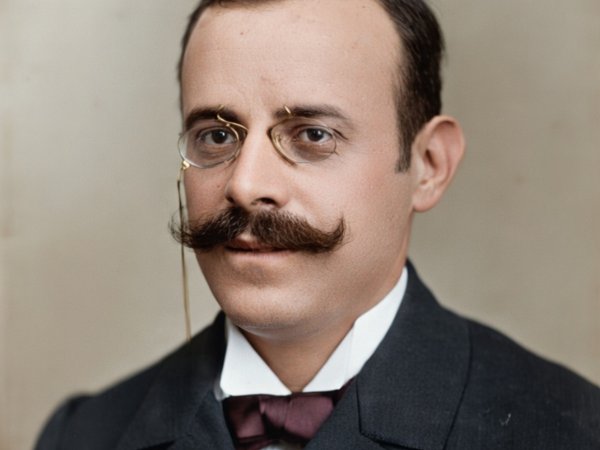
Teohari Antonescu was one of the Romanian intellectuals of the late 19th century who sought to transform the study of the past into a modern academic discipline. An archaeologist, historian, epigraphist and professor, he stood at the intersection of the research of antiquity, education and the cultural life of Junimea. Although he died at only 43 years of age, he left behind an important body of work for the beginnings of Romanian academic archaeology and for the study of ancient monuments on the territory of Romania. Born in Bucharest on September 1, 1866, Teohari Antonescu built much of his career in Iași, the city where he would become the university's first professor of archaeology. Here, he did not limit himself to teaching a discipline that was still taking shape, but sought to bring archaeology closer to history, epigraphy, geography and the study of ancient civilizations. The University of Iași thus provided the setting in which his interest in the past could become a genuine academic vocation. At the same time, Antonescu was connected to Junimea and to the intellectual environment of Iași. He even tried to revive the meetings and spirit of the old society, at a time when the founding generation was already at a late stage. His story is therefore also the story of an intellectual who tried to keep a cultural tradition alive at a time when Romania was building its modern institutions.
From Bucharest and Giurgiu to the University of Iași
Teohari Antonescu was born in Bucharest, but his connection with Giurgiu would become an important part of his later memory. He attended secondary school at the Gymnasium in Giurgiu, today's “Ion Maiorescu” National College, and then continued his education at the University of Bucharest. During his university training, he came into contact with important figures of Romanian culture, including Alexandru Odobescu, Grigore G. Tocilescu and Titu Maiorescu.
His interest in archaeology took shape early. In 1889, Teohari Antonescu presented his thesis The Cult of the Cabiri in Dacia, a study devoted to ancient monuments discovered in the Lower Danube region. The Central University Library “Mihai Eminescu” in Iași preserves the 1889 edition, which has 260 pages and 12 lithographic plates. The work already shows his interest in interpreting ancient remains by combining archaeological research with mythological and historical analysis.
His education, however, was not limited to Romania. Sources from the “Teohari Antonescu” County Museum mention periods of specialization and study in Paris, Berlin, Munich and Heidelberg, important European centers for historical and archaeological research at the time. Contact with Western academic environments was important for a researcher working at a time when Romanian archaeology was trying to move beyond the stage of simply collecting antiquities and consolidate its scientific methods.
In 1894, Teohari Antonescu was appointed professor at the provisional chair of archaeology of the University of Iași. It was a significant moment for Romanian education, as archaeology was beginning to acquire a distinct place within the university. The chair of “Archaeology and Antiquities” was established in 1896, and its status was connected to Royal Decree no. 366 of January 22, 1899. Antonescu remained the holder of this specialization until his death.
The professor who turned archaeology into a university discipline
Teohari Antonescu's activity in Iași went far beyond the limits of a university chair. Between 1895 and 1902, he repeatedly substituted for the courses of Petru Rășcanu, holder of the discipline “Ancient History, Epigraphy and Geography”, during the period when the latter was serving as general inspector of secondary education in Iași County. In this way, Antonescu came to teach a broad range of subjects connected with the ancient world.
His courses contributed to broadening the intellectual horizons of Iași students. According to the “Teohari Antonescu” County Museum, they were able to attend lectures on Eastern civilizations, the Greek and Roman worlds, as well as subjects such as the origin of the Aryans, Egyptian and Chaldean literature. For Romania at the end of the 19th century, such subjects showed just how broad the perspective of a professor had become who did not regard archaeology merely as an auxiliary discipline of history.
Antonescu also supported the development of the infrastructure necessary for research. In 1897, in a letter addressed to the dean of the Faculty of Letters and Philosophy, he drew attention to the need for laboratories and museums in assessing and developing the University of Iași. The idea was important: the study of the past could not remain only in the library or classroom, but had to be supported by collections, direct research and appropriate tools.
This approach also explains the diverse nature of his work. Instead of limiting himself to a single site or a single period, Teohari Antonescu researched issues concerning Dacia, the Roman world, the monuments at Adamclisi, Sarmizegetusa and Trajan's Column. In addition, he published articles about Egypt, Chaldea, prehistory, the origins of humanity and ancient culture in Convorbiri literare.
Teohari Antonescu and the world of Junimea
If archaeology represented the center of his professional activity, Junimea held an important place in his intellectual life. Teohari Antonescu was a member of the society and frequently participated in its meetings. His connection with Titu Maiorescu was an important one, while his marriage to Eugenia Vârgolici, the daughter of the university professor and Junimist Ștefan Vârgolici, brought him even closer to the old Junimist environment of Iași.
Antonescu did not want merely to maintain a symbolic relationship with Junimea, however. At the end of the 1890s, he tried to reactivate the meetings of the old Junimists who remained in Iași and to attract new people into the circle of discussions. He organized gatherings in private salons, conferences and scientific debates and attempted to recreate the tradition of the intellectual meetings of the society. The research of historian Lucian Nastasă shows that this project was supported by Antonescu's relations with Maiorescu and by his desire to revive a form of intellectual sociability specific to Junimea.
The attempt was not without difficulties, however. Some contemporary accounts, including those cited by Nastasă from the correspondence of Alexandru Philippide, indicate that the new formula of Junimea did not always reproduce the balance and atmosphere of the original group. This tension is precisely what makes Antonescu's story interesting: he was not only a researcher of the past, but also an intellectual concerned with the continuity of a cultural tradition that had entered a different stage.
The books through which he tried to recover the past
Teohari Antonescu's work includes books that reflect the diversity of his interests. In 1901, he published in Iași the volume Forgotten Worlds. Literary and Archaeological Studies, a book that brought together interests in literature, history and archaeology. The catalog of the Romanian Academy Library confirms the publication of the volume by the Dacia Printing House, P. Iliescu and D. Grossu, in 1901.
In 1905, Le trophée d’Adamclissi. Étude archéologique was published, devoted to the famous monument in Dobruja. One year later, Antonescu published The Fortress of Sarmizegetusa – Reconstructed According to Trajan's Column and the Ruins at Grădiștea. During the same period, two polemical texts appeared concerning the archaeological research of Grigore Tocilescu at Drobeta, demonstrating that Antonescu was willing to enter the methodological debates of Romanian archaeology.
Perhaps the most important of his works is Trajan's Column, Studied from an Archaeological, Geographical and Artistic Point of View, published in Iași in 1910. The modern Romanian bibliography of the Romanian Academy Library records the volume, which had 271 pages, plates, illustrations and a map and was preceded by a preface signed by A.D. Xenopol.
The research on Trajan's Column summarizes, in a certain sense, his main concerns: the monument was viewed simultaneously as a historical source, an archaeological document, a work of art and a geographical reference point. It was precisely this interdisciplinary approach that explains the place Antonescu occupies in the history of the beginnings of Romanian university archaeology.
A name preserved by the museum in Giurgiu
Teohari Antonescu did not live to see the institutions that would preserve his name. He died in Iași on January 11, 1910, at only 43 years of age, after a serious illness. His premature death interrupted an academic career that had begun less than two decades earlier, at a time when Romanian archaeology was still in a period of consolidation.
More than two decades after his death, his memory was officially connected with the city of Giurgiu. The county museum was established in 1934 through a decision of the Vlașca Prefecture and, at the suggestion of archaeologist Ion Andrieșescu, the institution was given the name of Teohari Antonescu. The choice was not accidental: the museum presents him as the first professor of archaeology at the University of Iași and identifies him as a native of Giurgiu.
The institution has had a complicated history. During its early years, it operated without its own premises and without permanent employees, while Professor Dumitru Berciu served as its honorary director until 1948. The museum subsequently went through several reorganizations, and in 1993 it returned to the name “Teohari Antonescu”. Today, the institution includes departments of history, archaeology, ethnography and art, memorial history, as well as a museum section in Comana.
The building in which the county museum operates is itself a historic monument. According to the database of the National Institute of Heritage, the building is listed under code GR-II-m-B-14876. Thus, Teohari Antonescu's name has not remained merely in a history of archaeology textbook, but continues to be associated with an institution dedicated to the preservation and research of heritage.
Teohari Antonescu's story is ultimately the story of an intellectual who tried to look at the past from several different angles. A Bucharest native by birth, educated between Bucharest and Giurgiu, a professor and researcher in Iași, close to Junimea and interested in the great civilizations of the ancient world, he worked at a time when Romanian archaeology was still searching for its methods and its place within the university. His life was short, but his projects outlived the 43 years he lived. And the fact that a county museum bears his name represents one of the most enduring ways in which his memory has remained connected to the study of heritage and the Romanian past.
We also recommend: The Story of the Famous Hagi Tudorache: How Bucharest’s Shop Boy Is Credited with Developing Some of the First Traveling Stores in Wallachia