Stories of Bucharest: Eugen Alimănescu, “The Iron Commissioner,” the Most Controversial Police Officer Who Dismantled the Capital’s Mafia
- Articles
- 06 FEB 26
Bucharest in the 1940s was not only a city of architectural contrasts and violent political transformations but also a territory dominated by fear, chaos, and crime. Successive economic crises, wartime shortages, and widespread corruption had turned the Capital into a real battlefield between gangs of criminals and a weakened, often compromised police force. In this turbulent landscape appeared the figure of Eugen Alimănescu, a character who would divide history into two: before and after the Fulger Brigade. For some, Alimănescu was an unparalleled hero, a fearless vigilante. For others, a torturer who constantly crossed the limits of the law. The fact remains that his name became legendary.
A legendary police officer, compared to the world’s greatest vigilantes
Eugen Alimănescu entered history as one of the most effective and controversial law enforcement figures Romania has ever had. Historians often compared him to Elliot Ness, the famous American agent who brought down Al Capone, or to Cesare Mori, the Italian prefect who, under Mussolini’s regime, led the most extensive anti-mafia campaign in Italy. Like them, Alimănescu understood that the fight against organized crime could not be won with half measures.
In a Bucharest suffocated by violent gangs, armed robberies, and assassinations, he chose to fight head-on, without compromises. His methods would inspire admiration, but also fear, both among criminals and within the system.
From Slatina to the frontlines and the road to the Police
Eugen Alimănescu was born on July 26, 1916, in Slatina, into a modest family. His father was a city hall clerk, and his mother was a housewife. He attended an accounting and commerce school in his hometown and later moved to Bucharest, where he worked as a clerk at the Cooperation Institute and subsequently as an accountant at a commercial company.
His life changed radically with the outbreak of war. He was assigned to the 20th Transmissions Battalion with the rank of sergeant and sent to the USSR front. His courage and wartime actions earned him the Military Virtue decoration. The war shaped his character and strengthened his belief that discipline and force were the only effective weapons against chaos.
Post-war Bucharest, a criminal’s paradise
After the war, at the age of 29, Alimănescu joined the Police. On June 1, 1945, he submitted his application and was hired as an operative officer responsible for gathering field intelligence. The capital was going through one of its darkest periods. The Soviet occupation, food shortages, and rampant inflation had triggered an explosion in crime.
It is said that in just four months of activity, Alimănescu managed to capture approximately 1,000 burglars. His spectacular results quickly promoted him to the rank of commissioner. Yet success came with a bitter discovery: corruption was deeply rooted not only among the police but also among magistrates.
The birth of the Fulger Brigade, the ultimate weapon against the mafia
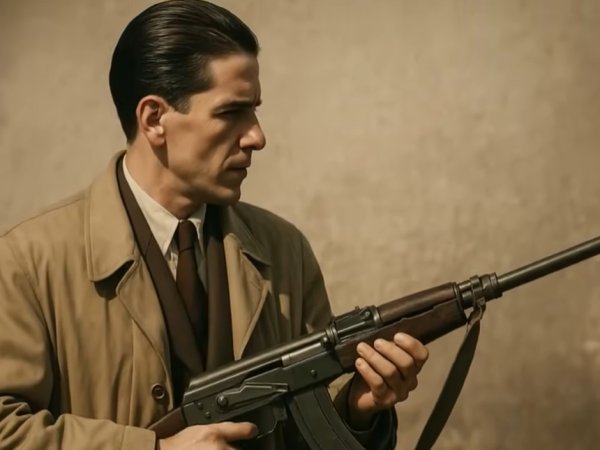
Convinced he could not rely on a compromised system, Eugen Alimănescu decided to act independently. He personally selected 22 young officers, equally committed to justice, and founded the famous Fulger Brigade. Its declared goal was clear: “the extermination of bandits and thieves from the Capital and the provinces.”
The brigade was equipped with rapid response vehicles and automatic pistols, used without hesitation in direct confrontations with criminals. Alimănescu and his men entered into an open war with the underworld, particularly in the Rahova and Ferentari neighborhoods, true strongholds of organized crime.
Extreme methods for extreme times
The commissioner knew that once arrested, many criminals were quickly released through bribes and political influence. Alimănescu’s solution was radical and at the edge of legality. He pursued, provoked, and in many cases executed them on the spot, later justifying the actions by claims of escape attempts or armed resistance.
Historian Dan Falcan explains that these methods, though illegal, were considered necessary in a city dominated by terror. Soon, criminals began to fear the Fulger Brigade, and communities across the country requested their intervention.
The press and the myth of the Iron Commissioner
Alimănescu’s deeds dominated the front pages of the era’s newspapers. Major publications dedicated columns to his activity, such as “Alimănescu’s Brigade in Action” or “Events from the Capital.” Universul newspaper described them as true “war reports” between bandits and policemen, led by “the most daring police officer the Capital has ever had.”
The commissioner often photographed his captures, alive or dead, alongside a card that read: “Bandits killed in combat with Alimănescu’s Brigade.” His public image oscillated between savior hero and sinister figure.
Major blows against organized crime
Among his most spectacular actions was the capture of the robbers who struck the National Bank in Brașov. Burglars Voinescu and Cairo had managed to steal one million dollars and 300 gold cocks. Alimănescu organized an ambush, and the two criminals shot each other during the operation.
He also captured Iancu Berilă, one of Romania’s most notorious serial killers, responsible for the deaths of 20 bakers. In 1947, Alimănescu caught him asleep, discovering a knife intended for his next victim.
In his hands fell Gică Cioc, nicknamed Balaur, Argintarul, and numerous other gang leaders.
Torture, accusations, and collaboration with the Communist regime
Alimănescu’s fame was accompanied by serious accusations regarding his interrogation methods. Reports mention brutal tortures, from hanging to simulated burnings, applied without regard for guilt. His office reportedly contained whips, weapons, and handcuffs.
At one point, he was recruited by the communists and became a member of the Romanian Communist Party. There are suspicions that the Securitate used him in operations to eliminate anti-communist resistance in Banat and Făgăraș.
The fall and mysterious death
Feared and inconvenient, Alimănescu eventually became a problem for the regime. From 1948, he was monitored, and in 1951, he fell out of favor, being expelled from the party and arrested. Convicted for abuses and crimes, he was sent to the Canal, registered under another name to protect him from former criminals he had arrested.
After two years in detention, he was released but never knew peace. Later accused of embezzlement and detained again, he died under suspicious circumstances during a transfer to Zimnicea. Officially, it was claimed he tried to escape custody. Unofficially, many believed that the head of the Fulger Brigade, whom the communists wanted eliminated at all costs, was killed.
The legacy of an impossible-to-judge figure
Eugen Alimănescu remains one of the most controversial figures in Bucharest’s history. Hero or criminal, vigilante or abuser, the Iron Commissioner permanently altered the balance of power between law and criminals. His story is perhaps the harshest proof that history is never black or white, but a succession of shades of gray, sculpted by extreme times and people willing to confront them at any cost.
We also recommend: The story of gangster Gică Cioc, the “Dragon” of Ferentari who terrorized Bucharest in the 1940s