Stars of Interwar Bucharest: Master Radu Beligan, the Descendant of Ion Creangă, Rică Venturiano, and the Titan of Romanian Theatre
- Articles
- 17 MAR 26
Interwar Bucharest was a true cultural capital of Eastern Europe, a city where theatres were full night after night and actors became genuine stars of society. In this effervescent landscape would emerge one of the greatest artists of the twentieth century: Master Radu Beligan. His longevity, talent, and versatility surpassed eras, political regimes, and generations, transforming him into a symbol of the Romanian stage.With a career of over 75 years — probably the longest in the history of Romanian theatre — Beligan was not only an actor, but a living institution. He played classical and modern roles, directed performances, taught, led theatres, and was an important figure in radio, television, and public life. Through his intellectual elegance and artistic discipline, he became a model for the younger generations of actors.
Origins, Childhood, and the Connection with Ion Creangă
Radu Beligan was born on December 14, 1918, in the village of Galbeni, Filipești commune, Bacău County, precisely on Saint Philimon’s Day — considered the protector of artists in the Orthodox tradition.
His destiny thus seems predestined for the stage. On his maternal side he had Greek origins, and on his paternal side he was a descendant of one of the brothers of the great storyteller Ion Creangă, which gave him a symbolic filiation with Romanian literary tradition.
This double heritage — Balkan and Moldavian — shaped his artistic sensitivity. In his personality could be found humor, irony, and a fine spirit of observation, but also a rare classical elegance.
Studies and the Encounter with the Great Spirits of Theatre
After high school, Beligan enrolled in the Faculty of Law and Philosophy of the University of Bucharest, but his destiny was soon to take another direction. In 1938 he became a student at the Royal Academy of Music and Dramatic Art, where he studied with the great actress Lucia Sturdza-Bulandra. Although he did not graduate from the institution, his artistic formation was decisive.
Beligan was a disciple not only of Lucia Sturdza-Bulandra, but also of the playwright Eugen Ionescu, one of the founders of the Theatre of the Absurd. This double influence — classical and modern — would define his entire career.
Later, between 1950 and 1965, Beligan himself became a professor at the Institute of Theatre and Film, contributing to the training of new generations of actors.
Debut in Interwar Bucharest
His stage career began in the midst of the interwar era, in 1937, on the stage of the Liedertafel – Alhambra – Regina Maria Theatre, in the adaptation of the play “Crime and Punishment” after Dostoevsky. A period of intense affirmation followed, with roles in diverse plays, from Romanian dramaturgy to European authors.
In the following years he performed at the Uranus – Comedia Theatre, at the Sărindar Theatre, and on the stage of the C.A. Rosetti Garden, collaborating with important directors such as Victor Ion Popa, Ion Iancovescu, or Sică Alexandrescu. This artistic mobility was characteristic of the era, when actors frequently evolved in several theatrical companies.
The roles from the interwar period already demonstrated his versatility: comedy, drama, farce, or psychological theatre. Beligan imposed himself through an elegant stage presence, impeccable diction, and the ability to build memorable characters.
The Rise on the Great Bucharest Stages
The 1940s consolidated his status as an important actor. He performed at the Tudor Mușatescu Theatre, the Majestic Theatre, the Maria Filotti – Sărindar Theatre, and the Municipal Theatre. Subsequently, his activity at the Alhambra Theatre, where he remained for six years, made him known to a wide audience.
During this period he interpreted roles in famous plays such as “The Star Without a Name” by Mihail Sebastian or “Spring Has Come” by John van Druten. At that time he also founded his own theatrical company — the Radu Beligan Company — a sign of his ambition and growing prestige.
Rică Venturiano and the Caragialian Triumph
A defining moment of his career was his entry onto the stage of the National Theatre of Bucharest, where he performed an impressive series of roles. Among these, the characters from the dramaturgy of Ion Luca Caragiale remained legendary.
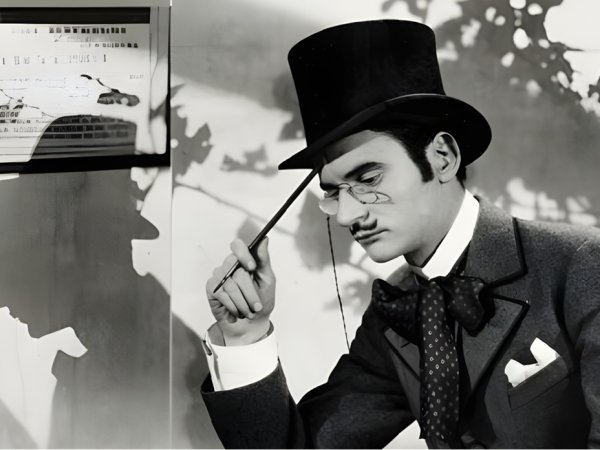
The role of Rică Venturiano in “A Stormy Night” became emblematic. Beligan managed to perfectly render the mixture of bravado, naivety, and involuntary comedy of the character, transforming it into a memorable creation.
He also interpreted Agamiță Dandanache in “A Lost Letter” and the Candidate in “Carnival Scenes,” demonstrating a special affinity for the Caragialian universe. These roles definitively consecrated him as one of the great interpreters of Romanian theatre.
A Universal Repertoire
Beligan did not limit himself to Romanian dramaturgy. He interpreted characters from Shakespeare, Goldoni, Chekhov, Gorky, Camus, Albee, or Süskind, demonstrating a rare versatility. Romeo, Richard III, Trinculo from “The Tempest,” Tuzenbach from “Three Sisters,” or Robespierre from “Danton” are only a few examples.
His phenomenal talent allowed him to approach both comedy and tragedy, classical and modern theatre. He was an actor of nuances, subtlety, and scenic intelligence.
Director, Institution Builder, and Professor
In 1961, Beligan founded the Comedy Theatre of Bucharest, which he led until 1969. Here he performed memorable roles, including characters from the Theatre of the Absurd by Eugen Ionescu.
From 1969 to 1990 he was director of the National Theatre of Bucharest, contributing decisively to the prestige of the institution. At the same time, he continued to act, direct, and promote quality dramaturgy.
Director, Television Figure, and Author
Besides acting, Beligan also distinguished himself as a director. He staged performances such as “Doctor in Spite of Himself” by Molière, “A Lost Letter” by Caragiale, or “Strangers in the Night” by Eric Assous. On television he appeared in appreciated productions, contributing to the popularization of theatre for the general public.
He also wrote several memoiristic and essay volumes, including “Pretexts and Subtexts,” “Monday, Tuesday, Wednesday…,” and “Notes of an Insomniac,” in which he reveals his reflections on art, life, and the condition of the actor.
Public Involvement and Political Life
During the communist period, Beligan also had a political career. Between 1961 and 1975 he was a deputy in the Great National Assembly, and between 1969 and 1989 a member of the Central Committee of the Romanian Communist Party.
These functions reflect the complexity of the relationship between artists and power in that era. Nevertheless, his public image remained primarily linked to theatre and culture.
The Titan of the Romanian Stage
Radu Beligan’s artistic longevity is impressive. He continued to perform until advanced ages, demonstrating rare vitality and exemplary discipline. For the public, he became the symbol of the total actor — cultivated, elegant, devoted to the stage.
He interpreted hundreds of roles from Romanian and universal dramaturgy, from William Shakespeare to George Bernard Shaw, from Carlo Goldoni to Umberto Eco, confirming his status as a universal artist.
The Legacy of a Legend
Radu Beligan remains one of the emblematic figures of Romanian theatre. He traversed almost a century of history, from interwar Bucharest to the contemporary world, without losing his elegance, refinement, and passion for art.
Through his talent, his memorable roles, and his contribution to theatrical institutions, he became a true titan of the Romanian stage. His story is not only the biography of an actor, but the living history of modern Romanian theatre — a history written with intelligence, work, and grace.
We also recommend: The stars of interwar Bucharest: Ion Talianu, from the arrogant Nae Cațavencu to the most beloved Romanian actor