Palace Vernescu, between history and legend: from the aristocratic palace of two centuries ago to the haunted casino and the luxurious restaurant of today
- Articles
- 01 SEP 26
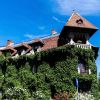
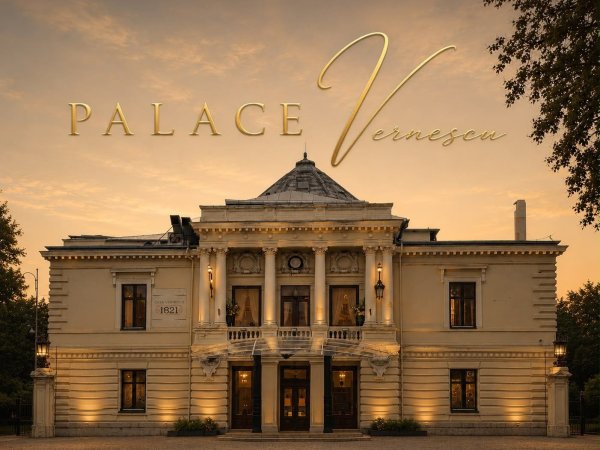
Casa Vernescu is one of the buildings that, almost without words, tells the story of Bucharest. Built at the beginning of the 19th century as an aristocratic residence, radically transformed towards the end of the century by architect Ion Mincu, subsequently used for administrative purposes, passing through periods of war and the communist regime, and after 1990 associated with the famous Casino Palace, the building at 133 Calea Victoriei has gone through almost two centuries of change. Today, Casa Lenș-Vernescu is a historic monument where the aristocratic past meets a new stage in its public life. Since August 2026, following the disappearance of the casino that operated here for more than three decades, the space has begun to be used in a gastronomic and events-oriented formula under the name Palace Vernescu, with a terrace and restaurant. The story of the building is, however, much older than the casino and, at the same time, much more spectacular. Within its walls, aristocrats, politicians, cultural figures, representatives of the state and, according to urban legends, even supernatural characters have followed one another. Precisely this combination of documented history, architecture and mysterious stories has transformed Casa Vernescu into one of the most interesting landmarks on Calea Victoriei.
From Filip Lenș's house to Gheorghe Vernescu's palace
The first stage in the history of Casa Vernescu dates back to around 1821. The construction is associated with Filip Lenș, a grand logothete, grand treasurer and an important figure in Bucharest at the beginning of the 19th century. Some sources attribute the project to an architect named Harti, while other documents and specialist works mention its attribution to Freywald. What is certain is that the building already existed around 1821 and represented one of the important aristocratic residences of the city.
The house went through difficult moments during its early decades. It was affected by fires and underwent several transformations before becoming the property of Gheorghe Vernescu. After Filip Lenș's death, the building also had military functions, being used for a period by a military unit and later by the Ministry of War.
The decisive moment in the building's evolution came in 1886, when it was purchased by Gheorghe “Guță” Vernescu, a lawyer, jurist and Liberal politician. Vernescu was not content simply to live in an old aristocratic residence. He wanted to transform it into a residence representative of his social and political status and called upon Ion Mincu to undertake the rebuilding of the house.
Ion Mincu and the transformation of the house into a sumptuous residence
Between 1887 and 1889, Ion Mincu intervened on the building and gave it the appearance that would establish it in Bucharest's memory. The architect, one of the fundamental names of Romanian architecture at the end of the 19th century, worked in an eclectic manner, combining Western influences with elements adapted to local taste.
The house was designed around an impressive central space, dominated by a large hall and a monumental staircase. Mincu also designed the servants' outbuildings in 1890, and the ensemble acquired the appearance of a true aristocratic residence. Inside, the architecture was complemented by the painter George Demetrescu Mirea, who created decorations and allegorical scenes for the ceilings.
The result is one of the most spectacular historic interiors preserved on Calea Victoriei. Marble, gilded decorations, wooden panelling, mirrors, stained glass, stucco work and painted ceilings create a setting reminiscent of the aristocratic taste of Belle Époque Bucharest. The monumental staircase, designed by Mincu, became one of the defining elements of the house.
It is no coincidence that heritage documents also emphasize the influence that French architecture of the period had on the project. Mincu created a balance between monumentality and elegance here, and the result is a building that does not resemble an ordinary urban villa, but rather a genuine palace.
Casa Vernescu, a witness to Bucharest's transformations
After the death of Gheorghe Vernescu, who died in 1900 without heirs, the building became state property. Beginning in the first decades of the 20th century, important institutions operated here, including the Ministry of Industry and Commerce and other administrative structures. The house thus ceased to be merely a private residence and became part of the administrative machinery of the Romanian state.
The interwar period, however, once again brought around the building the atmosphere of representation and social life characteristic of Bucharest's elites. Casa Vernescu became associated with social events, receptions and gatherings of the political and cultural world. According to some accounts concerning the history of the place, among the personalities who are said to have crossed the threshold of the house was also the Russian writer Leo Tolstoy, although this information should be regarded as part of the site's narrative tradition, rather than as a fact documented without ambiguity in all sources.
The Second World War, in turn, left its mark on the building. In 1944, the building was requisitioned by the Red Army, and some of the interior decorations were damaged. After the war, Casa Vernescu entered a new administrative stage, being used by state authorities and also as a protocol building.
During the communist regime, its purpose continued to be connected with state institutions. The house no longer served as a private residence, but its institutional use contributed to preserving the building until the political changes of 1989.
Where does the legend of the haunted house come from?
If documented history makes Casa Vernescu an important monument, legends have added an entirely different dimension to its story. After the building was transformed into a casino, stories began circulating more intensely about gamblers who had lost their fortunes and who, according to some versions of the legend, had taken their own lives after suffering gambling losses.
This is where the story of the “23 ghosts” that supposedly haunt the building originated. The legend says that the spirits of people ruined by gambling remained inside the house, and that at night unexplained noises could be heard, objects would move or cold drafts would appear. Another component of the myth speaks of a smell of brimstone or sulphur that was supposedly sometimes noticed near the building.
Obviously, there is no historical or scientific evidence confirming the existence of ghosts in Casa Vernescu. The story should be regarded as an urban legend, one of those narratives that develop around old buildings and gain strength as they are repeated. In this case, the palace's sumptuous setting, its complicated history and its association with gambling provided ideal ground for the emergence of such stories.
From Casino Palace to the Vernescu House's new life
After 1989, Casa Vernescu entered a new stage. The building was restored, and in 1995, Casino Palace was inaugurated on the first floor. For more than three decades, the casino became one of the best-known functions associated with the building. The historic house and the exclusive world of gambling became almost inseparable in the imagination of Bucharest residents.
Casino Palace operated for approximately 31 years, becoming a landmark for luxury tourism, businesspeople and those attracted by the spectacular atmosphere of a casino located in a historic monument. In 2026, however, the situation changed. Following legislative changes concerning the gambling industry, Casino Palace ceased its activity in Casa Vernescu at the end of August.
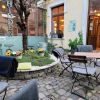
The change does not mean the disappearance of Casa Vernescu from the public life of the capital. On the contrary, in August 2026, the space began to be presented under a new identity, Palace Vernescu, with a gastronomic and events component and a terrace that makes use of both its central location and the building's spectacular architecture.
Palace Vernescu, a new chapter for the palace on Calea Victoriei
The new stage transforms Casa Vernescu into a destination where gastronomy, events and architectural heritage come together. The opening of the terrace and the development of the gastronomic space in August 2026 give the building a function adapted to the tastes of today's public, without separating its historical value from the experience offered to visitors.
One of the advantages of this formula is precisely the possibility of discovering the building's interior. For a visitor, the experience is not limited to a meal or to spending time on the terrace. The house itself becomes part of the experience, through the monumental hall, the imposing staircase, the decorated ceilings, the paintings, the marble and the other elements that made it famous. Documented architectural history confirms that these interiors were created between 1887 and 1890 under the direction of Ion Mincu, with the contribution of painter George Demetrescu Mirea.
In August 2026, the story continues in another form. Palace Vernescu brings the building back into the gastronomic and social circuit of the capital, offering the public the opportunity to spend time in a space where almost every architectural detail points towards another era. The house is no longer simply the palace of an aristocrat, the headquarters of an institution or the famous casino about which so many stories have been told. It has once again become a place where contemporary Bucharest meets its own past.
We also recommend: The oldest buildings in Bucharest. From the Old Princely Court to Manuc’s Inn and Casa Vernescu