“Music Is When I Put My Heart into Notes!” The Great Composer Giuseppe Verdi Has a Street Named After Him in Bucharest
- Articles
- 03 SEP 26
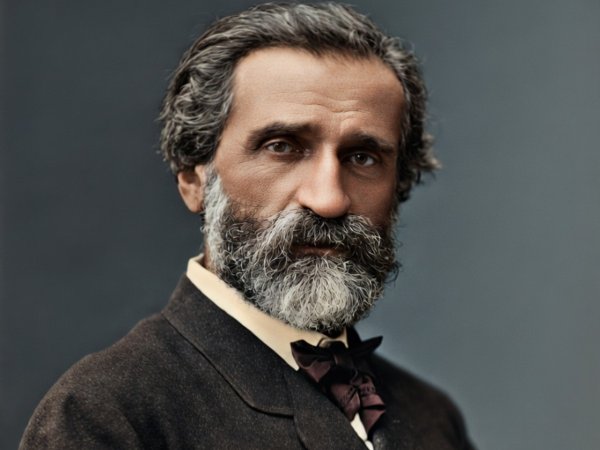
Giuseppe Verdi’s name has remained forever linked to the history of opera and to some of the most beloved works of classical music. “Nabucco,” “Rigoletto,” “Il trovatore,” “La traviata,” “Aida,” “Otello,” and “Falstaff” are just a few of the titles that made the Italian composer one of the most important figures in European culture. His music has long transcended Italy’s borders, and his artistic legacy is still celebrated on the world’s greatest stages. In Bucharest, the name of the great composer has also been preserved in the city’s street nomenclature, through a street that bears his name. It is a form of recognition for the man who transformed opera into a language of powerful emotions, human dramas, and great passions. A statement attributed to Giuseppe Verdi perhaps best sums up the way he viewed art: “For me, music is when I put my heart into notes.” Verdi’s path to fame was not a simple one, however. He was born into a modest family, rejected by the Milan Conservatory, endured personal tragedies that nearly made him give up music, and experienced painful failures before becoming one of the greatest composers of the nineteenth century. Beyond the history of opera, his story is also that of a man who continued to create even after life’s most difficult trials.
The Child from Roncole Who Discovered Music
Giuseppe Fortunino Francesco Verdi was born on October 10, 1813, in Roncole, a village located near the town of Busseto, Italy. He came from a modest family. His parents, Carlo Giuseppe Verdi and Luigia Uttini, did not belong to the privileged world of the aristocracy or to prominent artistic families, and at first there seemed to be nothing to suggest the extraordinary destiny that awaited their child.
Giuseppe’s talent manifested itself very early. At only four years old, he was already taking lessons in Latin and Italian, and later he began studying music. Among the first people to guide him was the organist Pietro Baistrocchi. Young Verdi practiced on a “spinetta,” a keyboard instrument related to the harpsichord, even though it was not in perfect condition.
Antonio Barezzi, a wealthy merchant and great music lover who was close to the Verdi family, played a fundamental role in his development. He recognized the young man’s potential and supported him in continuing his studies at a higher level. Barezzi’s assistance would prove decisive for the future composer, especially at a time when a young man from a modest family needed financial support and connections in order to enter the artistic world.
At the age of ten, Verdi began studying in Busseto, where he gained access to a more comprehensive education. By the age of fifteen, he was already collaborating with the town’s Philharmonic Society. During this period, he began composing and even wrote overtures that were performed, although some of these works were never published.
Rejected by the Milan Conservatory
One of the best-known episodes from Verdi’s youth concerns his attempt to study at the Milan Conservatory. In 1832, the young man applied for admission, determined to continue his training in Italy’s great cultural center. He was not accepted, one of the reasons being that he had exceeded the permitted age limit.
The paradox is obvious today: the institution that refused to admit the young Giuseppe Verdi would later become associated with the name of the man who went on to become one of Italy’s greatest composers. The rejection did not prevent him from continuing his education. On the contrary, he found his own path to knowledge.
Verdi studied privately with Vincenzo Lavigna, an experienced musician and former maestro at Teatro alla Scala. For several years, Lavigna helped him deepen his understanding of counterpoint and develop his technique. At the same time, the young composer became familiar with the great works of classical music and with the operas of Haydn and Mozart.
Independent study also made an important contribution to his development. Verdi focused on instrumental and choral forms and strengthened his training until he received the title of “Maestro di musica” from the town of Busseto.
In 1836, his personal life became even more closely connected to the family that had supported him. Giuseppe Verdi married Margherita Barezzi, Antonio Barezzi’s daughter. The marriage seemed to mark the beginning of a period of stability, but fate was preparing some of the most difficult trials of the composer’s life.
The Tragedies That Nearly Made Him Give Up
Verdi went to Milan with the desire to establish himself as an opera composer. In 1839, the premiere of “Oberto, conte di San Bonifacio,” his first important opera presented at Teatro alla Scala, took place. The audience’s response was positive enough for the young composer to receive new opportunities.
Behind his professional beginnings, however, lay a profound personal tragedy. His two children, Virginia and Icilio, died at very young ages. In 1840, Verdi also lost his wife, Margherita. Within a short period, the composer suffered losses that affected him deeply.
During the same period, the comic opera “Un giorno di regno” met with very little success. For an artist already devastated by family tragedies, the professional failure was an additional blow. Verdi withdrew from music and considered abandoning composition.
The history of opera might have turned out entirely differently if Bartolomeo Merelli, the director and impresario associated with Teatro alla Scala, had not intervened. He played an important role in Verdi’s return to music and offered him the libretto by Temistocle Solera for a new opera.
“Nabucco,” the Triumph That Changed His Destiny
On March 9, 1842, the premiere of “Nabucco,” initially known as “Nabuccodonosor,” took place at La Scala in Milan. The success was extraordinary and definitively changed Giuseppe Verdi’s destiny.
The opera was performed, among others, by the soprano Giuseppina Strepponi, who would become one of the most important people in the composer’s life. She would later become his wife and life partner, remaining close to Verdi during his mature years.
“Nabucco” marked the beginning of one of the most productive periods of the composer’s career. In the years that followed, Verdi worked at an impressive pace, writing numerous operas. Some achieved immediate success, while others were reassessed over time, but all contributed to the building of an unprecedented career.
The high point of this period came in 1851 with “Rigoletto,” considered one of his masterpieces. “Il trovatore” and “La traviata” followed, both released in 1853. The succession of these operas transformed Verdi into the dominant figure of Italian opera at the time.
A Composer Who Became a Symbol of Italy
Verdi’s career did not unfold separately from the major political transformations of nineteenth-century Italy. At a time when the idea of national unification was growing increasingly powerful, his name also became associated with the spirit of the Risorgimento.
The premiere of “Simon Boccanegra” took place in 1857. The work was not initially received with the enthusiasm enjoyed by some of Verdi’s other operas, but it would later be recognized as one of his important creations.
In 1859, Giuseppe Verdi married Giuseppina Strepponi. The same year was also marked by the success of the opera “Un ballo in maschera” and by his involvement in public life. Verdi was elected as a deputy and was received in Turin by King Victor Emmanuel II.
His music and name had become so well known that Verdi came to be perceived as a symbol of Italy’s national aspirations. Later, in 1874, the composer was appointed a senator in the Italian Parliament, without this permanently distancing him from musical creation.
From “La forza del destino” to “Aida” and the “Requiem”
In the second half of the nineteenth century, Verdi was already an international figure. On November 10, 1862, the premiere of “La forza del destino” took place at the Imperial Theatre in Saint Petersburg.
For the Paris Opera, he composed “Don Carlos,” which premiered on March 11, 1867. The opera would also be performed in other major European cultural centers and would confirm the composer’s international prestige.
Verdi was remarkable not only for his musical talent, but also for the rigorous way in which he defended his works. He paid close attention to the financial terms of his contracts and negotiated his fees firmly. At the same time, he insisted that his operas be presented in accordance with the score and libretto. He did not readily accept changes made by conductors, singers, or theater administrators.
This concern for his name and for the way his works were presented also reveals another side of Verdi’s personality: that of an artist aware of the value of his work and determined to protect his creations.
One of his most famous operas, “Aida,” was written in connection with the festivities surrounding the inauguration of the Suez Canal. The opera premiered later and would become one of the best-known works in the world’s operatic repertoire.
Following the death of the great writer Alessandro Manzoni, Verdi composed the “Messa da Requiem,” which was first performed in 1874. Verdi’s Requiem would become one of the most highly regarded and frequently performed compositions of its kind.
The Meeting Between Giuseppe Verdi and Ciprian Porumbescu
A particularly interesting episode connects the history of the great Italian composer with that of one of Romania’s most important musicians, Ciprian Porumbescu. In 1882, shortly before his death, Porumbescu traveled to Italy, to Nervi, on the Mediterranean coast, hoping that a milder climate would improve his fragile health.
In Italy, Ciprian Porumbescu came to the attention of the poet Marco Sala and of Arrigo Boito, a composer and librettist close to Verdi. Boito would, in fact, become the author of the librettos for the Italian composer’s last two great operas, “Otello” and “Falstaff.”
The meeting between Ciprian Porumbescu and Giuseppe Verdi remains one of the remarkable episodes in the relationship between Romanian and Italian culture. According to accounts recorded in the volume “A Violin Played in Stupca,” Porumbescu is said to have played a doina on the violin for Verdi, and the great Italian composer is said to have been deeply moved by his performance.
Verdi reportedly asked the young Romanian musician to continue and was impressed by the expressive power of Romanian music, which he had not encountered directly through travel. The episode is all the more moving because Porumbescu was then going through a difficult period due to the illness that would claim his life only a few months later.
The Final Masterpieces and Retreat to Sant’Agata
Even at an advanced age, Verdi did not end his career. On February 5, 1887, the premiere of “Otello” took place, offering another demonstration of his creative power.
The final major milestone of his career was “Falstaff,” presented at La Scala on February 8, 1893. The work represented a spectacular conclusion to a career that had spanned several decades and profoundly influenced the development of opera.
After these successes, Verdi spent increasing amounts of time at Sant’Agata, his country estate. There, he withdrew from the bustle of public life and occupied himself with simple activities. He enjoyed caring for animals, planting trees, and hunting.
There is also an almost surprising image of a man who had composed some of the most famous melodies in the history of opera: at Sant’Agata, Verdi did not want his works to be constantly hummed around him. For him, country life represented a refuge and a return to the simplicity he had known in childhood.
Throughout his life, Giuseppe Verdi received numerous distinctions and orders from several European states. This official recognition confirmed his international status and the importance he had acquired not only in Italian music, but also in European culture.
The Death of a Composer and the Birth of a Legend
Giuseppe Verdi was a private person and did not want a grand funeral ceremony. Nevertheless, the deterioration of his health became a matter of national interest. Italians followed news about the great composer with emotion, and his condition was reported constantly by the press.
Verdi died in Milan on January 27, 1901. His death caused immense emotion. The funeral took on the scale of a national event, and public participation was impressive. One of the symbolic images associated with the final ceremonies dedicated to the composer is the performance of the famous chorus from “Nabucco,” “Va, pensiero,” a work that over time became almost inseparable from the image of Giuseppe Verdi.
His artistic legacy remained immense. A century after the composer’s death, the year 2001 was marked in many parts of the world as the “Year of Verdi.” In 2013, on the 200th anniversary of his birth, events and celebrations dedicated to the Italian creator were once again held.
Today, Giuseppe Verdi’s operas continue to be performed on the world’s greatest stages and to move generations of spectators. From a child practicing on an old instrument in Roncole to the creator of universal masterpieces, his life remains one of the most impressive stories in classical music.
The fact that his name can also be found on a street in Bucharest is proof that the memory of the great artist has extended far beyond Italy’s borders. Giuseppe Verdi Street is located in northern Bucharest, in Sector 1, in the Aviației neighborhood, near Pipera Road and Dimitrie Pompeiu Boulevard. It is a street in a modern urban area, close to important office buildings and the Aurel Vlaicu metro station.
We also recommend: The composer Gioachino Rossini, the genius of comic opera and Verdi’s mentor, has a street named after him in Bucharest