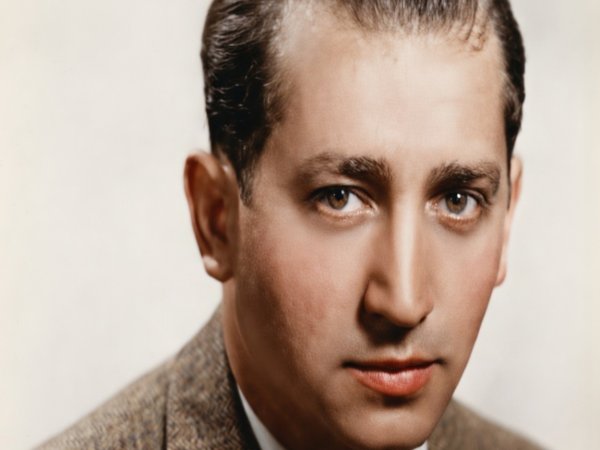
Mihail Sebastian, the Jewish child who became the “Star Without a Name” of Romanian literature, has a street named after him in Bucharest
- Articles
- 17 APR 26
Mihail Sebastian, born with the name Iosif Hechter in Brăila, into a Jewish family, became one of the important figures of interwar Romanian literature. His intellectual path began in the academic environment of Bucharest, where he studied law and philosophy. Although he initially worked as a secretary in a law office and later as a lawyer, his destiny would become definitively tied to literature and journalism.
The origin and formation of a writer who marked Romanian literature
His entry into the literary world was decisively influenced by Nae Ionescu, who was his professor and the president of his baccalaureate examination committee. Through him, Sebastian came into contact with great intellectuals of the era, including Mircea Eliade, with whom he developed a complex and long-lasting friendship. This formative period was essential in shaping a distinct literary voice, sensitive and profoundly analytical.
From the very beginning, Sebastian stood out through a lucid style and the ability to capture the social and inner tensions of his time. His volumes and novels reflected not only the realities of the era, but also his own identity and existential struggles.
Literary ascent and the novels that established him
In the 1930s, Mihail Sebastian became an increasingly well-known name in Romanian literature. He published the novel “Orașul cu salcâmi” in 1935, a work that confirmed his talent as an observer of urban life and human sensitivities. Later, he consolidated his reputation through plays and essays, as well as his involvement in journalism.
An important moment in his career is represented by the novel “Accidentul”, published in 1940, a story of deep love but also a reflection on unpredictable destiny. However, few know that this novel had a dramatic history: the original manuscript, which contained five chapters, was stolen while he was in France. Although the author was never identified, the loss was irreparable, and Sebastian was forced to rewrite the entire book from scratch.
This event was seen by those close to him as one of the many unfortunate episodes in the writer’s life, who seemed to be constantly pursued by bad luck. Nevertheless, he continued to create, demonstrating remarkable inner strength.
The playwright in the shadows and the success of “Steaua fără nume”
Starting in 1940, Mihail Sebastian’s life changed radically due to the political and social context. With the establishment of antisemitic legislation, he was forbidden from working as a journalist and had his right to practice law revoked. Moreover, his plays were banned from official stages, as he was considered unacceptable due to his Jewish origin.
In this context, in order to stage the famous play “Steaua fără nume”, Sebastian had to use a pseudonym, Victor Mincu. This work would become one of his most important dramatic creations, appreciated for its sensitivity and the universality of its themes.
At the same time, the writer was caught in a painful identity conflict. He was marginalized by antisemites for his origin, but also criticized by some Jewish circles, who considered him a traitor or too close to certain political movements. This ambiguous position turned him into a controversial figure of the era, sometimes called “the improbable Jew.”
Impossible love for Leny Caler and artistic inspiration
An essential chapter in Mihail Sebastian’s life is represented by his relationship with actress Leny Caler, one of the most beautiful and admired presences of interwar Bucharest. She had also been involved in a relationship with playwright Camil Petrescu and was already a well-known figure in artistic circles.
Sebastian fell hopelessly in love with Leny, whom he met after she read his writings and wished to meet him. The encounter between the two, however, was marked by disappointment on the actress’s side, who perceived him as timid and lacking the brilliance she had sensed in his texts.
Nevertheless, for Sebastian, Leny became a true emotional obsession and a source of artistic inspiration. He confessed in his writings the intensity of his feelings, reaching the point of considering that his emotional life depended on this relationship. In order to impress her, he wrote the play “Jocul de-a vacanța”.
Initially, the work had been conceived for Leny to play the main role, but artistic tensions and mutual disappointments led to the deterioration of the relationship. Criticism regarding the actress’s interpretation generated conflicts, and Sebastian began to see her flaws as well, which ultimately led to their separation.
Persecuted, contested, and caught between opposing worlds
Mihail Sebastian’s life was marked by a permanent tension between acceptance and rejection. Although he was an appreciated writer, he was constantly caught between two worlds that questioned him. On one hand, he was marginalized by the antisemitic regime, and on the other hand he was viewed with suspicion by certain Jewish circles.
This situation deeply affected him but also provided valuable literary material. In the novel “De două mii de ani”, Sebastian directly explores the condition of the Jew in Romanian society, in an intellectual and moral confession of great depth.
He also had controversial connections with political figures of the time, including Lucrețiu Pătrășcanu, Minister of Justice in the early years of the communist regime, which further increased the complexity of his public image.
The last day of his life and the tragic end
In 1945, Mihail Sebastian was already an established writer, a successful playwright, and a respected publicist. He seemed to have a long and promising career ahead of him. Everything ended abruptly on May 29, 1945, when he was hit by a truck on Regina Maria Boulevard in Bucharest, near a tram station.
On that day, the writer had lunch with his parents and was heading to the University, where he was to give a lecture. In his pocket he had the text prepared for this presentation.
Witnesses described the accident as violent and sudden. The vehicle, a delivery truck driven by Ion Zapodeanu, struck the writer laterally, and the impact was fatal. Although he was urgently transported to a dispensary, Mihail Sebastian died just a few minutes later, at 3:15 p.m.
His death was widely reported in the press of the time, becoming a tragic event of the era. The driver was later sentenced to two years in prison.
Literary legacy and his place in Romanian culture
Mihail Sebastian was buried in the Filantropia Jewish Cemetery in Bucharest, and his passing left a profound void in Romanian literature. His friends and contemporaries viewed his death as the end of an existence marked by difficulties but also by intense artistic creation.
Writer D. I. Suchianu noted that Sebastian’s life was filled with numerous misfortunes: fires, lost manuscripts, and personal suffering. Despite these challenges, he managed to leave behind lasting and profoundly human works.
Today, Mihail Sebastian is recognized as one of the essential voices of interwar Romanian literature, and his name is borne by a street in Bucharest as a tribute to his cultural contribution.
His legacy remains alive through his novels, plays, and intellectual confessions, which continue to be read and studied. His destiny, marked by talent, suffering, and a premature death, transforms him into a symbol of sensitivity and the tragic fate of the literary creator.
We also recommend: The stars of interwar Bucharest: Cristian Vasile, the suffering troubadour who drank Zaraza’s ashes