Kiseleff Park, the flower battle and the Romanian Infantry Monument. The history of one of the most beautiful public gardens of the Capital
- Articles
- 06 APR 26
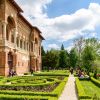
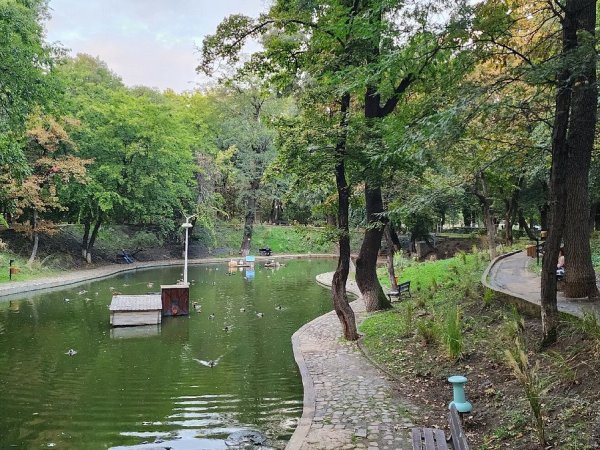
Kiseleff Park is one of the oldest parks in Bucharest and hosts the Romanian Infantry Monument. Located near Victory Square, the park is worth visiting both for its beauty and for its historical importance. The green space was arranged after 1823, the year in which Kiseleff Road was built. The landscape architect Willem Mayer is the one who made the plans according to which the park is arranged. The same architect also contributed to the arrangement of Cișmigiu Park.
The beginnings of the park and the connection with kiseleff road
Kiseleff Park has an area of 31,690 square meters and is dotted with several statues of notable personalities. The park is on the list of historical monuments in Bucharest and is among the most beautiful green spaces in the Capital.
Kiseleff Park is one of the oldest green spaces in Bucharest, its story being linked to Kiseleff Road, which was named after the Russian general Pavel Dmitrievici Kiseleff (1788–1872), the one who led the Russian military administration of Wallachia between 1829 and 1834.
During this period, the general was for a short time administrator of Bucharest. In 1832, Kiseleff ordered the clearing of the forest north of Capul Podului in order to create a road, which would bear his name. The works were completed after 1833, and the new artery quickly became a place of promenade for Bucharest residents.
The arrangement of the garden and the contribution of Wilhelm Meyer
In the middle of the 19th century, ruler Gheorghe Bibescu wanted to raise a statue in honor of Kiseleff, but the general refused, proposing instead the realization of a “work of public utility.”
As a result, in 1844, the German landscaper Wilhelm Meyer (the one who also contributed to Cișmigiu Park and Izvor) was hired for the arrangement of the future Kiseleff garden, which was inaugurated in the autumn of 1847.
The garden with linden trees, together with the road that crosses it (at that time it was simply called “the Road”), quickly became a very frequented promenade place for Bucharest residents.
The development of the area and the buffet at the road
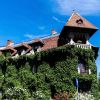
In 1891–1892, at the northern end of the park, the Buffet at the Road was built, a building designed by architect Ion Mincu. The area continued to develop, even introducing a horse-drawn tram line that had a stop in front of the Buffet. An important tradition related to the Park and Kiseleff Road was the “flower battle,” an event organized annually on Romania’s National Day, celebrated on May 10 until 1947.
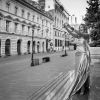
The tradition originated starting with 1895 and involved, after the military parade, elegantly dressed gentlemen and ladies gathering along the road, throwing flowers at each other from decorated carriages and automobiles, but also from balconies.
This exchange of greetings and flowers lasted until 4:00 PM, when some would go to the Buffet, others to the Royal House, while some would retreat to their homes. The road remained full of flowers, which children would gather and make into bouquets to take home. The event was a symbol of the La Belle Époque period, disappearing once that era ended.
The monuments in the park and the cultural value
Today, Kiseleff Park covers an area of 3.17 hectares and hosts numerous monuments, including the busts of Ovid, Barbu Ștefănescu Delavrancea, Nicolae Leonard, the Romanian Infantry Monument, the bust of the poet Hakim Omar Khayyam and the sculptural ensemble created by George Apostu.
To reach Kiseleff Park, one can do so from several directions: Aviatorilor, Kiseleff Road and Victory Square. The playground is located in the center of the park, protected by trees, and the safety surfaces are made of rubber and the equipment is made of wood.
The park shelters several statues representing busts of cultural figures – Ovid, Barbu Ștefănescu Delavrancea or Nicolae Leonard – as well as a complex of statues made up of four pieces, created by the sculptor George Apostu.
The Romanian Infantry Monument and the historical transformations
Also in Kiseleff is the Romanian Infantry Monument, inaugurated in the year 2000, the creation of sculptor Ion Bolborea. The monument is located at the end of a paved alley and was inaugurated on April 27, on the occasion of the 170th anniversary of the establishment of the Romanian infantry. It has a height of 10.5 meters, a diameter of 3 meters and a weight of 50 tons.
On the place where this monument now stands, several monuments existed over time. The first had the same name and was dedicated to the infantry soldiers who fell in the War of Independence and in the War of Reunification.
The monument was inaugurated in 1936 and was located in front of the statue of King Ferdinand, being made by architect N. Georgescu and sculptor Ion Jalea. It was composed of an obelisk, clad in marble in which the names of the main battles of the two wars were engraved. It was dismantled in 1939 and stored at the Military Museum in view of its later reinstallation.
After the outbreak of the Second World War, the relocation of the monument was postponed, and after the war it was found that it had disappeared. The statue of King Ferdinand was removed and destroyed in June 1948.
In 1987, in the same place, the Statue of the Soviet Liberator City was brought, this being the first monument inaugurated in Bucharest after the war. It replaced the statue of the Heroes of the Teaching Corps, made by Arthur Verona and Ion Jalea, which had been placed in 1945 on the northern side of Victory Square, between Kiseleff Road and Aviatorilor Boulevard. The statue of the Soviet Soldier did not remain long, being removed in September 1991.
Kiseleff Park today
Today, Kiseleff Park remains one of the most appreciated green spaces in Bucharest. Its location, between important boulevards such as Aviatorilor, Ion Mihalache and Ion Mincu Street, makes it easily accessible from several directions.
Its quiet atmosphere, combined with historical and artistic value, turns it into an ideal place both for relaxation and for discovering the past of the city. Whether it is about a walk on shaded alleys, a visit to monuments or a break in a natural setting, the park offers a complete experience.
Kiseleff Park is not just a green space, but a living page of Bucharest’s history, a place where every corner tells a story about the transformations of the city and about the people who shaped its identity.
We also recommend: Bordei Park, La Belle Époque and the Bucharest Elite. The History of One of the Capital's Most Stylish Gardens