How to travel efficiently by metro in Bucharest: schedule, ticket prices, lines, important hubs
- Articles
- 06 APR 26
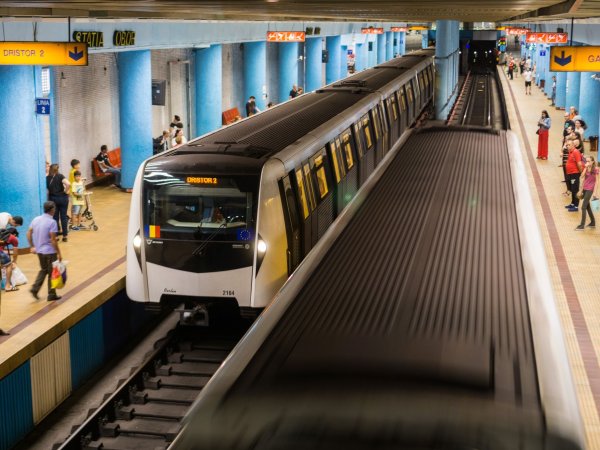
The Bucharest metro is one of the fastest and most efficient transportation options in the capital, being essential for millions of daily trips. In a city known for its heavy and unpredictable traffic, the underground network offers a stable, fast, and relatively easy-to-use alternative for both locals and tourists. To use it at full capacity, it is important to understand how the schedule works, what ticket prices are, how the lines are structured, and which are the most important transfer hubs.
The operating schedule of the Bucharest subway
The Bucharest metro runs daily, with a relatively consistent schedule adapted to the needs of commuters. In general, the first train departs around 5:00 AM, and the last trains run until close to midnight, depending on the line and direction.
During peak hours, the interval between trains can be 3–5 minutes, ensuring a constant passenger flow. Outside peak hours, waiting times increase, sometimes reaching 8–10 minutes. This regularity makes the metro one of the most predictable forms of urban transport in Bucharest.
It is important to note that on weekends or public holidays the schedule may undergo slight changes, and train frequency may be reduced, although it remains efficient for most trips.
Ticket prices and types of subscriptions
The metro fare system is simple and accessible. There are single tickets, magnetic cards, and subscriptions, each adapted to different types of travelers.
A standard ticket usually allows a limited number of trips within a defined time period. In addition, there are multi-trip cards, which become more cost-effective for those who use the metro frequently.
For commuters, weekly or monthly subscriptions are the most efficient option, offering unlimited travel during the validity period. Students and retirees benefit from discounts or special facilities, making underground transport even more affordable.
Payment can be made both at ticket machines and at ticket counters, and in recent years modern contactless payment systems have been introduced, simplifying access to stations.
The structure of Bucharest metro lines
The Bucharest metro network is organized into several lines, each with a clear route and different roles in connecting the city.
Line M1 is one of the most important, crossing the city from east to west and linking densely populated neighborhoods. It is an essential line for commuters because it intersects many other lines.
Line M2 connects the north to the south of the city and is one of the busiest lines. It links major residential areas with the capital’s financial center and is often considered the backbone of the network.
Line M3 connects the east and south-west of the city, passing through industrial and residential areas. It is an important line for residents of peripheral districts.
Line M4, although shorter, plays an essential role in connecting developing areas with the city center.
Line M5 is the newest and most modern, serving mainly the Drumul Taberei neighborhood, a densely populated area that was previously poorly connected to the metro network.
Important interconnection hubs
One of the major advantages of the Bucharest metro is the existence of important interchange hubs, where several lines intersect. These stations are essential for traffic flow and for efficiently connecting the city.
Piața Unirii station is the most important hub in the network, where several lines intersect. It is a central, heavily trafficked station that allows quick transfers between different parts of the city.
Piața Victoriei station is another strategic point, connecting lines M1 and M2. It is located in an administrative and business area, making it extremely important for commuters.
Eroilor station also plays an essential role, especially after network expansions, becoming a key connection point between major lines.
Other relevant hubs include Basarab and Gara de Nord, the latter being the main connection point between national rail transport and the capital’s metro network.
Tips for efficient use of the metro
To use the Bucharest metro efficiently, it is important to avoid peak hours, especially between 7:30–9:30 AM and 5:00–7:00 PM, when passenger flow is at its highest.
Planning your route in advance can save significant time, especially when transferring between lines. Mobile transport apps and digital maps are useful navigation tools.
It is also recommended to keep your ticket or card until exiting the station, as inspections can occur at any time.
For tourists, the metro is a safe and relatively easy-to-use option, especially on main lines that connect the city center with key areas of interest.
Advantages of the metro compared to other means of transport
The Bucharest metro offers a major advantage over surface transport: avoiding road traffic. In a congested city where traffic jams are frequent, the metro ensures consistent and predictable travel times.
In addition, the network is relatively well connected, allowing fast access between distant districts. Comfort is also an important factor, especially compared to buses or trams during peak hours.
Another advantage is the high frequency of trains, which reduces waiting times and enables efficient urban mobility.
Modernization and the future of the metro network
In recent years, the Bucharest metro network has undergone a modernization process, including line extensions and the introduction of new trains. Line M5 is a clear example of these investments, demonstrating the direction of urban infrastructure development.
Future plans include expanding the network into new areas of the city and modernizing existing stations. These projects aim to reduce pressure on surface traffic and improve urban mobility.
The metro as the backbone of Bucharest mobility
The Bucharest metro is more than just a means of transport; it is an essential infrastructure for the functioning of the city. Through its network of lines, important hubs, and accessibility, it manages to efficiently and quickly connect different parts of the capital.
Understanding how the schedule, fares, and routes work allows for much more efficient use. For both residents and tourists, the metro remains the fastest and safest way to cross Bucharest, a city in constant motion.
We also recommend: What it’s like to live along each metro line in Bucharest: rhythm, atmosphere and neighborhoods