From Pitești to Bacău: 60 Years of Highways Out of Bucharest
- Articles
- 31 AUG 26
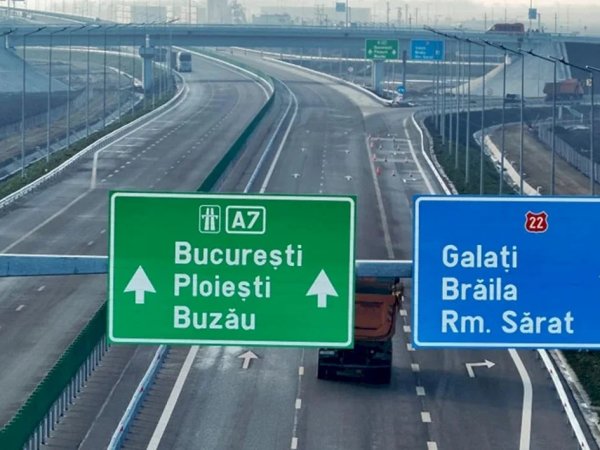
As of August 31, 2026, drivers leaving Bucharest for Bacău have, for the first time, an unbroken highway route: A3 to Ploiești, then A7 up to the ring road junction at Bacău. The new section, Adjud–Bacău South, runs 47.10 kilometers and was built by UMB, a Romanian contractor. Roughly 300 kilometers between the capital and the heart of Moldavia now take about two hours, down from a route that used to run through national roads better known for crashes than speed.
It's worth putting that in context. Bucharest hasn't always had highways, and getting to this point took a lot longer than the headlines on any given opening day suggest.
The first one, to Pitești
It started on February 4, 1967, when construction began on the Bucharest–Pitești highway, designed by the Institute for Road, Rail, Naval and Air Transport Design at Nicolae Ceaușescu's direct request. The highway ran 96 kilometers and was designed for a speed of 140 km/h, an unusually high figure for the time — the official reasoning was that it would cut down on drowsy driving over long distances. Construction took five years; a single lane in each direction opened to traffic in April 1970, and the full highway, both lanes, went into service in 1972.
It stayed the country's only highway for a long time. The 1967-1969 IPTANA study called for a 3,200-kilometer national network by the end of the century. Romania didn't reach even a fraction of that figure until after 2010.
The Sun Highway, the one that took a quarter century
The second major route out of Bucharest was also planned under communism: the link to Constanța, known today as the Sun Highway. Its first stretch, Fetești–Cernavodă, about 18 kilometers with bridges over the Borcea branch and the Danube, opened in 1987. The rest sat unfinished for years after the Revolution.
Construction picked back up only in the 2000s: the Bucharest–Drajna section was done in 2004, and Drajna–Cernavodă took from 2003 to 2008. The highway became fully drivable along its nearly 202-kilometer length only on July 19, 2012 — 25 years after that first stretch, and six presidents removed from the project's start: Ceaușescu, Iliescu, Constantinescu, Băsescu, plus two acting heads of state. The same day also saw the Bucharest–Ploiești link, the future A3, open in full along its 62 kilometers between the two cities' ring roads.
What didn't work, and what did this time
Not every project shared A1's or A2's fate. The continuation of A3 toward Brașov, through Comarnic, is a textbook stalled project: feasibility studies date back to 2002-2006, the route has been changed more than once, a public-private partnership with the firm Vinci collapsed for lack of financing, and as of August 2026 the total length of A3 actually open to traffic was just 215 kilometers out of a planned 584. The Transylvania Highway, the northern half of the same project, has its own history of sections opening in fragments since 2009.
The link to Moldavia officially started as a project in 2014, under the name A7, terminating at Siret. As a need felt by people in the region, the idea was over 30 years old. Major construction began in 2022, pushed along by the strict deadlines tied to PNRR funding. With the section toward Bacău now open, 241.62 of the planned 319 kilometers of A7 between Ploiești and Pașcani are in service.
The difference from A1 or A2 isn't really the pace of construction — A7 has its own delays and unfinished sections too — it's that, for the first time, a major route out of Bucharest toward one of the country's historic regions is closing in on completion within a few years, not a few decades. Whether the rest of the site keeps up remains to be seen.
Photo: Cristian Pistol/Facebook