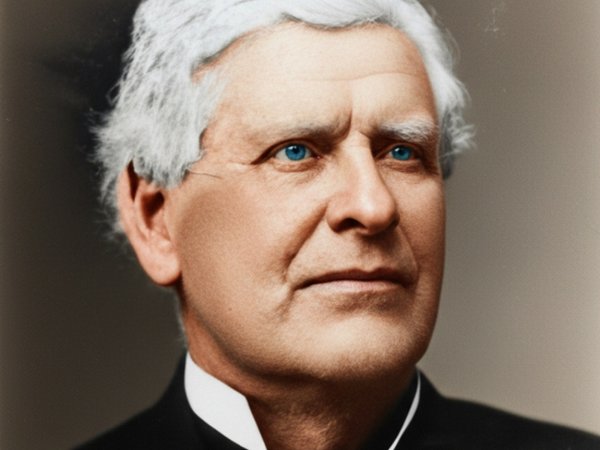
Famous Boulevard Names: Ion Ionescu de la Brad, the First Romanian Agronomist Engineer, the Scholar Who Loved Politics
- Articles
- 24 FEB 26
The history of modern Romania preserves the names of personalities who decisively contributed to the development of society, even if today they are known especially through the names of streets or boulevards. Among them is Ion Ionescu de la Brad, rightly considered the founder of Romanian agronomic education and one of the most important promoters of agricultural modernization. Scholar, professor, economist, and politician, Ion Ionescu de la Brad combined scientific research with social activism, always being concerned with the fate of the peasants and with rural development.
Childhood and the Formation of a Future Scholar
His life was marked by intense study, political activity, and ambitious projects, all carried out in an era in which Romania was taking its first steps toward modernity. Although he was a passionate researcher, Ion Ionescu de la Brad could not remain far from political life, convinced that scientific progress must be supported by social and economic reforms. Thus was born the image of the engaged scholar, of the man who loved politics because he saw in it an instrument of change.
Ion Ionescu de la Brad was born on June 24, 1818, in the town of Roman, under the name Ion Isăcescu. He came from a family with a religious tradition, both parents being children of priests. His father, Ion Isăcescu, was an economos and descended from a clerical family, and his mother, Safta or Elisabeta, was the daughter of another priest from Roman. The environment in which he grew up was one dominated by religious education and discipline, things that deeply influenced his formation.
The name under which he remained known in history is not, however, the one from his birth certificate. During his studies at the Princely School in Roman, one of his teachers, the schoolmaster Verescu, entered him in the register with the name “Ionescu,” thus indicating that he was the son of Ion. This patronymic was to accompany him throughout his entire life, becoming the name under which he would enter history.
Ion Ionescu de la Brad remembered the years of childhood with emotion, describing them in a small autobiography published in 1889, entitled “My Life by Myself.” He recounted how he learned Greek at the school near the Bishopric, Romanian at the Princely School, and church music at Precista. As a child, he actively participated in religious services, reading from church books, singing, and helping the priest in all duties.
At the age of seven he was sent to school, and later his father took him to Iași, where he attended the school at Three Hierarchs. This stage was decisive for his intellectual development, because it brought him into contact with the cultural environment of Moldavia.
Studies and the Beginnings of Agronomic Education
Ion Ionescu de la Brad attended the courses of the Mihăilean Academy in Iași, one of the most important educational institutions of the era. Here he formed the foundations of his scientific knowledge and began to take an interest in agriculture, the field that would define his entire career.
His talent and seriousness brought him a study scholarship in France, a rare opportunity in those times. In the West he studied viticulture in the Champagne region, where he was able to observe modern methods of vine cultivation. Then he continued his studies at the Sorbonne, coming into contact with the scientific and economic ideas of modern Europe.
The French experience radically changed his perspective on agriculture. Ion Ionescu de la Brad understood that rural development depends on the application of scientific methods and on the education of peasants. This conviction was to become the foundation of his later activity.
After returning to the country, he became a professor at the Mihăilean Academy, where he taught between 1842 and 1848. He is considered the first professor of agricultural sciences in Romania, contributing decisively to the appearance of agronomic education. Through his teaching activity, he formed a generation of young people interested in agricultural modernization.
Political Involvement and the Revolution of 1848
Besides scientific activity, Ion Ionescu de la Brad was also attracted to political life. He joined the group of young intellectuals who advocated for the transformation of Romanian society. Among them were personalities such as Nicolae Bălcescu, Mihail Kogălniceanu, Vasile Alecsandri, and Costache Negri.
These intellectuals elaborated a program of political and social reforms, which aimed at the modernization of the state and the improvement of the situation of the peasants. Ion Ionescu de la Brad actively participated in the Revolution of 1848, holding the position of vice-president of the Property Commission within the Provisional Government.
His political involvement had serious consequences. After the defeat of the revolution, he was exiled to Constantinople, where he was to spend eight years. Far from the country, however, he did not abandon his scientific concerns.
During the period of exile he continued to study agriculture and rural economy. He was appointed imperial expert and adviser and became director of the Agricultural School at San-Stefano. This experience gave him the opportunity to put into practice his ideas about the organization of agriculture.
Return to the Country and the Agrarian Reform
Ion Ionescu de la Brad returned to Moldavia in the year 1857, resuming his teaching activity at the Mihăilean Academy. In the same year he became the first director of the Statistical Society of Moldavia, an important institution for the knowledge of the economic realities of the country.
His activity was not limited to the academic environment. He founded between 1861 and 1863 the newspaper “The Romanian Peasant,” a publication dedicated to the problems of agriculture and rural life. Through his articles, he advocated for the improvement of the living conditions of the peasants.
During this period he was consulted by Prince Alexandru Ioan Cuza in the drafting of the law for agrarian reform. His ideas contributed to shaping one of the most important social reforms of the nineteenth century.
Later he was appointed Inspector General of Agriculture. From this position he organized agricultural exhibitions and competitions, established nurseries, and promoted modern cultivation methods. He led for a period the Agricultural Institute at Pantelimon and taught agriculture at the Normal School in Bucharest.
His intense activity was not without conflicts. His permanent criticisms of the injustices suffered by peasants disturbed the authorities. In the year 1869, his position as Inspector General of Agriculture was abolished.
The Estate of Brad and Agricultural Projects
After the end of his administrative career, Ion Ionescu de la Brad dedicated himself to practical projects. Together with his brother Nicolae Ionescu, a renowned lawyer and former minister of foreign affairs, he bought from the state the estate at Brad, located in a village from the former Roman county.
From the moment he became owner, he added to his name the appellation “de la Brad,” under which he was to remain known. The estate became the place where he put into practice his ideas about the organization of agriculture.
He established here a small model farm, intended for peasants with modest resources, but also a large model farm, intended for important agricultural exploitations. He also organized an agricultural school, in which young people could learn modern cultivation methods.
These initiatives showed his conviction that agricultural progress must begin from education and practical example. The estate at Brad became a true agricultural laboratory.
Here he also spent the last years of his life, dealing with research and writing.
Scientific Work and International Recognition
Ion Ionescu de la Brad was a prolific author, publishing works about agriculture, rural economy, and statistics. One of his most important books is “Romanian Agriculture from Brad,” in which he presented the results of the experiments carried out on his estate.
He represented Romania at numerous international congresses and exhibitions, contributing to the promotion of Romanian agriculture in Europe. His activity was appreciated also abroad.
In the year 1884 he became a corresponding member of the Statistical Society of London, a recognition of his scientific contributions. This distinction shows the prestige he enjoyed in academic circles.
Due to his vast activity, Ion Ionescu de la Brad is considered the founder of agronomic education in Romania and one of the pioneers of agricultural modernization.
The End of Life and the Legacy
Ion Ionescu de la Brad died on December 16, 1891, on his estate at Brad, the place that had become his home and research laboratory. In his autobiography, written two years before his death, he described the path he had traveled from the modest child, son of a priest, to the respected landowner and recognized scholar.
He considered himself a man who rose through work and perseverance, transforming his destiny through education and passion for science. The story of his life perfectly illustrates the spirit of an era in which Romania was beginning to modernize.
As a sign of respect for his contributions, the Agricultural High School at Horia, near Roman, bears his name. Streets and boulevards in many Romanian cities recall the one who laid the foundations of modern agriculture.
Ion Ionescu de la Brad remains an example of an engaged scholar, of an intellectual who was not satisfied only with research, but who wanted to change society. Through his activity, he demonstrated that science and politics can go together when the goal is the good of the community.
We also recommend: Famous boulevard names: Constantin Brâncoveanu, the Prince of Gold, the ruler beheaded for his faith