Ermil Pangrati, the father of the Romanian school of architecture, has a street named after him in Bucharest
- Articles
- 17 SEP 26
In Bucharest, there are streets that bear the names of people known by almost everyone and streets dedicated to personalities whose contribution to the development of Romania has remained, over time, mainly in the memory of specialists. Ermil Pangrati Street, in the northern part of the capital, belongs to the second category. The name on the street sign belongs to one of the people who contributed decisively to transforming Romanian technical and architectural education into a modern university system.
Who was Ermil Pangrati?
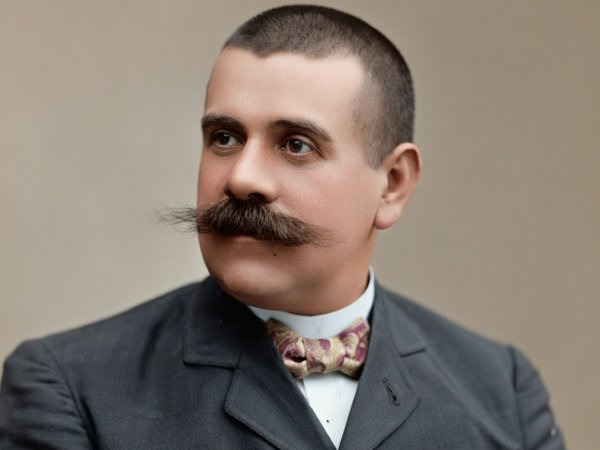
Ermil A. Pangrati (July 21, 1864 – September 19, 1931) was an engineer, mathematician, university professor, rector of the University of Bucharest, director of the School of Architecture and, for a short period, Minister of Public Works. He also had important interests in the fields of the history of science, heritage and the organization of higher education. The “Ion Mincu” University of Architecture and Urbanism today includes him among the leaders of the School of Architecture in Bucharest, Pangrati holding this position between 1904 and 1931.
His story is connected to a period when Romania was trying to build its modern institutions, while the training of engineers and architects was becoming an essential condition for the development of cities, infrastructure and administration. In this context, Pangrati understood that modernization could not be achieved only through projects and constructions, but had to begin in universities and through the training of specialists.
From Iași to the great technical schools of Europe
Ermil Pangrati was born in Iași, on July 21, 1864. The Museum of the University of Bucharest lists him among the professors of the Faculty of Sciences born in Iași, confirming his date of birth as July 21, 1864. He came from a family with important connections in the military and political environment of the period, his father being Colonel Gavril Pangrati, while his mother, Eufrosina Cuza, was related to Alexandru Ioan Cuza.
He completed his first stages of education in Iași and continued his training in the field of sciences. For a young man interested in mathematics, engineering and technology, Paris represented, during the last decades of the 19th century, one of the great European centers of professional training. Pangrati arrived in the French capital and studied at the École Nationale des Ponts et Chaussées, the prestigious institution dedicated to training engineers in bridges and roads.
The French experience was to decisively influence his conception of education. It was not merely about acquiring technical knowledge, but about training a specialist capable of working within a modern institutional system. After returning to Romania, Pangrati worked within the General Directorate of the Romanian Railways, holding positions as a traction inspector in Craiova, Bucharest and Iași.
His engineering career was, however, only one of the stages of his path. In 1893 he began his teaching activity at the University of Iași, where he taught geometry, and in 1894 he arrived at the University of Bucharest, where he became professor of descriptive geometry. A work dedicated to the history of the University of Bucharest describes him as an engineer graduated from the Paris School of Bridges and Roads and shows that, from 1894 until his death, he served as professor of descriptive geometry in Bucharest.
This was the beginning of an almost four-decade-long activity dedicated to organizing and modernizing Romanian technical education.
The man who organized the modern school of architecture
Ermil Pangrati's name is particularly connected with the development of Romanian architectural education. Before the state organized a national school, there had been a private initiative by architects. In 1892, the Society of Romanian Architects decided to establish a School of Architecture, which functioned until 1897 under the guidance of Ion N. Socolescu. In December 1897, the school was nationalized and transformed into the National School of Architecture, with a five-year duration, being headed by Ermil Pangrati.
This moment was essential. Romania needed architects trained within a stable institutional framework, while architecture had to move beyond the status of a simple profession and consolidate itself as an academic discipline. Pangrati contributed to this transformation through the organization of study programs, the development of the school's structure and the bringing of architectural education closer to European models.
The official information of the “Ion Mincu” University of Architecture and Urbanism shows that Pangrati headed the School of Architecture from 1904 until 1931, after the institution had initially been led by Constantin Stăncescu and George Mirea. This period of more than a quarter of a century explains why his name is so closely connected to the consolidation of the school.
Important architects of the period were associated with the institution, including Ion Mincu and Petre Antonescu. For Pangrati, however, the training of architects could not be separated from knowledge of heritage. He supported research into historic monuments and the involvement of students in producing surveys and documentation. The Digital Library of the “Mihai Eminescu” Central University Library in Iași preserves, among his works, those dedicated to the “graphic surveys and photography of historic monuments,” published in 1907.
Through this concern, architectural education became directly connected to heritage preservation. The student was not only supposed to learn how to design a new building, but also to understand historic constructions and the characteristics of Romanian architecture.
Professor, rector and reformer of the University of Bucharest
Pangrati's activity was not limited to the School of Architecture. At the University of Bucharest, he became one of the important figures in academic administration. He was rector during two periods, 1911–1912 and 1923–1929. The Museum of the University of Bucharest also confirms September 19, 1931, as the date of his death in Bucharest.
During his time as rector, he was concerned with the development of the institution and the modernization of the conditions in which university activity took place. For him, the university had to be more than a place where courses were transmitted. Laboratories, material resources, administrative organization and the connection between research and education were part of the same modernization project.
The list of rectors published by the University of Bucharest explicitly mentions Ermil Pangrati for the 1911–1912 mandate. Other university sources confirm his second period of leadership, from 1923 to 1929.
This dual perspective, as professor and administrator, helped him understand the problems of Romanian education at the level of the entire system. Pangrati supported the idea of well-organized university education, connected to the country's economic and technical development.
A brief passage through Romanian politics
His university activity did not keep him away from public life. Ermil Pangrati was a deputy and senator and entered government administration for a period. In 1912, in the government led by Titu Maiorescu, he held the position of Minister of Public Works.
His engineering experience made infrastructure a natural field for him. At the head of the ministry, Pangrati had the opportunity to participate directly in the administration of a field in which technical training and political decision-making came together.
His ministerial position was, however, a short-lived one. His most consistent contribution remained in the field of education and university institutions, where he worked for decades.
The books through which he supported the modernization of education
Pangrati was not only a professor and administrator, but also the author of studies and works dedicated to education, science and architecture. The Digital Library of the “Alexandru Ioan Cuza” University of Iași preserves many of his writings, making it possible today to reconstruct an important part of his intellectual activity.
Among the titles that illustrate his concerns are “The New Direction of Our Higher Scientific Education,” published in 1903, “Fine Arts Education and Its New Organization,” from 1908, as well as works concerning technical and polytechnic institutes. He also addressed the issue of universities, publishing the series “Strengthening the Universities” in 1905.
These writings reveal his constant concern with consolidating Romanian higher education. Pangrati believed that the development of a modern country depended on the existence of institutions capable of training specialists and, in turn, producing knowledge.
One of his important concerns was also the relationship between tradition and modernity in architecture. In 1931, in “The Progress of Romanian Architecture,” he continued to support the need for an architecture connected to local tradition, but without isolation from European technical and cultural developments. The idea summarizes, in a way, his entire activity: modernization should not mean abandoning identity, but using modern tools for its development.
Ermil Pangrati Street in Bucharest
Today, the memory of the professor is also preserved through a discreet urban landmark: Ermil Pangrati Street in Bucharest. The street is located in the northern part of the capital, in the area near Charles de Gaulle Square and the Romanian Television headquarters. Its name can easily go unnoticed in a city where thousands of streets bear the names of historical personalities.
For the history of Bucharest's academic world and for the history of Romanian architecture, however, this name has a special significance. It recalls the man who spent most of his professional life building institutions, study programs and generations of specialists.
More than a street, the name represents the connection between the modern city and the period when Romania was building its university system. And the fact that Pangrati is today included in the official history of the School of Architecture in Bucharest, alongside personalities such as Ion N. Socolescu, Constantin Stăncescu, George Mirea and Petre Antonescu, demonstrates the scale of his institutional role.
In a city that preserves his name on a street in the northern part of the capital, Ermil Pangrati thus remains connected to a less spectacular legacy at first sight, but a fundamental one: the idea that a modern Romanian architecture cannot exist without a strong school, without research and without teachers capable of passing knowledge on to future generations.
The legacy of an institution builder
Ermil Pangrati died in Bucharest on September 19, 1931, at the age of 67. The Museum of the University of Bucharest records the date of his death in its register of professors of the Faculty of Sciences. His death occurred precisely in the year when the school whose organization and consolidation he had decisively contributed to entered a new institutional stage, becoming the Academy of Architecture.
In retrospect, his career is impressive not because of a single famous building or a single position, but because of his ability to establish order and develop institutions. He was an engineer, but chose to invest heavily in education. He was a mathematician and professor, but became involved in architecture and heritage preservation. He was a rector and a minister, yet his most lasting influence can be found in the School of Architecture.
The “Ion Mincu” University of Architecture and Urbanism preserves him in its institutional genealogy as one of the historic leaders of the School of Architecture, where he worked from 1904 to 1931. And his documents and works preserved in university library collections demonstrate how broad his concern was for education, science, architecture and heritage.
For this reason, the title of “father of the Romanian school of architecture” should primarily be understood through the perspective of his role as an institutional organizer and builder. Pangrati was not the architect of a famous building, but one of the people who contributed to educating those who would go on to design modern Romania.
In the city that preserves his name on a street in the northern part of the capital, Ermil Pangrati thus remains connected to a legacy that is less spectacular at first glance, but fundamental: the idea that a modern Romanian architecture cannot exist without a solid school, without research and without teachers capable of passing knowledge on to future generations.
We also recommend: Architects who shaped Bucharest: Ion Mincu, the “father” of the neo-Romanian style, built his own house with money borrowed from City Hall