Car vs. Public Transport in January: Which Option Actually Saves You Time in Bucharest
By Bucharest Team
- Articles
- 16 JAN 26
In January, choosing how to get around Bucharest is no longer a matter of comfort—it’s a matter of efficiency. Cold weather, slower traffic, and cumulative delays significantly change travel times across the city. For many residents, the same question comes up every morning: do you get there faster by car or by public transport?
There is no universal answer. It depends on the route, the time of day, and the type of public transport involved. January, however, makes these differences much more visible.
The private car: a sense of control, unpredictable timing
In winter, driving offers the illusion of control: you leave when you want, you don’t wait in the cold, and you avoid transfers. In practice, January significantly erodes these advantages.
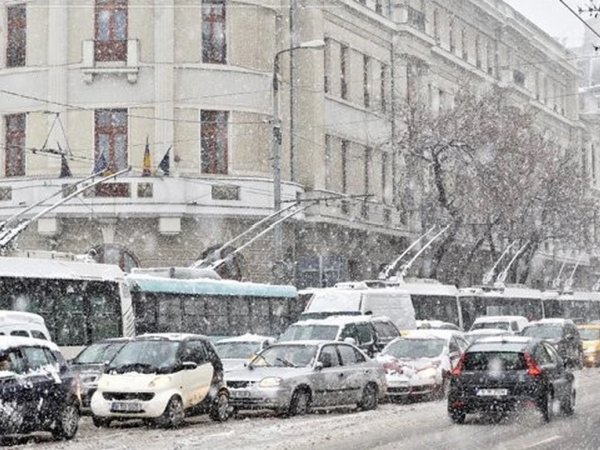
Traffic slows down even on days without snow. Cold starts, reduced morning visibility, and increased driver caution all contribute to lower average speeds. Any minor incident—a car stalled at an intersection, a bus stopping longer than usual, a blocked traffic light—spreads quickly through the network.
Another often-overlooked time cost is parking. In January, finding a free, accessible, and safe parking spot can easily add 5–15 minutes to each trip, especially in central or office-heavy areas.
Practical takeaway:
Driving can be faster over short distances or outside peak hours, but in January it quickly becomes a source of lost time during busy intervals.
Public transport: slower at first, more stable overall
Public transport in Bucharest continues to operate throughout the winter, though with greater variability. Buses and trams may experience delays when leaving depots, and stations are more crowded during peak hours. Even so, once vehicles are on route, total travel time tends to be more predictable than by car.
Lines that benefit from dedicated lanes or segregated infrastructure—such as the metro and trams running on their own tracks—are the most efficient options in January. They are not directly affected by road congestion and allow for more reliable travel-time estimates.
Buses and trolleybuses are more exposed to traffic conditions, but they can still be a faster option on routes where parking is difficult or practically impossible.
Practical takeaway:
Public transport performs better in terms of predictability, especially on longer routes and during peak hours.
Peak hours: where the real difference appears
In the morning (7:30–9:00) and in the late afternoon (16:30–18:30), January amplifies all of the city’s weak points. During these intervals:
- private cars lose time in traffic and while parking,
- public transport loses time in stations but often recovers it once in motion.
For commuters crossing large parts of the city, the metro remains consistently the fastest option in January.
Which option actually saves time
- Short distances, nearby neighborhoods: driving can be quicker if parking is guaranteed.
- Long routes, cross-city travel: public transport—especially the metro—is more efficient.
- Central areas: public transport combined with walking saves time compared to searching for parking.
- Flexible schedules: avoiding peak hours makes driving more competitive.
January doesn’t fundamentally change the rules of mobility in Bucharest—it simply makes them clearer. Driving offers comfort but loses on predictability. Public transport involves waiting and cold exposure, but gains in time stability.
For those who want to arrive on time— January makes one thing clear: it’s not the mode of transport that matters most, but the context in which it’s used.