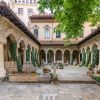
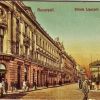
Calea Văcărești, the story of one of the oldest arteries in Bucharest. The princely road connected the center of the Capital to the famous monastery
- Articles
- 18 FEB 26
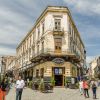
Calea Văcărești is one of the oldest arteries of Bucharest, a street that, for centuries, linked the city center to the southern areas and that underwent dramatic transformations over time. Its story begins long before Bucharest acquired the appearance of a modern capital, in a period when the city was still a settlement dominated by boyar courts, churches, and streets paved with wooden beams.
The origins of an artery with medieval roots
On the site where Calea Văcărești stands today, decisive battles for the history of Wallachia were fought more than five hundred years ago. In the year 1512, the army led by the ruler Vlad cel Tânăr, also known as Vlăduț, confronted the Ottoman troops that had invaded from the south.
The battle took place in the Văcărești area, at that time a village on the outskirts of Bucharest, among vineyards and agricultural lands. The conflict ended tragically for the ruler, who was defeated, captured, and killed by the Ottomans, an episode recorded by the historian G.I. Ionescu Gion.
The Văcărești area was to remain, from that time on, a space with a special historical charge. From a battlefield located at the periphery, it gradually transformed into an essential artery for the urban development of the city.
From princely road to strategic link between center and south
After the consolidation of the city as a princely residence, especially with the raising of the Princely Court in the center of Bucharest by Mircea cel Bătrân, the Văcărești area began to gain strategic and symbolic importance. Many boyars lived here, and the proximity to the center made this road one frequently used by the princely retinue.
Calea Văcărești was arranged and paved with beams, like the main streets of the city. Its initial purpose was to connect the Sfânta Vineri church in the city center with Mănăstirea Văcărești, one of the most impressive monastic ensembles in Wallachia. The road thus became a direct axis between the administrative and religious center of the Capital and its southern part.
During the interwar period, Mănăstirea Văcărești was transformed into a prison, and later, during the communist regime, it was demolished. With its disappearance, one of the fundamental symbolic connections of Calea Văcărești with its spiritual past was also broken.
Transformations of route and urban landscape
Over time, the route of Calea Văcărești was considerably modified. If at the beginning of the 20th century the artery stretched from Calea Călărașilor to Văcărești Prison, today it is almost twice as short, stopping at its meeting with the Dâmbovița. Initially, the street had a winding route, passing sometimes on the left, sometimes on the right of the river, and intersecting picturesque areas, including the famous Mandravela tavern.
This part of the city gradually became an important center of the Jewish community in Bucharest, especially in the Văcărești–Dudești area. It was not about the financial elite, which had already moved to the central and prosperous areas of the city, such as Doamnei or Smârdan, but about an active middle class involved in small businesses and trade.
The writer Isac Peltz finely describes the differences between the wealthy Jews, integrated into the bourgeois life of the Capital, and those who remained on Calea Văcărești, tied to tradition and to the neighborhood.
Along the street there were lined up modest shops, with goods displayed almost up to the roadway: fabrics, silks, groceries with simple products, taverns with a provincial air, and neighborhood cinemas with posters faded by rain. Tailoring and hat-making workshops completed the atmosphere of a lively space, but far from the brilliance of the center.
Modernization, resistance, and urban contrast
During the interwar period, the authorities started an extensive process of sanitation and drainage of the narrow streets around Calea Văcărești. The mud and puddles that formed after every rain were eliminated, and the area began to acquire a more orderly and sanitary appearance. Modernization was part of a broader effort to transform Bucharest into a European capital.
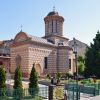
However, not all residents looked enthusiastically at these changes. The patriarchal priest of the Sfântul Nicolae de la Jignița church, a place of worship built in 1722 and one of the oldest in the city, opposed the paving of the area around the church. While other churches benefited from small squares, parks, and electric lighting, this area remained unchanged, becoming, around 1936, a true “time capsule.” In contrast with the city undergoing an intense process of urbanization, here a patriarchal, quiet, and slightly archaic atmosphere was preserved.
The communist mutilation and the loss of historical identity
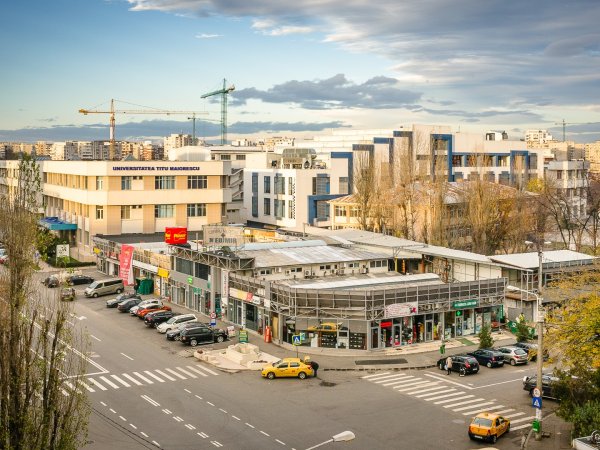
After the Second World War and the establishment of the communist regime, Calea Văcărești entered a dramatic stage of its existence. The process of urban systematization meant the demolition of many old houses, some dating from around 1800. The architectural charm of the area, given by low buildings with shops at the street front and inner courtyards, was replaced by massive apartment blocks built in a standardized style.
At the same time, the route of the street was shortened and radically modified. The section between the Timpuri Noi area and Mărășești Boulevard was integrated into the new Mircea Vodă Boulevard, redrawing the map of the southern part of the Capital. Calea Văcărești thus lost not only its original length, but also the historical continuity that linked it to the monastery and to its medieval past.
Today, few elements still recall the old artery that directly connected the center of Bucharest with Mănăstirea Văcărești. Nevertheless, beyond architectural and urban transformations, Calea Văcărești remains a space charged with memory. Beneath the modern asphalt lie successive layers of history: battlefields, princely road, Jewish neighborhood, modernized interwar area, and finally, communist boulevard.
The story of this artery is, in fact, a synthesis of the history of Bucharest itself — a city always situated between tradition and modernity, between preservation and demolition, between memory and oblivion.
We also recommend: The story of the Tineretului neighborhood: Calea Văcărești, the Manu Cavafu district, and Queen Marie’s favorite florists