Bucharest beyond the brochures: five pieces of the city that don’t ask for attention
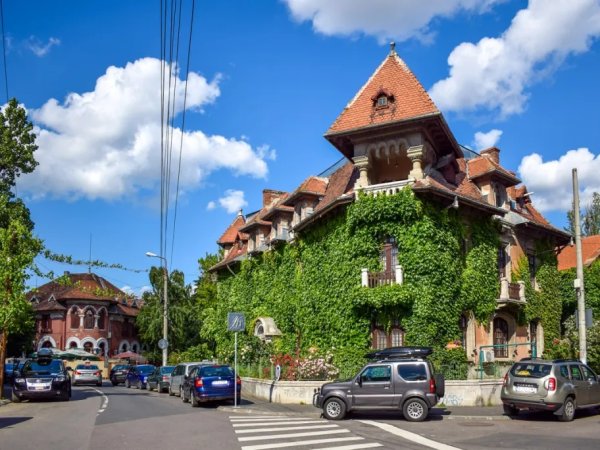
- Articles
- 09 FEB 26
You wake up on a morning when the city doesn’t seem rushed. It’s rare, but it happens. Early on a Sunday, or on a Saturday before traffic remembers who it is. You open the window and Bucharest doesn’t shout. It breathes. That’s when it’s at its best. Not the version from brochures, not the one with exaggerated skylines and slogans about a “vibrant capital,” but the one that reveals itself only if you walk and don’t hurry anywhere.
The real Bucharest doesn’t show off. It stays tucked away on side streets, in inner courtyards, between buildings that haven’t been renovated in decades but still know who they are.
Streets that lead nowhere, yet make you stay
There are streets in Bucharest that feel deliberately designed not to be passed through. You find them in Cotroceni, in the older parts of Domenii, in fragments left intact from the former Uranus neighborhood. They have no shops, no trendy cafés, not even perfect sidewalks. They have old trees, low fences, and the feeling that you’ve stepped into a parallel city.
On streets like Aurel Vlaicu or Xenopol, time seems to have politely stepped out of the frame. The houses aren’t spectacular, but they are lived in. You can feel it. Windows are open not for photos, but for air. No one comes here “to see something.” That’s exactly why it’s beautiful.
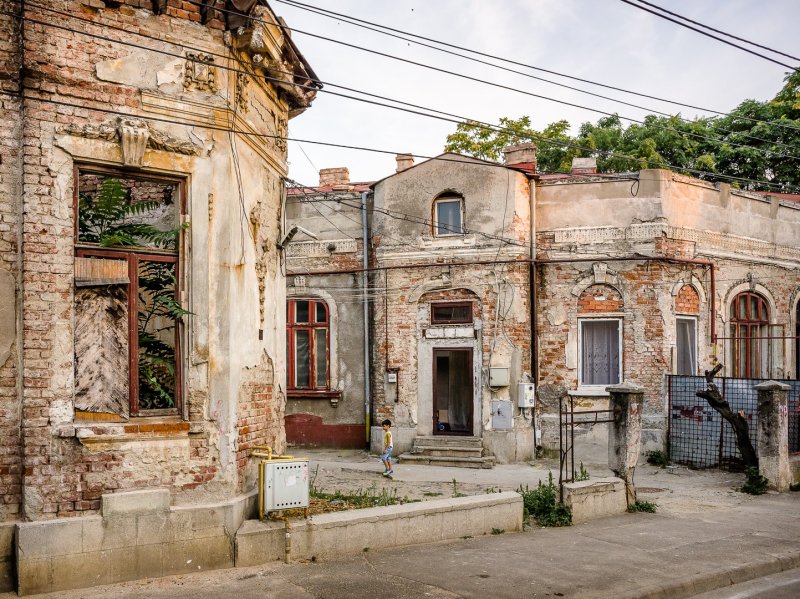
Inner courtyards, Bucharest behind the façades
Brochures show you façades. Reality lives behind them. If you dare to glance through passageways and archways, you discover a small, domestic, intimate Bucharest. Courtyards with grapevines, rusty bicycles, white plastic chairs, and cats sleeping like rightful owners.
Behind crowded boulevards hide fragments of life that don’t ask for validation. No one put them on Instagram because they’re not “Instagrammable.” They’re real. And real, paradoxically, is much rarer.
Parks where nothing happens – and that’s exactly the point
Everyone knows Herăstrău, Cișmigiu, IOR. Few people reach their overlooked corners or the smaller neighborhood parks that never become “destinations.”
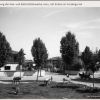
In Carol Park, for instance, if you drift away from the main alleys and monuments, you find benches occupied by people who didn’t come to do anything. They simply sit. They look around. No headphones, no phones. An urban luxury we’ve forgotten how to name.
The same goes for neighborhood parks like Circului Park or quiet sections of Tineretului Park that never make it into recommendations. These are places where the city slows down. There’s no spectacle. There’s a pause.
Passages, spaces of transit that become destinations
Bucharest has a strange fascination with underpasses and passages. Most are ugly, rushed through, crossed without being noticed. But some, precisely because they were never “fixed,” gain character.
Victoria Passage, for example, is more than a connection between two points. It’s a space suspended between eras, offering a perspective no terrace ever could. It’s not beautiful in the classic sense. It’s interesting. And that matters more.
Stairs, courtyards, and the city’s small breaks in level
Bucharest isn’t a flat city, even if it looks that way on a map. You truly discover it when you start climbing and descending stairs that don’t lead anywhere in particular, but connect fragments of life.
These are stairways between streets at different levels, narrow paths between apartment blocks, alleys that suddenly drop into shared courtyards. You find them in places like Cotroceni, Vatra Luminoasă, Dealul Mitropoliei, or behind large boulevards that paradoxically hide the quietest spaces.
Here the city breaks apart beautifully. Children play with a ball without fearing cars, neighbors sit on steps and talk without rushing, and traffic noise hangs somewhere above, like distant background static. These places have no names, which is why they never appear in brochures. You can’t really “recommend” them, because they aren’t destinations. They’re pauses.
In these small shifts of level, you understand something essential about Bucharest: it’s not a city meant to be seen from above, but one meant to be felt up close, on foot, between two steps, in spaces never designed for spectacle.
The Bucharest that doesn’t sell itself
There is a Bucharest that doesn’t try to please anyone. It doesn’t promise experiences, doesn’t optimize routes, doesn’t greet you with explanatory panels. It’s there for those who look for it without hurry and without expectations.
Cities become boring the moment they start explaining themselves too much. Bucharest still escapes that fate because it’s incoherent, fragmented, imperfect. And precisely because of that, alive.
The Bucharest that doesn’t appear in brochures isn’t more beautiful. It’s more honest. It doesn’t impress you right away, but it stays with you. You discover it when you leave recommended routes behind, when you stop asking “where should I go” and start wondering “where could I get lost.”
If you want to see this city, you don’t need apps or top lists. You need time, walking shoes, and the willingness not to check anything off. The rest comes on its own.
Also recommended Bucharest’s main neighborhoods and the stories behind their names