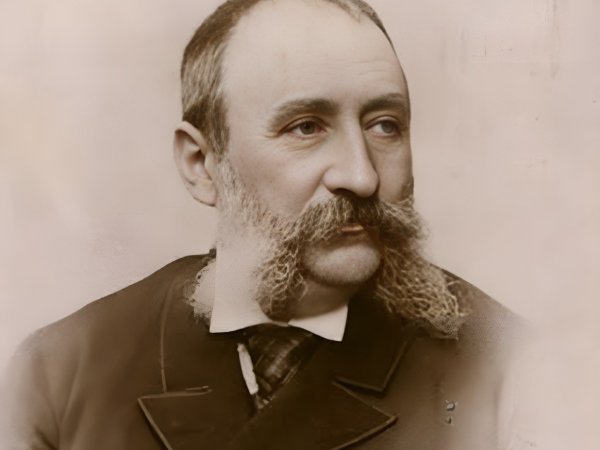
Boyar Ioan Movilă, founder of the Eforie Sud resort in Dobrogea, has a street bearing his name in the center of Bucharest
- Articles
- 11 FEB 26
The name of boyar Ioan Movilă is inseparably linked to the emergence and development of the Eforie Sud resort, one of the oldest and most elegant spa destinations on the Romanian seaside. A complex personality, trained as a jurist, politician, refined collector, and visionary in the field of urban planning, Movilă left behind not only a resort raised from a wild land, but also an impressive cultural legacy. The fact that today a street in the center of Bucharest bears his name represents a symbolic recognition of his contribution to the modernization of Romania at the end of the 19th century.
Boyar origins and a distinguished education
Ioan Movilă was born on August 6, 1847, in Bucharest, into a family with deep roots in the political and cultural history of the Romanian space. He descended from the old Movilești family, a boyar lineage that played a major role in the 17th century. Among his ancestors were rulers of Moldavia such as Ieremia Movilă (1595–1606), Simion, Constantin, and Alexandru Movilă, as well as Metropolitan Petru Movilă of Kyiv, known for his decisive contributions to the development of religious culture and for the support he offered to the introduction of printing in the Romanian space. The Movilești were also the founders of Sucevița Monastery, one of the most valuable monuments of Romanian medieval heritage.
This historical legacy profoundly influenced Ioan Movilă’s formation. He benefited from an elite education in the country, studying with some of the most appreciated professors of the time. He later continued his studies in Naples, where he obtained a doctorate in Law, a remarkable achievement for a young Romanian of that era. Returning to the country, he embraced a judicial career, becoming prosecutor and judge at the Vlașca Tribunal, and later president of the Galați Tribunal.
His activity was not limited to the magistracy. In 1888, he was elected deputy by the people of Brăila, and in 1891 he was appointed prefect of Brăila. He was a respected figure, known for rigor, culture, and balance. Nevertheless, at a certain moment he chose to withdraw from public life, without however giving up the desire to build and to leave something lasting behind.
Passionate collector and protector of culture
Beyond his judicial and political career, Ioan Movilă was an authentic patron of the arts. Throughout his life he gathered an impressive collection of over one hundred Romanian and foreign paintings, works of great artistic value. His relationship with the world of art was personal and profound: he was the brother of Alexandrina Luchian, the mother of the great painter Ștefan Luchian. Through this family connection, he benefited from the artist’s influence and advice, which refined his taste and interest in the visual arts.
His art collection was later donated to the Municipal Pinacotheca of Bucharest, a gesture that proves his attachment to the capital and his desire to make culture available to the general public. He did not stop there. Movilă also owned an exceptional collection of old manuscripts, among which was one of the first editions of the Pravila of Vasile Lupu, a fundamental document for the history of Romanian law. He also assembled a valuable numismatic collection. All these treasures were donated to the Romanian Academy, strengthening the national cultural heritage.
Through these gestures, Ioan Movilă joins the gallery of great scholarly boyars who understood that wealth gains meaning only when it is placed in the service of the community.
The dream at Techirghiol: the beginning of a resort
Although he had a comfortable life and a solid status in society, Ioan Movilă chose to assume a major risk. At the initiative of some friends, he learned about the therapeutic properties of Lake Techirghiol, whose waters and mud were considered miraculous for treating rheumatism and skin conditions. At that time, numerous poor and sick people arrived on the shore of the lake, willing to sleep under the open sky just to benefit from the healing effects of the mud.
Impressed by this phenomenon and animated by his entrepreneurial spirit, Movilă made a radical decision: he sold a large part of his fortune and left for Dobrogea. On September 20, 1899, he laid the foundations of the Movilă–Techirghiol resort, the nucleus of the future Eforie Sud. From the state he purchased, at four lei per square meter, the entire surface on which today’s Eforie Sud and the northern part of Techirghiol now stand.
The land was far from welcoming. An arid area, with salty soil, strewn with dried stones and fossilized shells of prehistoric snails, covered by steppe vegetation and dominated by colorful thistles. Snakes were the masters of the place, and the landscape seemed hostile to any attempt at urbanization. Nearby, at the tail of the lake, was the estate of Zarguzoni, another pioneer who had settled in Dobrogea with permission.
For Ioan Movilă, however, this apparently unfriendly land represented a challenge and an opportunity.
Building a city from scratch
Movilă did not intend only to exploit the therapeutic resources of the lake, but to create a modern city, planned from its very foundations. He began by sketching the network of streets, the route of the sewage pipes and electrical lines, establishing the location of the school, the church, and the promenade areas. He thought in perspective, anticipating the needs of an organized urban community.
He built two hotels intended especially for the high society, in order to attract tourists from among the elites of the time. In one of them he even designed a theater hall, aware that a modern resort must offer not only treatment, but also entertainment. Since traveling troupes rarely reached Dobrogea, he involved his own children in organizing performances. They learned texts from the classics, staged theater plays, and gave recitals at the piano or harpsichord, according to the fashion of the era.
The architecture of the resort was entrusted to Arta Cerchez, a talented Armenian architect, who was also Ioan Movilă’s son-in-law. Under his guidance, the buildings acquired a distinct, elegant style, adapted to the specific character of the seaside. The resort was beginning to take shape, becoming a place where nature, medicine, and culture met harmoniously.
The premature death and the continuity of an ideal
At the beginning of the 20th century, the project was only in its incipient but promising phase. Ioan Movilă, full of energy and enthusiasm, seemed ready to further develop the city he had dreamed of. Fate intervened brutally, however. He fell ill with pneumonia, and the evolution of the disease was rapid and merciless. He died on January 13, 1904, in Techirghiol, at only 56 years old.
His disappearance was a heavy loss for the family and for the community in formation. Nevertheless, his dream did not fade. His wife, Elena Movilă, survived him by another 47 years and continued to take care of the development of the resort, carrying forward her husband’s “beautiful madness” of building a city on the seashore.
Thus, what began as a courageous initiative on a wild land turned, over time, into a well-known and appreciated resort. Movilă–Techirghiol would become Eforie Sud, a reference name on the map of Romanian spa tourism.
A street in the center of Bucharest, a sign of gratitude
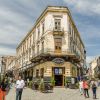
Today, the memory of Ioan Movilă is preserved not only through the existence of the resort he founded, but also through a street in the center of Bucharest that bears his name. It is a symbolic yet significant gesture, through which the capital honors one of its sons who contributed to the cultural and urban development of the country.
Ioan Movilă was more than a boyar or a magistrate. He was a visionary who understood the potential of a marginal region and had the courage to invest everything in an ideal. He was a collector who enriched the national heritage and a promoter of culture in a space that was just at its beginning.
Through his life and deeds, he remains an example of involvement, generosity, and entrepreneurial spirit. And the fact that his name endures both on the map of Bucharest and on that of the Romanian seaside confirms that great projects, even if begun by a single man, can change the destiny of a place for generations.
We also recommend: The eccentric Gheorghe Petrașcu, one of the greatest Romanian painters, has a street bearing his name in Bucharest