10 Forgotten Habits of Old Bucharest
By Eddie Țone
- Articles
- 03 MAR 26
If you have ever wondered why the central boulevards of the capital seem designed to be admired from a tall window, the answer lies in the social DNA of a city that, before becoming a hurried metropolis, functioned as an open-air theatre.
Old Bucharest operated according to rules that today feel lifted from a manual of social choreography, where every gesture, from the way you tilted your top hat to the speed at which you sipped your coffee, sent a clear message about your place in the world.
There was a time when life flowed differently, measured in the length of a promenade or in the number of calling cards left on a silver tray. Once nicknamed “Little Paris,” Bucharest possessed an extraordinary ability to absorb Western elegance and season it with a Balkan mix of pride and ease. You might assume life was simpler back then. The complexity of etiquette, however, would turn a modern influencer into an amateur in the art of personal branding.
1. The Ritual on the Avenue, or How to Be Seen on Sunday
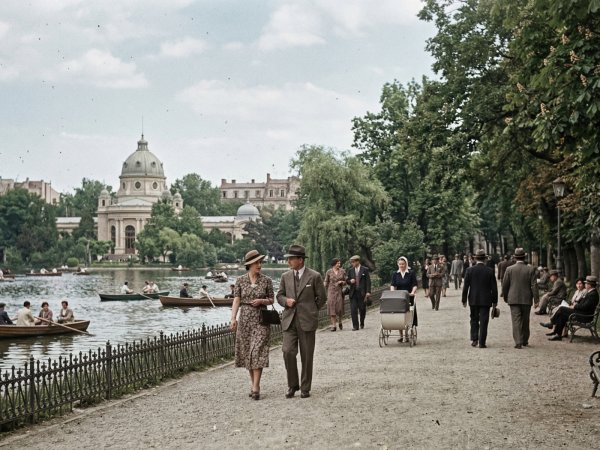
By the late nineteenth century, Kiseleff Avenue had transformed into a rolling fashion runway. On Sundays, after morning service, the entire “high society” left the comfort of their boyar residences to participate in a collective spectacle of vanity. Luxury carriages, springs freshly oiled and coachmen dressed in impeccable livery, formed a slow-moving procession that allowed passengers to carefully observe who was with whom and, more importantly, what everyone was wearing.
It quickly became clear that this custom went beyond the need for fresh air. It was a social necessity. Figures such as Prince George Valentin Bibescu or members of the Cantacuzino family appeared in carriages worth the price of a country estate.
Arriving in a dusty carriage or with a limping horse could damage your reputation more severely than a stock market crash. Gentlemen removed their hats with mathematical precision, while ladies handled their parasols like silk shields, filtering the curious glances from onlookers. The Avenue was where engagements were confirmed and gossip was launched, destined to feed Bucharest’s salons for the rest of the week.
2. Political Coffee at Capșa and the Nation’s Fate in a Cup
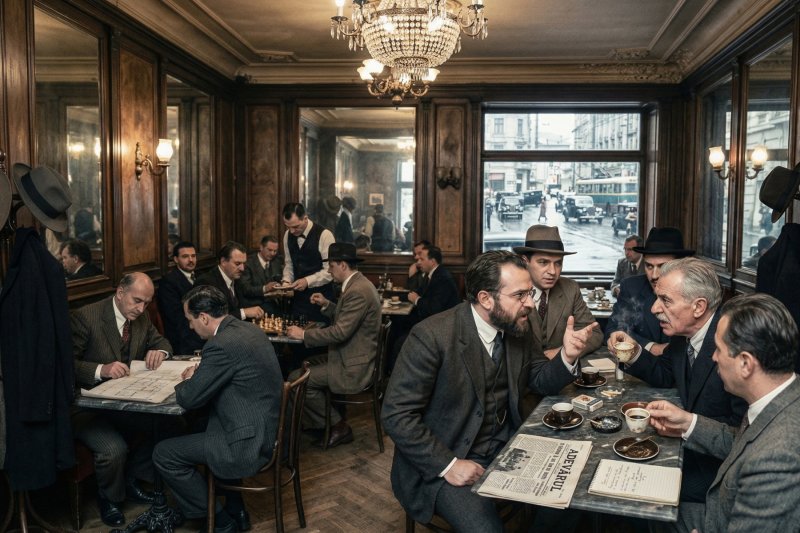
Between 1880 and the interwar years, Casa Capșa functioned as Romania’s unofficial command center. If you wanted to know who would become the next minister or which literary movement would sweep through Parisian cafés the following month, you needed a table here, in a space where pride exceeded the amount of sugar in the sand-brewed Turkish coffee. Writers such as Ion Minulescu and Liviu Rebreanu shared the room with Liberal and Conservative politicians who sketched the country’s future on linen napkins.
Entering Capșa meant immediately sensing the weight of words. A poorly timed joke about a rival could lead to a dawn duel at the Hippodrome, while a well-placed compliment secured favorable press coverage.
Grigore Capșa, who turned the confectionery into a temple of refinement, understood that Bucharest’s elite required a place to feel important while savoring a “Joffre” cake. Coffee served as a pretext for constant intellectual gymnastics, where silence signaled a lack of wit and the clinking of teaspoons against fine porcelain formed the soundtrack of a vibrant, if occasionally chaotic, democracy.
3. Aristocratic Balls in Palaces That Shaped Destinies
During the Belle Époque and the interwar years, the salons of the Șuțu Palace and the Ghica residences became genuine centers of power. Balls functioned as strategic events where marriage alliances were sealed and immense financial deals concluded. Hosts, often legendary figures such as Grigore Șuțu and his wife Irina, invested colossal sums to bring flowers from Nice and champagne directly from the cellars of Reims.
Dance might appear central, yet it provided a discreet backdrop for negotiations. Guest lists reflected the social hierarchy with surgical accuracy. Being excluded from a major ball effectively erased you from the city’s social life.
Gowns arrived directly from luxury ateliers in Vienna or Paris, and jewels displayed beneath crystal chandeliers narrated the history of families who owned vast portions of the country’s land. Heavy perfumes filled the air, and etiquette was so rigid that a single mistake resulted in swift and merciless social exile.
4. Corso on Calea Victoriei and the Measured Steps of Elegance
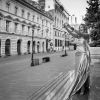
Between 1900 and 1930, Calea Victoriei transformed each afternoon into the stage for the “corso,” a ritual of slow walking and mutual observation. The stretch between the Royal Palace and the Military Circle operated as a living showcase. Young officers in gleaming uniforms, bohemian students, and wealthy bankers crossed paths in a carefully rehearsed choreography.
Each passerby embraced a role. Steps were calculated, glances measured to appear attentive without insistence, conversations conducted in low, polished tones.
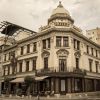
Calea Victoriei pumped life into the city, with shop windows and hotel entrances, including the famous Grand Hôtel du Boulevard, reinforcing Bucharest’s cosmopolitan image. The corso represented the ultimate democracy of elites. Participation required impeccable attire and the ability to sustain an intelligent conversation about the latest theatre premiere or the evolution of the Romanian leu on the Paris stock exchange.
5. The Calling Card and the Art of the Brief Visit
In the second half of the nineteenth century, social life followed a remarkably precise analog communication system: the calling card. Visiting unannounced counted as barbaric. Protocol required leaving a card on a small precious-metal tray in the entrance hall before being admitted to the salon. The household servant delivered the card to the hosts, who decided whether they were “at home” or whether the visitor should return another time.
These small pieces of cardstock carried hidden codes. A folded corner signaled condolences; another type of fold announced congratulations or farewell before a long journey.
It was a refined game of discretion. This polite barrier protected private space and elevated meetings into special occasions. Without that elegantly printed card, you remained a stranger at the gates of a world that valued intimacy almost as much as noble titles.
6. Summer Gardens and the Spell of Open-Air Orchestras
Between 1890 and 1940, Bucharest’s nightlife relocated to summer gardens. Places such as the Oteteleșanu Garden or Union Terrace offered refuge from the Balkan heat. Beneath chestnut trees and vine-covered pergolas, live music, ranging from military marches to heartfelt romances, provided the soundtrack for animated conversations.
Cold beer and platters of traditional Romanian delicacies blended with a sense of perpetual celebration. People gathered to escape the rigidity of offices and formal salons. Certain orchestras built devoted followings, and conductors were treated like local celebrities.
The atmosphere radiated controlled effervescence, where laughter intertwined with violin strings and the clinking of glasses. These gardens acted as the cultural lungs of the city, spaces where social barriers seemed to thin under the influence of good music and the holiday spirit that ruled every summer evening.
7. Arriving at the Theatre by Carriage, the Ultimate Status Statement
In the late nineteenth century, arriving at the National Theatre on Calea Victoriei marked the highlight of a successful evening. The manner of arrival sometimes mattered more than the play itself. The carriage transported reputations as much as people. A spectacular entrance, with well-fed horses and freshly lacquered panels, captured immediate attention.
At the steps, gentlemen carefully assisted their partners to avoid brushing voluminous gowns against muddy wheels. The coachman executed precise maneuvers to clear space for the next carriage under the critical gaze of those already present. Theatre intermissions transformed into intense social exchanges in the foyer.
Arriving on foot, even from a nearby street, positioned you outside the elite circle. It signaled financial decline or a lack of respect for the importance of the cultural occasion.
8. Elegant Public Baths and Hygiene as Social Performance
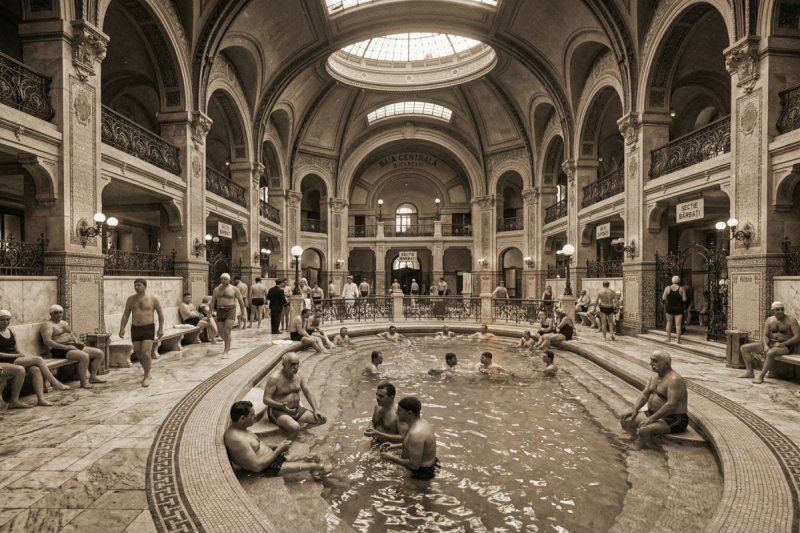
Around 1900, Bucharest embraced modernity through establishments such as Baia Centrală and the Eforie Baths. At a time when private bathrooms remained rare luxuries, even in affluent homes, these palaces of hygiene provided cleanliness while functioning as relaxation and social hubs, with marble pools, perfumed steam, and massage services rivaling those of major European capitals.
The architecture evoked Roman temples. Businessmen and politicians discussed affairs in informal settings, wrapped in plush towels. Hygiene became fashionable, a sign of civilization and progress. These baths operated like exclusive clubs, granting the body the same attention that Capșa offered the mind.
9. Băneasa Hippodrome and the Adrenaline of Distinction
The interwar period brought a passion for horse racing, and the Băneasa Hippodrome quickly became the elite’s playground. Inspired by Longchamp, its architecture provided the perfect stage for risky bets and fashion displays that would stir envy in any couture house. Members of the Royal Family frequently attended from the official stand, lending the event an untouchable aura of nobility.
When the horses began to race, tension surged. Many spectators, however, focused their binoculars on the grandstands rather than the track. Ladies wore spectacular hats designed especially for the “Grand Prix of Bucharest,” while gentlemen discussed equine bloodlines with fervor that concealed serious financial stakes.
The Hippodrome cultivated elegant detachment. Losing a significant sum required a thin smile and a witty remark. Any sign of panic betrayed weak character and questionable social origins.
10. Immortalizing Prosperity in the Photo Studios of Calea Victoriei
Between 1890 and 1930, lacking a studio portrait meant virtual nonexistence within high society’s visual record. Calea Victoriei housed the studios of celebrated court photographers such as Franz Mandy and Jean Berman, where respectable families arrived with the nervous excitement of opera debutantes. A visit to the photographer resembled a near-religious ritual, producing tangible proof of financial and social success for relatives in the countryside or business partners abroad.
Preparation for a single exposure lasted hours. Ladies tightened corsets to the limit of breath, while gentlemen adjusted the symmetry of their mustaches in Venetian mirrors. The photographer acted as a director of prestige, arranging families around plaster columns or before painted backdrops depicting French gardens absent from Bucharest reality.
The resulting sepia card with gilded edges circulated by mail as currency of status. Receiving such a photograph signaled that the Bucharest branch of the family prospered, that the pearls were genuine and the top hat freshly brushed. The desire to project an idealized self turned photo studios into factories of personal mythology, where light and shadow collaborated to smooth wrinkles and elevate the nobility of one’s gaze.
You may also like: Vanished Trades in Bucharest: How Much Did a Shoeshiner or a Carriage Driver Earn?