Paradox in Bucharest: ARO-Patria building caught between major seismic risk and residents’ refusal to allow reinforcement
By Raluca Ogaru
- NEWS
- 25 MAR 26
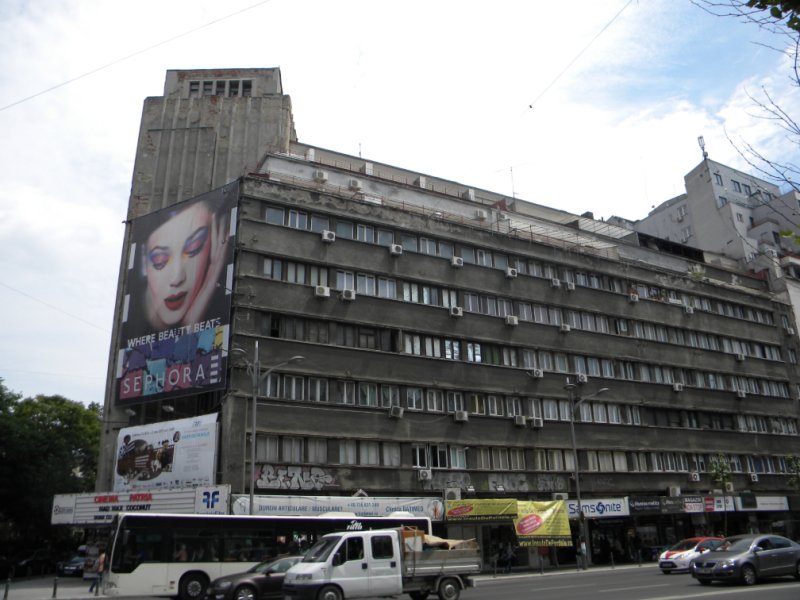
The situation of the ARO-Patria building in central Bucharest highlights one of the city’s most complex urban problems: the difficulty of intervening quickly on buildings with high seismic risk, even when technical projects are already finalized.
According to statements by Bucharest’s mayor, Ciprian Ciucu, although the consolidation project for the building has been ready for about two years, the works cannot begin. The main obstacle is the refusal of the property owners to give their consent and to relocate temporarily during the intervention.
“The Patria building is currently under our attention to enter the consolidation process. The project is ready, but, as far as I understand, there is distrust among the residents of the Patria building regarding the cost of the intervention,” Ciprian Ciucu said.
The mayor explained that residents’ fear is related to potentially high costs: “They are afraid they will end up paying tens of thousands of euros, even though the cost is not maximal.” In this context, the City Hall is considering setting a maximum contribution cap for the owners, with the difference to be covered from public funds.
Legal disputes and commercial interests blocking the intervention
Another significant obstacle to consolidation is the legal situation of the commercial spaces in the building. In particular, the former Melody bar, located in the basement, complicates the process.
“For expropriation, there is a restaurant there owned by Mr. footballer Mutu, if I understood correctly. Melody or something like that. The former Melody bar,” Ciucu explained.
He noted that he has discussed with George Tuță so that the Sector 1 City Hall can get involved in the expropriation procedure.
The problems are further compounded by debts accumulated over time by the operator of that space, which complicates the administrative process even more. Authorities intend for the entire ensemble—cinema, commercial spaces, and residences—to be included in a unified consolidation project.
Iconic building but vulnerable to earthquakes
The ARO-Patria building is one of Bucharest’s most well-known architectural landmarks. Designed by Horia Creangă and built in the 1930s during the reign of King Carol II of Romania, the building combines residential and cultural functions.
At the ground floor operated the famous Patria cinema, inaugurated in 1935, which was closed in 2015 following the enactment of a law by President Klaus Iohannis. The regulation prohibits activities in buildings classified as Class I seismic risk.
According to technical assessments, the building is in an advanced state of degradation, and there is a real risk of collapse in the event of a major earthquake, similar to the 1977 earthquake.
What solutions do authorities have and what does the law provide
The issue of consolidating buildings with seismic risk is not unique to Bucharest. The legal framework is primarily governed by Law no. 212/2022 on reducing seismic risk, which establishes the obligations of property owners and the role of local authorities.
Under the law, consolidation works can be carried out with financial support from the state or local authorities, and in certain cases, administrative measures may be imposed to protect public safety. However, owners’ consent remains essential in most situations, especially when temporary relocation is necessary.
For the ARO-Patria building, the solutions being considered include:
- setting a maximum cost cap for residents;
- expropriation of commercial spaces that block the intervention;
- direct negotiations between authorities and owners to obtain consent.
ARO-Patria building, between past and an uncertain future
The situation of the ARO-Patria building reflects the real difficulties of the consolidation process in Bucharest, where private interests, financial fears, and bureaucratic procedures can delay essential interventions for public safety.
Although authorities claim that the project is ready and financial solutions exist, the lack of consensus among parties keeps the building in a vulnerable state. Without swift decisions, risks remain high, and a potential major earthquake could have severe consequences for one of the city center’s most famous buildings.
WE ALSO RECOMMEND YOU:
Symbols of Bucharest: Cinema Patria, the ARO Building, the Construction of Ion Creangă’s Nephew