Locations close to Bucharest Football Museum

  • Museums & Galleries

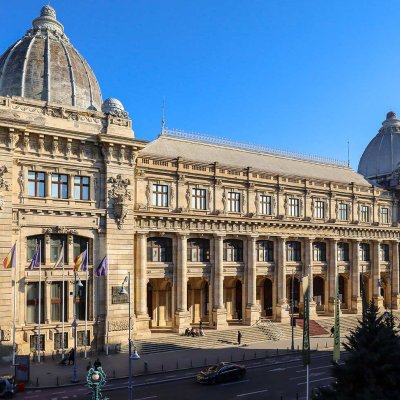
    The National Museum of Romanian History (MNIR)

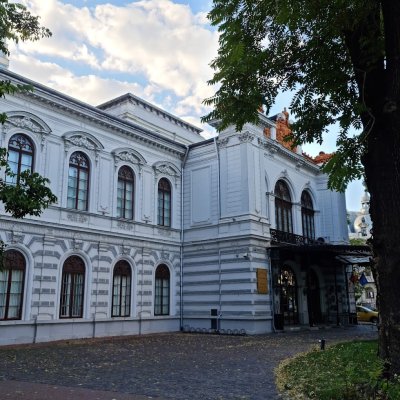
    The National Museum of Romanian History (MNIR), located in Bucharest, on Calea Victoriei, was established in 1970 and is housed in an impressive building dating back to the Belle Époque period. The building, constructed between 1894 and 1899, was originally the headquarters of the Central Post Office, and its transformation into a museum was part o...
  • Museums & Galleries

    Suțu Palace

    Built in 1835 by the high-ranking official Costache Suțu, Suțu Palace is one of the oldest aristocratic residences still standing in Bucharest. The building stands out for its Neo-Gothic architecture, with elegant details, stained-glass windows, and a striking spiral staircase that dominates the interior.
    Located near University Square, the palace...

  • Museums & Galleries

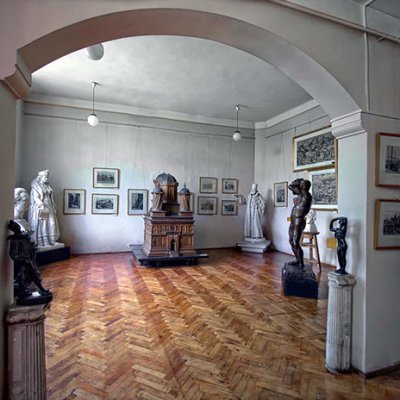
    Casa Melik (Theodor Pallady Museum)

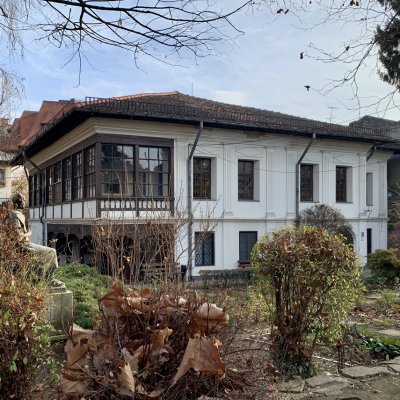
    Casa Melik (Theodor Pallady Museum) is a living fragment of the 18th century, hidden among apartment blocks and busy streets, yet entirely detached from the pace of modern-day Bucharest. Built in traditional Romanian style with Oriental influences—with a wooden veranda, steep roof, and open porch—it is considered the oldest surviving residence in t...

  • Museums & Galleries

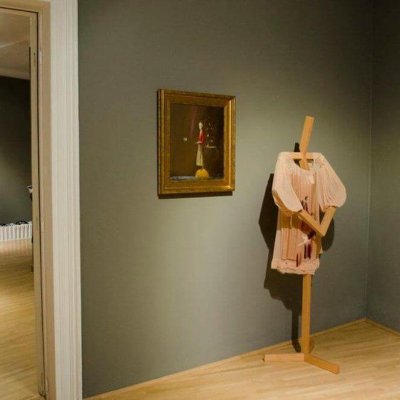
    Galeria Posibilă

    Galeria Posibilă is a contemporary art space with a strong curatorial vision, active in Bucharest since 2003. It is currently located at 6 Popa Petre Street, tucked away in a quiet courtyard near the city center. Though discreetly situated, the gallery has gained recognition for its thoughtful programming and dedication to Romanian contemporary art...

  • Museums & Galleries

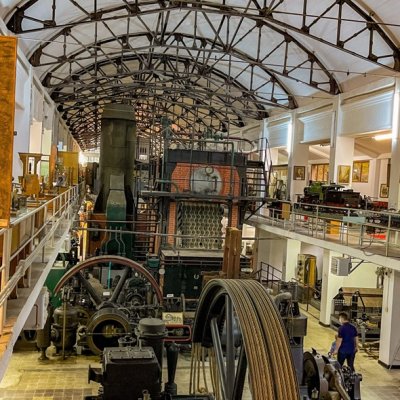
    National Technical Museum „Dimitrie Leonida”

    Founded in 1909 by engineer Dimitrie Leonida and inspired by the technical museum in Munich, the National Technical Museum was the first of its kind in Romania. From the beginning, it had a strong educational mission, using interactive exhibits to make science and technology more accessible to the general public.
    Located in Carol I Park, at 2 Gener...

  • Museums & Galleries

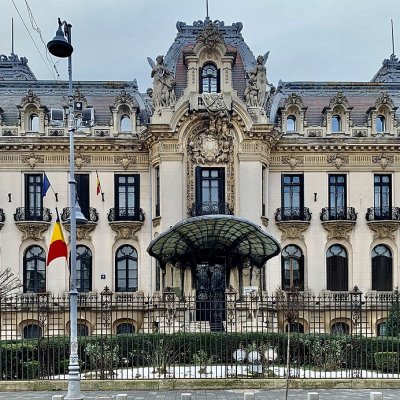
    Cantacuzino Palace

    Cantacuzino Palace is a magnificent palace located in Sector 1 of Bucharest, on Calea Victoriei, and is an example of eclectic architecture from the Belle Époque period. Built between 1901 and 1903, the palace was the residence of the Cantacuzino family, one of Romania’s oldest and most influential noble families.
    Its architecture combines elements...

  • Museums & Galleries

    Muzeul Copiilor — Bucharest

    At 11 Decebal Boulevard in Sector 3, the Children's Museum is one of Romania's largest non-formal learning hubs. Its 110 rooms spread across nearly 1,900 square metres cover a wide range of subjects — technology, geography, history, art, gastronomy, physics, chemistry — and can accommodate up to 350 visitors at once. This is not a museum in the tra...

  • Museums & Galleries

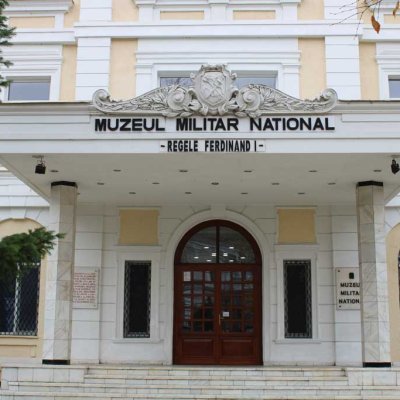
    The National Military Museum "King Ferdinand I"

    The museum was founded on 18 December 1923, by Royal Decree no. 6064, signed by King Ferdinand I himself — after whom it is named to this day. The founding purpose was clear: to preserve and pass on Romania's military memory at a time when the country had just emerged from the First World War with reunited territories, but also with deep wounds.
    Ov...

  • Museums & Galleries

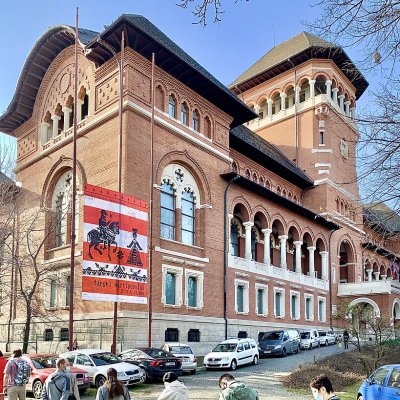
    The National Museum of the Romanian Peasant (MȚR)

    The National Museum of the Romanian Peasant (MȚR) is one of the most important cultural institutions in Romania dedicated to traditional rural life. Housed in a heritage building in Neo-Romanian architectural style, the museum features an impressive collection of authentic artifacts: from folk costumes and painted icons to tools, furniture, and eve...

  • Museums & Galleries

    The National Museum of the Romanian Peasant

    One of the most important ethnography museums in Europe, with a collection of over 155,000 objects — folk costumes, ceramics, glass icons, tools, textiles, and everyday household items from all Romanian provinces. The neo-Romanian style building is itself a historic landmark.
    The permanent exhibition was reopened in April 2025 following restoration...

FAQ in case you need it

  • Yes, it is generally safe, with occasional petty theft in busy areas. Use common sense precautions.
  • No, but it helps. Many people speak English, especially younger generations and
    professionals.
  • Metro is fastest, public transport is cheap, and ride-sharing (Uber/Bolt) is convenient.
    Walking works great in the city center.
  • Yes. EU citizens can buy freely. Non-EU citizens can buy apartments and rent easily.
  • Bucharest is affordable compared to most EU capitals. Rent, food, and transport are
    reasonably priced. Costs depend on lifestyle.
  • Non-EU citizens need a visa or residence permit. EU citizens must register after 3 months
    with Romanian Immigration.
  • Yes. Public healthcare is accessible, but private clinics offer faster and higher-quality
    services. Health insurance is recommended.
  • Yes. Bucharest has several international schools and English-taught university programs,
    especially in medicine, business, and tech.