Who Was the Italian Revolutionary Giuseppe Garibaldi and Why Is There a Street Named After Him in Bucharest?
- Articles
- 08 SEP 26
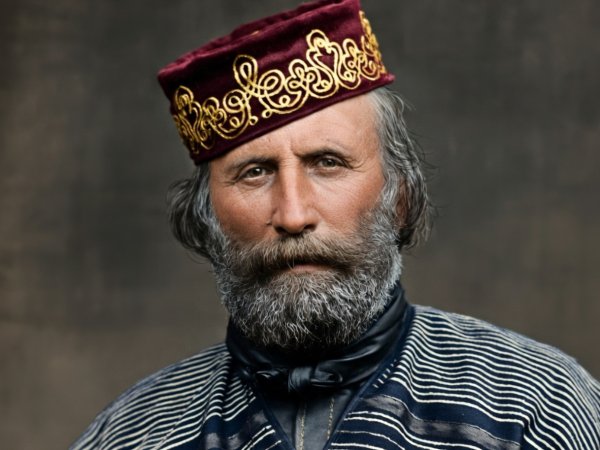
Giuseppe Garibaldi was one of the great figures of nineteenth-century European history: a revolutionary, patriot, and military commander who became a symbol of the struggle for freedom and the unification of Italy. His life was a succession of sea voyages, exiles, revolutions, military campaigns, and spectacular victories, extending from the shores of South America to Sicily and southern Italy. A committed republican in his youth, Garibaldi eventually collaborated with the monarchy of the House of Savoy when he believed it could help achieve his fundamental objective: the creation of a unified Italian state. His name, however, long ago transcended Italy’s borders. Streets, squares, and monuments dedicated to Giuseppe Garibaldi can be found in numerous European cities and in other parts of the world. Bucharest is no exception. The Romanian capital has an avenue named after him, as part of the tradition of preserving in the urban landscape the memory of important figures from world history.
From Young Sailor to Freedom Fighter
Giuseppe Garibaldi was born on July 4, 1807, in Nice, a city that was then under French influence but deeply connected to the Italian world. He came from a family of sailors and coastal traders, and the sea would decisively shape the early years of his life. He spent more than a decade at sea, and in 1832 he obtained a captain’s license for merchant vessels. The experience he gained at sea provided him with knowledge that would later prove extremely useful during his military expeditions and campaigns.
In his youth, Garibaldi came into contact with the nationalist and revolutionary ideas circulating throughout Europe. He was strongly influenced by Giuseppe Mazzini, one of the central figures of the Risorgimento, the historical period associated with Italy’s political revival and unification. Garibaldi became close to “Young Italy,” the organization founded by Mazzini, and came to regard the liberation and unification of the Italian territories as the cause to which he would dedicate his entire life.
In 1834, following the failure of a revolutionary attempt in Piedmont, Garibaldi was forced to flee. A court in Genoa sentenced him to death in absentia, and the young revolutionary chose exile. This marked the beginning of a decisive period spent far from Europe, in South America.
South America and the Birth of the “Hero of Two Worlds”
Between 1835 and 1848, Garibaldi lived in South America, during a period marked by civil wars, revolutions, and struggles for independence. He took part in conflicts in Brazil and Uruguay, and his experiences on the South American continent transformed him into an experienced military commander.
In Brazil, Garibaldi became involved in the Farroupilha Revolution in the province of Rio Grande do Sul. There he met Anita Ribeiro, the woman who would become his first great love and his first wife. Anita was not merely his life partner; she accompanied him during military campaigns and, in turn, became one of the legendary figures associated with the adventures of the Italian revolutionary.
Later, Garibaldi settled in Montevideo, where he fought in defense of Uruguay. He organized the Italian Legion and began building his reputation as a courageous and unconventional military leader. It was during this period that the image that would become inseparable from his name emerged: that of the fighter in a red shirt. The simple uniform worn by his volunteers would become one of the best-known symbols of the Risorgimento.
His experiences in South America gave Garibaldi knowledge of mobile warfare, rapid operations, and the use of volunteer forces. In Europe, his victories began to attract attention, and the Italian revolutionary gradually became an international figure. This period would later earn him the nickname “Hero of Two Worlds,” with South America and Europe representing the two continents on which he built his military reputation.
Return to Italy and the Struggle for the Roman Republic
In 1848, when revolutions swept across much of Europe, Garibaldi returned to Italy. The peninsula was divided into numerous states and territories, while a significant part of the north was under the domination or influence of the Austrian Empire. The desire for independence and national unity had become one of the most powerful political ideas of the age.
Garibaldi initially offered his services to various forces fighting against Austrian domination. After several difficulties, he formed volunteer units and entered the conflict. A crucial moment was his participation in the defense of the Roman Republic, proclaimed in 1849.
Elected as a deputy to the Roman Assembly, Garibaldi became one of the important figures of the new republic. When France sent troops to restore papal authority, he was given a significant role in the defense of Rome. His volunteers achieved important victories, including one against French forces on April 30, 1849, and Garibaldi distinguished himself through his direct presence on the battlefield.
Ultimately, however, the Roman Republic was defeated. Garibaldi left Rome with some of his men and began a dramatic retreat through central Italy, pursued by French, Austrian, and Neapolitan armies. During this period, Anita, exhausted and ill, died near Comacchio. Her death affected Garibaldi deeply and remained one of the great personal tragedies of his life.
The Expedition of the Thousand and the Unification of Southern Italy
After another period of exile, Garibaldi returned permanently to Italian political and military life. In 1859, during the Second Italian War of Independence, he commanded the volunteer unit known as the “Cacciatori delle Alpi” and fought against Austria.
The moment that would definitively transform him into a national hero came in 1860. In May of that year, Garibaldi set out from Quarto at the head of approximately one thousand volunteers. The expedition would go down in history as the “Expedition of the Thousand.”
Garibaldi’s military force landed in Sicily and began a campaign against the Kingdom of the Two Sicilies, ruled by the Bourbon dynasty. Despite being numerically inferior, Garibaldi’s volunteers achieved a series of victories. Sicily was conquered, and the campaign continued on the mainland.
Garibaldi then crossed to the southern part of the peninsula and advanced toward Naples. On September 7, 1860, he entered the city, in an event of enormous political and symbolic importance. His campaign had contributed to the collapse of the Bourbon regime and made possible the integration of southern Italy into the unification process.
A crucial moment came when Garibaldi accepted the union of the territories he had conquered with the Kingdom of Piedmont-Sardinia, ruled by Victor Emmanuel II. Although he had been a republican and had dreamed of a different form of political organization, Garibaldi considered national unity more important than his own republican convictions. Thus, his conquests became part of the state that would form the Kingdom of Italy in 1861.
Garibaldi, Cavour, and the Other Architects of Modern Italy
Giuseppe Garibaldi was one of the fundamental figures in the unification of Italy, but he was not the only person who contributed to this project. The Risorgimento resulted from the actions of personalities with very different ideas and methods.
Giuseppe Mazzini represented the republican and nationalist ideal. Camillo Benso, Count of Cavour and prime minister of Piedmont-Sardinia, represented diplomacy and realistic politics. Victor Emmanuel II gave the unification project the legitimacy of the Piedmontese monarchy, while Garibaldi was the man of action, a leader capable of mobilizing volunteers and transforming a risky expedition into a military victory.
The relationships among these figures were not always simple. Garibaldi and Cavour had significant disagreements, and Garibaldi remained an independent spirit throughout his life. Nevertheless, it was precisely the combination of revolutionary idealism, political diplomacy, and military action that made the unification of Italy possible.
After 1860, Garibaldi did not consider his mission complete. Rome and Venice were not yet part of the new Italian kingdom, and he continued to support their incorporation. He also took part in the 1866 campaign, leading volunteers in Trentino, and later attempted once again to organize actions against papal rule in Rome. Some of these attempts failed, but his image as a fighter for national unity remained intact.
His Final Years on the Island of Caprera
During the final years of his life, Garibaldi often withdrew to Caprera, the island that had become his home. There he tried to lead a quieter life, away from the great battles that had shaped his existence. He nevertheless continued to follow political developments and to involve himself in public affairs.
Garibaldi was married several times and had several children. The memory of Anita remained one of the most important personal dimensions of his life. Her death during the dramatic retreat of 1849 further contributed to the legend of the two fighters who had shared both family life and revolutionary adventures.
Giuseppe Garibaldi died on June 2, 1882, in Caprera. His wish to be cremated was not respected, and his body was buried on his estate. Over time, this issue generated numerous discussions and legends concerning his final wishes and the actual location of his remains. What is certain is that historical documents confirm that Garibaldi clearly expressed his desire to be cremated, but that this wish was not fulfilled.
Why Is There a Street in Bucharest Named After Giuseppe Garibaldi?
The connection between Giuseppe Garibaldi and Bucharest is primarily political, intellectual, and symbolic. The Italian revolutionary was known and admired in the Romanian Principalities during his lifetime, while the Romanian press followed his activities as early as 1849, including his involvement in the defense of the Roman Republic and, later, the Expedition of the Thousand. The unification of Italy was closely followed by Romanians as they pursued their own national project, from the 1848 Revolution and the Union of the Principalities in 1859 to the achievement of independence.
An important link between Garibaldi and Bucharest’s political circles was C.A. Rosetti, one of the leaders of the 1848 Romanian Revolution and a figure close to democratic circles influenced by Giuseppe Mazzini and the Garibaldian movement. According to historical research, Rosetti displayed portraits of Garibaldi and Mazzini in the window of his bookshop in Bucharest, a gesture with clear political significance. The relationship between Romanians and the Garibaldian movement went beyond admiration: sources mention the participation of Romanian volunteers, including Nicolae Dunca and Ioan Mircea de la Giret, in the battles led by Garibaldi.
In this context, Giuseppe Garibaldi Street in Bucharest can be understood as a tribute to a symbol of freedom, national unity, and the struggle against foreign domination. However, there is no evidence that the street’s name was connected to a visit by Garibaldi to Bucharest or to a specific event that took place there. The name of the street primarily preserves the memory of the affinities between Romanian and Italian revolutionaries and recalls an era in which the ideals of the Risorgimento created political and cultural bridges between Romania and Italy.
We also recommend: Composer Georges Bizet, the “Father” of the Famous Opera Carmen, Has a Street Named After Him in Bucharest