Who was the great actress Aura Buzescu and why does a street in Bucharest bear her name
- Articles
- 09 JAN 26
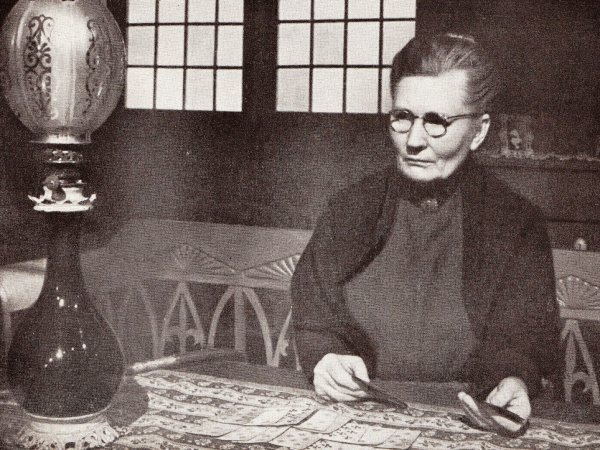
The history of Romanian theatre in the 20th century cannot be fully understood without evoking the personality of Aura Buzescu. A first-rank actress, a demanding pedagogue and a moral reference point for entire generations of artists, Aura Buzescu was one of those figures who shaped not only memorable performances, but also the professional conscience of Romanian theatre. The fact that today a street in Bucharest bears her name is not a simple administrative formality, but a public recognition of a life dedicated to the stage, to art, and to the training of others.
The formation of an actress under the sign of excellence
Aura Buzescu’s path toward theatre was marked by a decisive encounter with one of the greatest personalities of the Romanian stage: Lucia Sturdza Bulandra. Her admission to the Conservatory in Bulandra’s class meant, for the young student, not only access to a prestigious institution, but entry into a true school of artistic thought.
Aura Buzescu would later confess that without the careful guidance and constant support of her great mentor, her beginnings, already difficult and unusual, would have been almost impossible to carry through to the end.
Her admission to the Conservatory, achieved with a “Fable,” was the moment when she truly discovered her vocation. Under the guidance of Lucia Sturdza Bulandra, her paths became clear, and the study of acting took on a defined, consciously assumed direction.
Even during her studies, Aura Buzescu was already employed in the theatrical company of the Bulandra spouses, a sign of her early-recognized value. Nevertheless, she considered the true beginning of her career to be the moment when she stepped onto the stage of the National Theatre, the instant when her artistic dream became reality.
That stage was to be her home for four decades. Loyalty to the country’s foremost stage was not merely a professional choice, but a form of profound devotion to the public and to the actor’s mission in society.
Memorable roles and official recognition
Aura Buzescu’s career was crowned by a series of roles that became landmarks in the history of Romanian theatre. After 1944, her artistic activity was also recognized through three State Prizes, which came as confirmation of an intense body of work, carried out with passion and rigor. For her, these distinctions were not an end in themselves, but the crowning of a total dedication to the stage and to her spectators.
Among the roles that brought her particular satisfaction were those in Three Sisters by Chekhov, A Personal Matter by A. Stein, and The People from Dangaard by Martin Andersen Nexø, interpretations that contributed decisively to her receiving the title of People’s Artist. In these performances, Aura Buzescu demonstrated remarkable psychological depth and a rare ability to build nuanced characters, rich in inner life.
Later on, the actress also distinguished herself in original Romanian drama, appearing in plays such as Bad Grass by Aurel Baranga, The Family Tree by Lucia Demetrius, For the Happiness of the People by Nicolae Moraru and Aurel Baranga, and The Inn at the Crossroads by Horia Lovinescu.
A special moment was her interpretation of the Old Lady in Friedrich Dürrenmatt’s play, a role of a different nature from those she had previously attempted, which offered her the chance to explore other human typologies and to view the characters from a new perspective, unknown to her until then.
The pedagogue who shaped generations of actors
Beyond her stage brilliance, Aura Buzescu has remained in the memory of Romanian theatre as an exceptional teacher. Her pedagogical activity was guided by the deep conviction that the bond between generations is, in theatre, stronger than in any other field. For her, the boundaries between generations were fluid, almost imperceptible, and the continuity of the art was achieved through the direct transmission of experience from master to disciple.
As a teacher, Aura Buzescu contributed decisively to the formation of actors who would themselves become essential names of the Romanian stage: Victor Rebengiuc, Gina Patrichi, Mircea Albulescu, George Cozorici, and many others. Her method was firm, demanding, but profoundly honest. Victor Rebengiuc would later recount how, in a single semester, Aura Buzescu cured him of all the exaggerations and comic artifices he had previously accumulated, eliminating facile cabotinism and theatrical trickery, and bringing him closer to scenic truth.
For the actress, the joy of success was not limited to her own applause. When her students were acclaimed by the public, she felt a special emotion, a quiet pride that made her sit, as she said, a little straighter in her chair. She regarded her disciples as “the children of her work,” and their achievements were a natural continuation of her own artistic activity.
A life dedicated to the stage and an unfulfilled dream
Aura Buzescu lived theatre as a total vocation, but also as a demanding commitment, marked by sacrifices. Despite an impressive career, there was also a dream left unfulfilled: the interpretation of the role of Elizabeth in Mary Stuart by Friedrich Schiller.
The actress studied this character for months, preparing intensely for the premiere. Unfortunately, health problems prevented her from offering the public what she felt it had the right to demand and expect from her.
This experience was felt as a difficult, almost painful moment, but it did not mean renunciation. Even in the face of limits imposed by the body, Aura Buzescu continued to hope that she would soon resume her work, proof of the indestructible bond between her and theatre.
Why Bucharest bears her name
Today, a street in Bucharest bears the name of Aura Buzescu as a sign of gratitude and cultural memory. It is not only a tribute to a great actress, but also to a teacher who shaped generations, to an artistic conscience that believed in continuity, discipline, and scenic truth.
Aura Buzescu represents a model of total dedication, and her name, inscribed in the space of the city, reminds passersby that Romanian theatre was built on authentic vocations, assumed to the very end.
In an artistic world that is constantly changing, the example of Aura Buzescu remains relevant: the bond between generations, respect for the stage, and responsibility toward the public are values that never grow old.
We also recommend: