Who Was Maria Bălan, Nicknamed Romania’s Mata Hari: The Story of the Most Feared Spy on the Eastern Front During World War I
- Articles
- 04 DEC 25
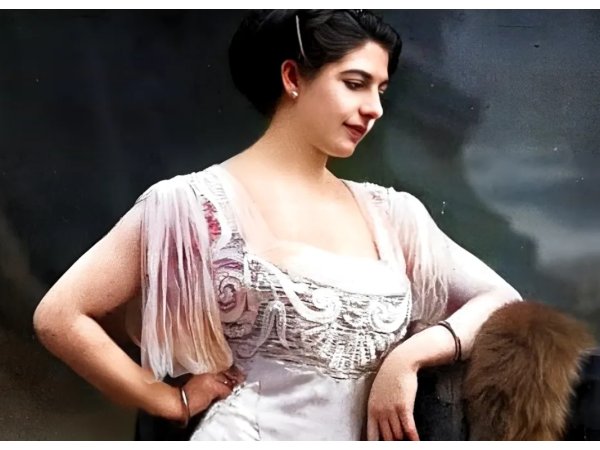
In the midst of the enormous historical storm that shook Europe at the beginning of the 20th century, among heroes, strategists, traitors, and anonymous figures, the name Maria Bălan remains one of the most fascinating and, at the same time, tragic. Considered by military historians as the most skilled, elusive, and effective Romanian spy during World War I, Maria Bălan was nicknamed “Mata Hari of Romania.” Her beauty, extraordinary intelligence, and ability to infiltrate the most inaccessible spaces of the enemy made her a secret weapon of immense value for the Romanian state. Her story, full of courage, sacrifice, and betrayal, remains one of the most dramatic pages in the history of Romanian espionage.
The Youth of a Woman Out of Her Era
Maria Bălan was born in the last decades of the 19th century, in a Kingdom of Romania undergoing profound transformation. From a young age, she stood out through a rare combination of charm, ambition, and intellectual brilliance, qualities that did not go unnoticed.
At only 19 years old, she attracted the attention of the Romanian secret services, which were already modernizing their methods and intelligence networks. This was a period in which Europe was simmering, and tensions between the great powers heralded the inevitable conflict.
Recruited under the code name B-9, young Maria entered a dangerous world, dominated mostly by men. But she was not a novice. Her capacity for disguise, spontaneity, and rapid analysis of situations transformed her into an agent with immense potential, worthy of the most sensitive missions.
Infiltration in Timișoara, the Strategic Hub of the Central Powers
Once the great European conflict began, Romania still hesitated to enter the war. However, its secret services worked intensively. In 1914, Maria Bălan was sent on a mission of critical importance: infiltration in Timișoara, a city under Austro-Hungarian authority and a top strategic military point for the Central Powers.
In the elegant salons of the local aristocracy, in officers’ cafés, at balls, or private dinners, Maria proved irresistible and unreadable. She approached German and Austro-Hungarian commanders with ease, entering circles that were impossible for an ordinary civilian to access.
Through her studied charm, carefully chosen questions, and subtle psychological manipulation, she managed to extract information that, under other circumstances, would have required months of work and dozens of agents.
The reports she sent reached both the General Security Directorate and the Second Section of the General Staff. Historians note that this data had a major impact on Romanian military strategies and even on those of Serbia during this highly tense period.
Her Secret Weapon: The Psychology and Discipline of a True Professional
Although Maria Bălan’s beauty is often highlighted, her real power came from another source: a profound understanding of human psychology. She knew exactly when to be seductive, when to be distant, when to become a confidante, and when to withdraw suddenly to sow doubt or desire for renewed contact. This refined technique made her unforgettable and nearly impossible to track.
She attended balls and dinners, but also discreet meetings invisible to the public eye. Beneath the mask of a refined, pleasant, sometimes frivolous young woman, lay a mind that constantly analyzed troop movements, officer information exchanges, military routine changes, or political developments. She returned from these meetings not only with smiles but with attack plans, artillery positions, defensive strategies, and intelligence of inestimable value.
This efficiency made her one of the most hunted targets of Austro-Hungarian counterintelligence. Many tried to identify her, yet she seemed to vanish each time, leaving only rumors and suspicions.
Hunted by the Enemy, Betrayed at Home
Paradoxically, despite the enormous risks in occupied territories, Maria Bălan was not captured there. For years, she maintained her anonymity and transmitted vital information. But the fatal blow came from within.
Austro-Hungarian spies infiltrated even in Bucharest. There, they obtained, through a leak still not fully clarified, the real identity of agent B-9. That is how they discovered that behind this seemingly uncatchable agent was a young Romanian woman with an angelic face, sharp mind, and unwavering loyalty.
Once her identity was compromised, the Austro-Hungarians launched a rapid operation. Maria was captured and brought before a military tribunal, in a formal, rushed process with no real chance of defense.
Execution and Unjust Oblivion
The military tribunal’s verdict was swift and cruel: death by hanging. For the Central Powers, her removal was a demonstration of force and a warning to the rest of the Romanian espionage network. For Romania, the loss of Maria Bălan meant the disappearance of one of its most talented agents. However, for political or security reasons, the state offered her no official recognition at the time.
The years that followed were no kinder. Unlike Mata Hari, celebrated in dozens of books and films, Maria Bălan was left in the shadows. Her story was only marginally mentioned, while her contributions to saving thousands of lives on the Eastern Front were silenced.
The Legacy of a Discreet but Decisive Heroine
The passage of time only accentuated the injustice. Maria Bălan was far more effective than the famous Mata Hari, more discreet, and devoted to her cause. She did not work for money but out of patriotism, in an era when women rarely had the chance to demonstrate strategic intelligence. Her courage, sacrifice, and ability to confront a hostile system remain unmatched.
Today, more than a century after her death, Maria Bălan’s story deserves to be remembered and honored. She did not fight with weapons but with intelligence, charm, and an iron will. For her country, these were invaluable tools.
In a world full of invented heroes, Maria Bălan was a genuine hero, one who lived and died for Romania. And although she did not gain the international fame of other espionage figures, she remains without a doubt one of the most impressive women in the history of Romanian military intelligence.
We also recommend: Rodica Ojog Brașoveanu, a story like in books. The great lady of Romanian detective literature who gave up law for Melania and Minerva