Who was Hagi Stoica Nicolae and why a street in Bucharest bears his name
- Articles
- 16 JAN 26
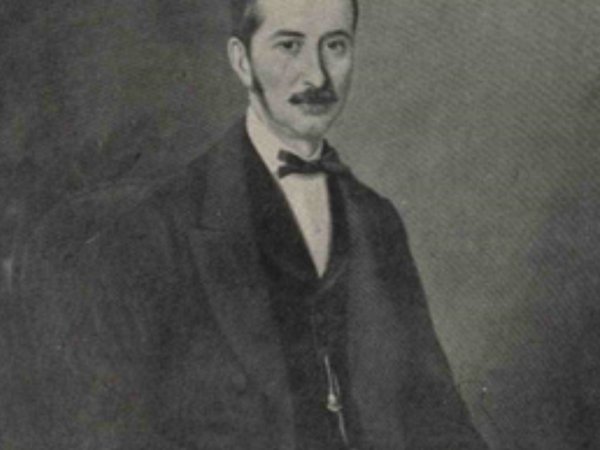
Nicolae Hagi Stoica is one of those nineteenth-century personalities who, although not very well known to the general public today, played an essential role in the modernization of Romanian society. A visionary merchant, a man of action, and an authentic entrepreneurial spirit, he contributed decisively to the transformation of Romanian trade during a period marked by profound economic and political changes.
Origins and formation within a family of merchants
The street that bears his name in Bucharest is not merely an urban detail, but a recognition of his impact on the development of the capital and on local commerce. The life and activity of Nicolae Hagi Stoica tell the story of a man who knew how to see beyond the limits of his time and to build a modern business model, oriented toward efficiency and innovation.
Nicolae Hagi Stoica was born in 1818 in Pitești, in the Mavrodolului neighborhood, into a family with a tradition in commerce. His father, Petre Daciu, was a merchant of abale, a type of wool highly sought after at the time, while his mother, Elena, came from a wealthy family of merchants from northern Macedonia. This combination of local experience and Balkan commercial connections provided young Nicolae with a favorable environment to understand the mechanisms of trade from an early age.
Through his mother, Nicolae Hagi Stoica had relatives involved in important commercial activities in cities such as Craiova, Iași, and Focșani. These connections helped form an extensive network of relationships, extremely valuable in an era when success in business depended largely on trust and collaboration.
Apprenticeship and rise in the world of Bucharest merchants
At just 18 years old, in 1836, Nicolae Petrovici, as he was initially called, arrived in Bucharest to become an apprentice to Ștefan Hagi Stoica, one of the most important merchants of the capital. This formative period was essential for his future, as it allowed him to learn not only the secrets of trade, but also discipline, perseverance, and the importance of reputation in business.
His diligent work and seriousness quickly made him stand out in the eyes of Ștefan Hagi Stoica. As proof of the trust placed in him, in 1845 he decided to give him the hand of his daughter, Maria, who was only 17 years old, on the condition that Nicolae take the family name Hagi Stoica. Thus, the young merchant officially became part of one of the most respected commercial families in Bucharest.
Taking over the business and consolidating his position in the capital
After the death of Ștefan Hagi Stoica, in 1853, Nicolae Hagi Stoica took over the entire family business. Under his name, the commercial activity initially continued in the area of Saint George Square, and later moved to Colței Street, into a space owned by him. This move reflected not only the expansion of the business, but also the ambition to adapt to the demands of a capital city undergoing rapid development.
His personal life was closely connected to his professional success. Nicolae Hagi Stoica had five children, four sons who pursued intellectual careers, becoming specialists in fields such as law or medicine, and one daughter. Investing in his children’s education demonstrates his modern vision and his desire to build a solid future for the next generations.
Commercial innovations and the elimination of intermediaries
A key moment in Nicolae Hagi Stoica’s activity was the realization that old commercial methods no longer matched the new economic realities. After the Treaty of Adrianople in 1829, which opened trade and facilitated international exchanges, he understood that dependence on intermediaries artificially increased prices and limited the development of local businesses.
In this context, Nicolae Hagi Stoica decided to travel personally to purchase goods directly from producers. Initially, his journeys took him to Vienna, and later he reached England, where he identified far more advantageous commercial opportunities.
A famous example is that of the sickles purchased from Sheffield, which he bought entirely from the manufacturer, paying on the spot the sum of 1,000 pounds sterling and requesting that his name be inscribed on each piece.
Direct trade with Europe and product diversification
The success of the sickles marked with the name Nicolae Hagi Stoica was only the beginning. The merchant introduced new products to the Bucharest market, brought directly from factories in France and Germany, at prices considerably lower than those practiced through intermediaries. Among these novelties were the first metal nails and forks, essential items for agriculture and construction.
His frequent travels to France, England, Italy, Germany, and Austria were described by him in a letter from 1872 addressed to his daughter. These journeys were not only commercial in purpose, but also represented a form of documentation, through which Nicolae Hagi Stoica remained connected to the technological and economic developments of Western Europe.
Withdrawal from business and the legacy left behind
As the nineteenth century approached its end, the pace of economic change became increasingly rapid. Although he had been a pioneer of modernization, Nicolae Hagi Stoica realized that the new conditions exceeded his ability to adapt. In 1888, he decided to withdraw from commercial activity, after settling all his debts and selling his properties.
He spent the last 12 years of his life in his old family houses, leading a quiet existence and occasionally receiving visits from old friends. His legacy does not consist only of material goods, but above all in the business model he created and in the contribution he made to the development of Romanian trade. The street that bears his name in Bucharest is a tribute to a man who helped the capital and the country take a decisive step toward modernity.
We also recommend: Who Was Ion Câmpineanu and Why a Street in Central Bucharest Bears His Name