Who was General Nicolae Dona and why does he have a street bearing his name in the center of Bucharest
- Articles
- 24 APR 26
Bucharest preserves in its street nomenclature the names of personalities who had an important role in the history of Romania, even if today not all residents of the capital still know the story behind these names. One of these streets is General Nicolae Dona Street, located in the central area of the city, a name that recalls one of the notable officers of the Romanian army from the 19th century.
The history of General Nicolae Dona
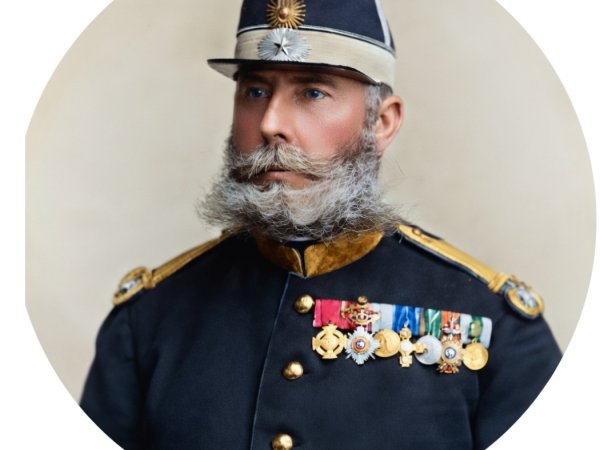
General Nicolae Dona was one of the important figures of the modern Romanian army, a career military man who dedicated his entire life to the organization and development of the military structures of the Romanian state, which was in full consolidation. He had an essential role both in the strategic and administrative field, as well as in military topography, being one of the pioneers of the technical institutions that contributed to the professionalization of the army.
His career took place during a crucial period for Romania, marked by modernization, by the War of Independence, and by the transformation of the army into a modern institution, following the Western model. From positions as a military professor and specialist in topography, to the position of Chief of the General Staff and army corps commander, Nicolae Dona had an impressive professional path.
The fact that a central street in Bucharest bears his name is not accidental at all, but represents a form of recognition of his contribution to the construction of the modern Romanian army and to the history of the Capital.
Origins and the beginning of the military career
Nicolae Dona was born on August 6, 1833, in Bucharest, into a respected family, having Constantin and Elena Dona as parents. He grew up during a period in which the Romanian Principalities were going through important political and administrative transformations, and the military profession was beginning to gain increasing importance in the modernization process of the state.
Young Nicolae Dona chose the military career and attended the Infantry Military School in Bucharest, one of the most important military training institutions of the time. He graduated on April 7, 1856, obtaining the rank of second lieutenant, being immediately assigned to the 3rd Infantry Regiment.
From the very beginning of his activity, he stood out through seriousness, discipline, and good technical training, qualities that recommended him for positions of responsibility. In 1858 he was appointed to an Engineering Office attached to the War Ministry, the same structure of which Constantin Barozzi, one of the important personalities of Romanian military engineering, was also part.
This stage was decisive for his professional formation, because it offered him direct contact with the technical and strategic organization of the army, during a period in which Romanian military institutions were still in the process of construction.
The rise in the General Staff
His professional qualities quickly propelled him into the command structures. On December 14, 1859, second lieutenant Nicolae Dona was promoted to the position of assistant to the chief of the 2nd Section of the General Staff, an important position for such a young officer.
On February 20, 1860, he was advanced to the rank of lieutenant, and on October 9, 1862, by Decree no. 202, he was appointed chief of the 2nd Section of the General Staff. This appointment demonstrated the confidence that his superiors had in his organizational capacity and in his professional skills.
Alongside his activity in the General Staff, Nicolae Dona was appointed, beginning with October 13, 1860, professor of topography and topographic drawing at the Infantry and Cavalry Military School in Bucharest. This position shows how important his technical expertise was and how appreciated he was in the field of officer training.
Teaching topography had major strategic importance, because knowledge of the terrain and the making of military maps represented essential elements in planning military operations. Nicolae Dona stood out precisely through this rare combination between command competence and technical competence.
Specialization in France and contribution to military topography
After a period of training in Romania, Nicolae Dona benefited from a training internship in France, one of the most advanced European military powers of the era. The French experience had a major influence on his professional formation, giving him access to modern methods of military organization and to Western standards of instruction.
On October 2, 1867, he received the rank of major, and in 1868 he was appointed chief of the Scientific War Depot, an essential institution for managing technical documentation and the information necessary for the army.
This area of activity established him as one of the important personalities of the pioneering period in the organization of the first military topogeodetic institution in Romania. Military topography did not mean only the making of maps, but also the development of a strategic infrastructure for knowing the national territory.
On April 1, 1871, he was appointed deputy director of studies at the Military School in Bucharest, after on January 1 he had been advanced to the rank of lieutenant colonel. Later, on April 1, 1872, he returned to the War Depot, and from March 9, 1873, he became deputy director at the Infantry and Cavalry Military School.
All these positions show how strongly he was involved in the professional training of the new generations of officers and in the development of the technical structures of the Romanian army.
His role in the War of Independence
The year 1877 represented a defining moment both for the history of Romania and for Nicolae Dona’s career. In the context of the outbreak of the War of Independence, his military experience and command capacity became essential.
In April 1877, he was advanced to the rank of colonel and appointed, beginning with May 1, commander of the 5th Dorobanți Regiment. This position placed him directly at the center of military operations.
On September 11, he was promoted commander of the 2nd Brigade of the 4th Infantry Division and became commander of the Grivița Assault Group, one of the most important structures involved in the battles for the conquest of the Ottoman redoubts at Plevna.
Participation in the assault at Grivița was one of the most important stages in his military career. The battles here remained in the history of the Romanian army as symbols of courage and sacrifice in the fight for independence.
The front-line experience consolidated his reputation as an efficient commander and turned him into a respected name in the Romanian army.
Leadership positions in the Romanian army
After the end of the war, Nicolae Dona continued to hold important positions in the leadership of the army. On December 16, 1878, he returned to the position of section chief in the General Staff Corps, and from July 19, 1879, he was appointed general director at the General Administration of the War Ministry.
On April 24, 1880, he became commander of the 21st Dorobanți-Ilfov Regiment, and on August 1, 1880, he was appointed president of the Permanent Commission of the Superior Council of the War Ministry.
From April 1, 1882, he led the 2nd Section of Topography, Photography, Lithography, and Library within the War Depot, which again confirms his major role in the development of the technical and documentary structures of the army.
On March 16, 1883, he was appointed chief of the 3rd Section of the Great General Staff Service, and from May 25, 1884, he became deputy chief of Staff and chief of the same section.
Between May 1, 1885, and January 13, 1886, he held one of the most important positions of his career: Chief of the Great General Staff. This position placed him at the top of the Romanian military hierarchy and confirmed the professional prestige accumulated in the previous decades.
The last years of service and the legacy left behind
On February 20, 1886, Nicolae Dona became commander of the 6th Infantry Division, and on June 1, 1887, he was advanced to the rank of brigadier general and appointed commander of the 3rd Infantry Division.
From April 8, 1888, he took over command of the 4th Infantry Division, and on April 15, 1898, he was appointed commander of the 1st Army Corps, one of the most important military structures of the country.
On July 5, 1898, he was placed in reserve, and in 1907 he was officially retired due to age limit. Even after the end of active service, recognition of his merits continued.
On May 5, 1910, he was advanced to the rank of major general in retirement, a symbolic gesture that confirmed the importance of his contribution to the development of the modern Romanian army.
Nicolae Dona passed away on February 25, 1916, at the age of 83, leaving behind an impressive military career and a solid institutional legacy.
Why does he have a street bearing his name in the center of Bucharest
General Nicolae Dona Street in the center of Bucharest is not just a simple administrative name, but a form of urban memory. Through this choice, the city keeps alive the memory of a man who contributed decisively to the organization of the modern Romanian army and to the professionalization of its strategic structures.
Nicolae Dona was not only a front-line commander or a career officer, but also a builder of institutions. He supported the development of military topography, participated in the training of new generations of officers, and held the highest positions in the Romanian military system.
In a Bucharest where many street names go unnoticed, the street that bears his name recalls an era in which discipline, competence, and service to the state represented fundamental values.
General Nicolae Dona remains one of those discreet but essential personalities, without whom the military history of Romania would have looked completely different. That is precisely why his name continues to exist in the center of the Capital, as a sign of respect for a life dedicated to the army and the country.
We also recommend: General Ioan Emanoil Florescu, founder of the Romanian Army, has a street bearing his name in the center of Bucharest