Where do we eat the best mucenici in Bucharest, on March 9: venues, prices, flair
- Articles
- 09 MAR 26
Every year, at the beginning of spring, Bucharest enters a special atmosphere, and one of the most beloved traditions is connected to March 9, when the 40 Martyrs of Sebaste are commemorated. On this occasion, in Romanians’ homes, but also in confectioneries, pastry shops, and restaurants, mucenici appear – the symbolic dessert of the beginning of spring. Whether we are talking about Moldavian mucenici, baked and glazed with honey and walnuts, or about Muntenian mucenici, boiled in a sweet syrup flavored with cinnamon and lemon, this preparation is always present on the menu of the day. In Bucharest, the offer is more varied than ever. From historic confectioneries and neighborhood pastry shops to gastronomic fairs or desserts reinterpreted in gourmet style, mucenici can be found in almost all areas of the city. Prices differ depending on the ingredients used and the fame of the venue, but also on the way the traditional recipe is reinterpreted.
The tradition of mucenici and the taste of childhood
The day of March 9 marks in the Orthodox Christian calendar the commemoration of the 40 martyrs from Sebaste, Christian soldiers who refused to renounce their faith and were sentenced to death. In their memory, Romanians created a special culinary tradition: mucenici, prepared in the shape of the number eight, a symbol of infinity and eternal life.
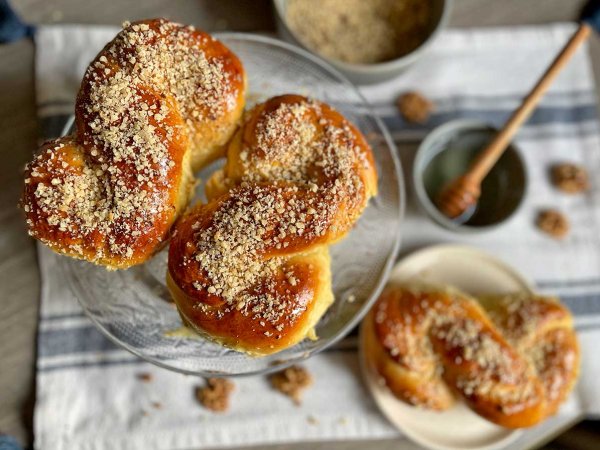
There are two major versions of this dessert. In Muntenia and Dobrogea, mucenici are small eight-shaped pieces of dough boiled in a sweet syrup with sugar or honey, flavored with rum, cinnamon, and lemon peel, over which ground walnuts are sprinkled. In Moldova, the dessert is completely different: the mucenici are baked, fluffy, similar to small braided breads, brushed with honey and generously sprinkled with walnuts.
In the capital, both versions are extremely popular, and the people of Bucharest often divide into two camps: those who prefer boiled mucenici and those who cannot give up the baked version, sweet and aromatic. Every year, pastry shops and confectioneries prepare thousands of portions, and some sell even several thousand pieces in a single day.
Confectioneries in Bucharest where we find good mucenici
In the period around March 9, many confectioneries in Bucharest introduce this traditional dessert into their display windows, and some of them are already known for their mucenici.
One of the appreciated options is the Casandra Confectionery, where Moldavian mucenici are well soaked in syrup and covered with walnuts, the price being around 18 lei for one piece. For those who want to buy for the family or for the office, there are also boxed versions – for example, 18 pieces can reach approximately 300 lei.
A more accessible option can be found at the Polen Pastry Shop, where mucenici are sold for about 10 lei each. This version keeps the classic recipe, with honey and walnuts, without sophisticated reinterpretations.
At the Alice Confectionery, the traditional dessert is also very popular during this period, and the price reaches about 14 lei for a Moldavian mucenic. The confectionery is known for its classic desserts, and the mucenici are prepared according to recipes close to homemade ones.
For those who want a more elegant experience, there are also premium versions. Some confectioneries use more sophisticated ingredients – honey from local producers, candied orange, or aromatic syrups – which transforms the mucenic into an almost gourmet dessert.
Pastry shops and bakeries where mucenici are the stars of the day
Besides confectioneries, many pastry shops and artisan bakeries in Bucharest prepare mucenici during this period. Very often, these places manage to keep the authentic taste, close to the one made at home.
Some artisan bakeries offer Muntenian mucenici boiled in syrup flavored with honey, lemon, and cinnamon. For example, in certain artisan bakeries in the city, a portion of Muntenian mucenici can reach approximately 26–30 lei for a casserole of about 340 grams.
In neighborhood pastry shops, prices are usually lower, and the dessert is sold by the piece. Generally, Moldavian mucenici cost between 6 and 14 lei, depending on the size and the ingredients used.
On forums and in online communities, the people of Bucharest frequently recommend places such as neighborhood pastry shops, artisan bakeries, or well-known pastry chains. Some even say they found surprisingly good mucenici in supermarkets or in lesser-known bakeries, where the dessert is prepared fresh every morning.
Festivals and fairs where mucenici are eaten as in the old days
If you want to turn tasting mucenici into a complete experience, it is worth going to one of the fairs dedicated to this tradition. In Bucharest, such events are organized almost every year around March 9.
One example is the “Traditions of Mucenici” Festival, organized in the Kiseleff area. Here, cooks prepare Muntenian mucenici in huge cauldrons, and visitors can taste the traditional dessert in a folk fair atmosphere. Sometimes even a 1,000-liter cauldron of mucenici is prepared, and the organizers try to set culinary records, such as huge chains of Moldavian mucenici.
Besides mucenici, at these fairs you can also find other traditional dishes – cozonac, pies, langoși, or gingerbread – and the atmosphere is completed by shows and workshops for children.
Such events transform a simple tasting into a cultural experience, in which the gastronomic tradition blends with folk customs.
How much mucenici cost in Bucharest
The prices of mucenici in Bucharest can vary quite a lot, depending on the place where they are bought and the way they are prepared.
In simple pastry shops and bakeries, the price can start from about 6–10 lei for a Moldavian mucenic. In more well-known confectioneries, the price usually reaches between 14 and 18 lei per piece.
In the case of premium versions or those prepared with special ingredients, the price can be higher. Some confectioneries sell mucenici packaged in elegant boxes or prepared with rare ingredients, which turns them into an occasional dessert or even a gastronomic gift.
Restaurants or artisan bakeries can also offer larger portions, served in casseroles, especially for the boiled mucenici, where the price depends on the quantity.
A simple dessert, but full of meaning
Although today mucenici can be bought from almost any corner of the city, their charm remains the same as in childhood. It is a simple dessert, made from ordinary ingredients – flour, honey, walnuts, and flavors – but loaded with symbols and traditions.
For many people in Bucharest, March 9 does not mean only a religious holiday, but also the beginning of spring, a moment when tables fill with the smell of cinnamon and roasted walnuts.
Whether you choose to buy mucenici from a famous confectionery, from a neighborhood pastry shop, or from a traditional fair, the experience remains the same: a return to the simple and authentic tastes of Romanian cuisine. And in Bucharest, the city where tradition intertwines with modernity, mucenici on March 9 are more than a dessert – they are a small celebration of taste and memory.
We also recommend: The most famous legends of the Mărțișor: The Dragon Who Kidnapped the Sun, Baba Dochia and the Fierce Battle Between Spring and Winter