Where Bucharest residents went on December 1st in the ’90s and where they go now: the evolution of winter urban habits
By Bucharest Team
- Articles
- 01 DEC 25
Over the past three decades, December 1st has shifted from a simple date on the calendar to a marker that shapes how Bucharest experiences the start of winter. The way residents spend this day reflects the city’s own evolution: its infrastructure, its access to leisure, and the way public space has been reorganized after 1989. In the ’90s, everything was still diffuse and experimental; today, the city operates with a clear set of urban rituals — from attending the military parade to moving toward fairs, lights and commercial spaces. The evolution of these behaviours outlines, in practice, the story of the city’s transformation.
The ’90s: a holiday still taking shape
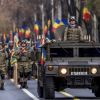
In the first decade after the Revolution, December 1st has a mostly institutional character. The military ceremony at the Arch of Triumph gradually crystallizes, but there is no clear “urban habit” yet. Attendance is modest, and the city offers no alternatives: no winter fairs, no tradition of extensive holiday lights, no modern retail. After the ceremony, people go home or withdraw into private spaces; the holiday has no component of urban leisure time.
Before 1989: no December 1st in the public space
As context, before 1989, there was no type of public marking on December 1st. The average Bucharest resident had no association between this date and the idea of a national holiday. Only the ’90s bring this reinterpretation, and in its early stages, the city functions without any pre-existing social model.
The 2000s: the emergence of an urban ritual
With institutional stabilization and infrastructure modernization, Bucharest begins to build a recognizable reference point: the parade at the Arch of Triumph becomes the central event, accompanied by early attempts at festive lighting in the central areas. Even so, the afternoon of December 1st remains quiet. The urban entertainment market is still small, and events are sporadic.
The major shift comes with the development of modern retail. Mall openings introduce a completely new alternative: a climate-controlled space with winter leisure options. For the first time, part of the population abandons the exclusively institutional ritual and begins spending the day in commercial spaces rather than outdoors.
After 2010: the city transforms and winter season emerges
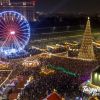
The next decade permanently changes habits. Bucharest enters the European logic of the winter months, and December 1st becomes, informally, the start of the festive season. Christmas markets appear and multiply; cultural events diversify; parks are used more; pedestrian infrastructure expands. For the first time, the city offers real alternatives for families, young people and visitors.
In parallel, cultural and social consumption partially moves online: the parade becomes widely broadcast and watched on digital platforms, which changes how residents relate to the event. Physical presence is no longer required to “participate.”
Today: December 1st as an anchor of Bucharest’s winter urban style
Now, December 1st functions as an intersection of three types of urban behaviors:
– traditional participation in the military parade, stable and predictable;
– modern urban consumption: fairs, lights, children’s events, outdoor activities;
– retreat into private spaces: malls, cinemas, cafés, indoor family options.
Moreover, the city has built a visible identity around the winter season. Where the ’90s offered only the official event, today Bucharest proposes a coherent mix of activities, increasingly aligned with European capitals.
The evolution of December 1st in Bucharest is essentially the story of the city’s transformation from a place with limited infrastructure and unclear rituals into a capital capable of generating and sustaining urban habits. From a purely institutional day, Bucharest has reached a diverse calendar where residents choose among multiple ways of spending their free time.