What You Should Know Before Driving in Bucharest When It Snows
By Bucharest Team
- Articles
- 05 JAN 26
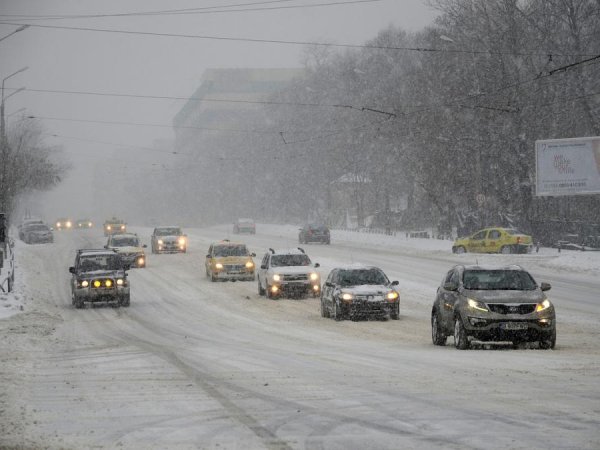
In Bucharest, snowfall is not a meteorological exception but a test of how the city functions. Problems rarely stem from the amount of snow itself and far more often from the way infrastructure, snow removal, and traffic behavior do—or do not—work in sync. When driving is unavoidable, a few basic considerations can make the difference between a manageable journey and an exhausting one.
More often than not, getting started is harder than the drive itself. Main boulevards are usually cleared first, while secondary streets and residential parking areas tend to remain covered with compacted snow or ice. As a result, leaving your neighborhood often concentrates the real difficulties: reduced traction, limited space, and forced maneuvers around tightly parked cars.
During snowfall, distance is no longer a reliable indicator of travel time. Disruptions occur locally and spread quickly—a slippery ramp, a stalled tram, or a blocked intersection can change traffic conditions within minutes. Navigation apps become indicative rather than predictive, and realistic planning requires wider time buffers and alternative routes.
The greatest risk arises when stopping, not when accelerating. On compacted snow or ice, braking distances increase significantly, even at low speeds. Keeping extra space from the vehicle ahead is not a courtesy; it is a control measure that provides reaction time when conditions change abruptly.
Certain areas remain vulnerable regardless of how thoroughly the city has been cleared. Bridges, underpasses, and ramps freeze earlier and thaw later, making them frequent sites of skidding, even at reduced speeds. Sudden maneuvers—hard braking or rapid lane changes—amplify the risk precisely in these sensitive spots.
Proper vehicle preparation helps, but it does not eliminate uncertainty. Winter tires are mandatory and necessary, yet safety depends on a combination of factors: road conditions, traffic flow coherence, and the reactions of other drivers. In this context, defensive driving matters more than the technical performance of the vehicle.
Parking becomes a separate challenge. Road markings disappear under snow, curbs are no longer visible, and spaces narrow. Improvised parking increases the risk of damage and can block access, while after heavy snowfall freeing the car may take longer than the drive itself.
When there is no clear urgency, postponing the trip is often the soundest decision. The hours immediately following a heavy snowfall, peak traffic periods, and routes with ramps or narrow streets are the slowest to stabilize. The city recovers gradually, not instantly.
Ultimately, snowfall does not create new dysfunctions; it reveals existing ones. Infrastructure designed for ideal conditions becomes fragile when circumstances change, and the way traffic moves on snow says more about the city than about the weather.
Driving in snowy conditions in Bucharest is not a matter of skill or boldness, but of anticipation and self-control. The smart decision is not to arrive faster, but to arrive without incident.