What remains today of Interwar Bucharest and where the best-preserved buildings can be seen
- Articles
- 07 JUL 26
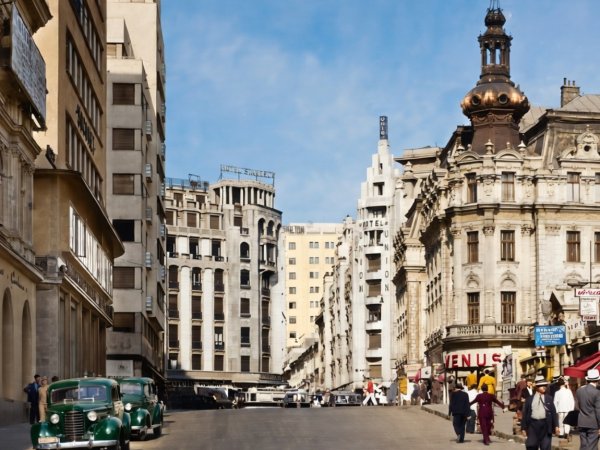
Few periods in the history of the Capital left such a strong mark on the city's image as the interwar years. Between the end of the First World War and the beginning of the Second World War, Bucharest went through one of the most spectacular stages of urban, economic and cultural development. Elegant buildings, modernized boulevards, luxurious hotels, impressive villas and administrative headquarters built in various architectural styles transformed the city into a capital often compared to Paris. Although the bombings during the war, the earthquakes and the communist systematization radically changed the appearance of Bucharest, numerous buildings and urban ensembles from the interwar period have survived to the present day. They represent today some of the most valuable testimonies of an era in which architecture, elegance and the cosmopolitan spirit defined the life of the Capital.
Interwar Bucharest – a capital undergoing full transformation
The interwar period meant for Bucharest an accelerated pace of modernization. After the Great Union of 1918, the Capital of Greater Romania became the administrative, political and economic center of a considerably expanded country. The population grew rapidly, and urban development followed the same pace.
During those years, new traffic arteries were laid out, modern apartment buildings, bank headquarters, ministries, cultural institutions and numerous villas intended for the bourgeoisie and the intellectual elite were built. Romanian architects, many of them educated in France, Italy or Germany, brought to Bucharest Art Deco, Modernist, Neo-Romanian and Neoclassical influences.
The result was an eclectic city, in which elegant buildings coexisted harmoniously with nineteenth-century palaces and the new constructions inspired by the great European capitals.
Calea Victoriei, the place where the past is still present
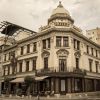
Few streets preserve the atmosphere of interwar Bucharest as well as Calea Victoriei. Although numerous buildings have been renovated or adapted to new functions, this thoroughfare remains one of the most important open-air museums of architecture.
The walk begins at the CEC Palace, continues toward the former bank headquarters, the historic hotels and the office buildings erected during the 1920s and 1930s. Many of them preserve their original façades, ornamentation and proportions specific to the period.
Among the most representative buildings are:
- The Telephone Palace, inaugurated in 1934 and considered the first authentic skyscraper in Bucharest;
- The Athénée Palace Hotel, one of the symbols of interwar high society;
- The National Military Circle Palace;
- The Palace of the Union of Architects;
- Numerous former headquarters of banks and commercial companies.
Today, Calea Victoriei remains probably the best choice for those who want to discover, in a single walk, the architecture and atmosphere of Bucharest between the two World Wars.
Magheru Boulevard – the manifesto of Romanian Modernism
If Calea Victoriei reflects the classical elegance of the Capital, Magheru Boulevard represents the symbol of interwar Modernism.
Between 1930 and 1940, this area became a true laboratory of modern architecture. The tall buildings, with simple lines, continuous balconies and large windows, radically changed the city's appearance.
Among the best-known buildings are:
- The ARO Building (today Cinema Patria);
- The Adriatica Building;
- The Scala Building;
- The Casata Building.
At the time of their inauguration, these buildings offered facilities considered revolutionary: fast elevators, central heating, spacious apartments and commercial spaces on the ground floor.
Today, Magheru Boulevard is considered one of the most important Modernist boulevards in Eastern Europe.
Dorobanți district and the elegance of the interwar villas
Dorobanți is one of the districts where the interwar heritage has been preserved the best. Here, hundreds of villas built between 1920 and 1940 can be admired, many of them designed for doctors, lawyers, university professors and politicians.
The houses impress through:
- Art Deco details;
- Neo-Romanian elements;
- Mediterranean influences;
- Generous gardens;
- Richly decorated façades.
Numerous buildings have been restored in recent years, and the area continues to be one of the most appreciated for its architectural heritage.
Cotroceni – a district that has preserved its charm
Another place where interwar Bucharest is still very much present is the Cotroceni district. The quiet streets, shaded by mature trees, preserve numerous villas built during the interwar period, many of them almost unchanged.
The characteristics of this district include:
- Narrow and airy streets;
- Generous plots of land;
- Elegant detached houses;
- Wrought-iron fences;
- Discreet ornamentation.
A walk through Cotroceni offers the feeling of traveling back in time, especially on streets such as Dr. Lister, Louis Pasteur, Doctor Staicovici and Ana Davila.
The Armenian Quarter and the legacy of Bucharest's bourgeoisie
The Armenian Quarter represents one of the most valuable concentrations of historic architecture in the Capital.
Here, numerous villas and buildings constructed during the interwar period can be found, many of them belonging to influential families of merchants and industrialists.
In addition to its remarkable architecture, the district also preserves the atmosphere of a prosperous community that contributed significantly to the economic development of Bucharest.
Although some buildings require restoration, the urban ensemble remains one of the most authentic in the city.
The Grădina Icoanei area and Dacia Boulevard
Between Piața Romană and Foișorul de Foc lies another important nucleus of interwar Bucharest.
Here, numerous elegant villas, two- and three-story buildings, and structures designed in the Neo-Romanian or Modernist style can be admired.
Grădina Icoanei Park perfectly complements the atmosphere, while the adjacent streets offer one of the most pleasant walking experiences for history and urban architecture enthusiasts.
The palaces and institutions that have stood the test of time
The interwar period meant not only private residences, but also numerous impressive public buildings.
Among them are:
- The Telephone Palace;
- The Military Academy;
- Victoria Palace, whose construction began before the Second World War;
- The Arch of Triumph, rebuilt in its current form in 1936;
- Băneasa Railway Station.
These buildings continue to be important landmarks of the city and demonstrate the high level of Romanian architecture during that period.
Interwar apartment buildings, true symbols of modernity
One of the most important legacies of interwar Bucharest is represented by the apartment buildings constructed between 1930 and 1940.
Unlike buildings erected later, these emphasized comfort, natural light and the quality of construction materials.
The apartments featured:
- High ceilings;
- Large windows;
- Spacious entrance halls;
- Premium finishes;
- Monumental staircases;
- Modern elevators for that time.
Today, these apartments are among the most sought-after on the real estate market due to their efficient layouts and historical value.
Why have some buildings survived?
The fact that an important part of the interwar heritage still exists today is due to several factors.
First of all, many buildings were constructed using very high-quality materials and benefited from solid structural designs.
Secondly, certain districts were not affected by the massive demolitions carried out during the communist period, which radically transformed the historic center of the Capital.
Last but not least, over the past two decades there have been numerous restoration initiatives and efforts to designate valuable buildings as historic monuments, providing them with legal protection.
Even so, many buildings still require structural reinforcement and restoration, while deterioration caused by the passage of time remains a major challenge.
How interwar Bucharest can be discovered today
For those interested in the city's history, Bucharest offers numerous walking routes dedicated to interwar architecture.
The most interesting areas include:
- Calea Victoriei;
- Magheru Boulevard;
- Dorobanți;
- Cotroceni;
- The Armenian Quarter;
- Dacia Boulevard;
- The Grădina Icoanei area;
- Polonă Street;
- Paris Street;
- The Aviatorilor area.
A simple walk through these districts allows visitors to observe an impressive architectural diversity, ranging from Neo-Romanian villas to Art Deco apartment buildings and Modernist constructions considered remarkable even by European standards.
Beyond their aesthetic beauty, these buildings tell the story of an era in which Bucharest was seeking its place among the great capitals of the continent. They recall the years when the city was a vibrant cultural center, where cafés served as meeting places for writers and artists, while the boulevards were animated by elegant automobiles, modern trams and passers-by dressed according to the latest Western fashions.
The interwar heritage that remains in Bucharest today represents much more than a collection of old buildings. It is an essential part of the city's identity and proof of the level of development that the Capital had achieved during the first half of the twentieth century.
Every restored façade, every saved villa and every reinforced Modernist apartment building contributes to preserving the memory of a period regarded by many as one of the brightest in the history of Bucharest. For this very reason, discovering these places is not only a journey into the past, but also a way to better understand the city's evolution and the importance of protecting its architectural heritage for future generations.
We also recommend: The code of good manners in interwar Bucharest: How gentlemen and young ladies behaved when they went out in the city