The code of good manners in interwar Bucharest: How gentlemen and young ladies behaved when they went out in the city
By Bucharest Team
- Articles
- 17 JUN 26
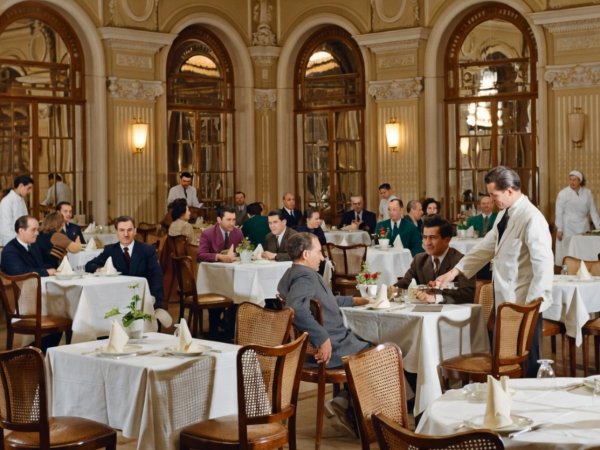
Today, the rules of behavior in public spaces are much more relaxed than they were a century ago. The way we dress, the way we speak with those around us, or the habits we have when going to a restaurant are no longer subject to the same social restrictions as in the past. In interwar Bucharest, however, every gesture had a certain significance, and respecting the code of good manners was considered essential for any person who wished to be accepted into the elegant circles of society. The capital of Romania was going through a profound transformation during that period. Bucharest was gradually abandoning the Oriental influences that had long marked its social life and was turning toward Western models, especially those coming from Paris and Vienna. For the bourgeoisie and for those who aspired to a high position in society, elegance was not limited only to expensive clothes or visiting luxurious establishments, but also required knowledge of strict rules of conduct. According to the explanations provided by specialists in the history of everyday life, such as Alexandra Rusu from the Filipescu-Cesianu House, adopting Western norms of behavior represented a way through which the residents of Bucharest could build a respectable image and demonstrate their social status. Thus, a simple outing to a restaurant, a café, a confectionery, or a bar became a true social ritual, in which every movement was carefully controlled.
Entering an establishment, the first test of elegance
In interwar Bucharest, good manners began from the very moment a person crossed the threshold of an establishment. Entering was not considered a simple gesture, but the moment that set the tone for the entire meeting. According to the work “Rules of Education and Good Manners” written by Victor Grosu, people were advised to adopt a balanced attitude, without appearing either too indifferent or excessively shy or uncomfortable.
Couples and groups had to respect a certain order when entering and leaving. The gentleman entered a restaurant or café first, having the role of checking the surroundings and ensuring the comfort and protection of the lady accompanying him. Upon departure, the same rule applied, the man being the one who exited first to prepare the way and avoid possible unpleasant situations.
This conduct reflected the mentality of the time, in which the man was considered responsible for the safety and the smooth development of the social outing. Today, these rules may seem outdated, but during the 1920s and 1930s they represented a sign of respect and refined education.
The cloakroom, attire, and attention to the smallest details
Once inside the establishment, guests had to respect other rules of behavior. If the restaurant or café had a cloakroom, clothes were left there. If the establishment did not have such a space, the waiters took the guests’ coats, and the gentlemen had the obligation to help the ladies remove their coats or overcoats.
At the end of the meeting, the gesture was repeated. The man offered his partner help in putting on her coat, making sure that the garment was placed correctly and that the woman’s outfit looked impeccable before leaving the establishment. These gestures were considered expressions of refinement and attention toward the accompanied person.
Physical appearance had a special importance during the era. A neat outfit, appropriate accessories, and a discreet appearance conveyed information about a person’s education and social position. For this reason, the members of Bucharest’s high society paid extremely close attention to the way they presented themselves in public.
Why a young lady alone in a restaurant was viewed differently
One of the greatest differences between interwar society and today’s society was related to women’s freedom to visit public establishments alone. In most cities in Romania, the idea of a young lady having a meal unaccompanied in a restaurant was considered inappropriate.
Bucharest, however, was more permissive than the rest of the country, and in certain prestigious restaurants there were situations in which women could come alone. Even in these cases, the codes of good manners recommended that they choose more secluded tables and avoid the central areas of the establishment.
If they could not find a free table, young ladies were advised to sit either near other women or near elderly gentlemen, who were considered respectable individuals. At the same time, unmarried young women were encouraged to avoid visiting restaurants alone, and even older women were not recommended to frequent establishments unaccompanied during the evening.
These rules reflected the social norms of the period, when a woman’s reputation was considered an extremely important asset, and any behavior that went beyond accepted limits could become a subject of comments within society.
The art of conversation and the relationship with waiters
Once seated at the table, educated Bucharest residents had to permanently maintain elegance in their gestures and speech. The gentleman had the obligation to pull out the chair for the lady accompanying him, and the discussions held at the table had to take place in a moderate tone, without exaggerated gestures or loud manifestations that could disturb the other customers.
The relationship with the establishment’s staff was also governed by strict rules. Even when a problem occurred, such as receiving an incorrect order or having additional products added to the bill, complaints had to be made calmly and discreetly. Arguments with waiters or raising one’s voice were considered clear signs of poor education.
In the elegant establishments of the Capital, refinement was measured not only through clothes or the choice of menu, but also through a person’s ability to remain polite and self-controlled under any circumstance.
Who paid the bill and how much tip was left
According to the social rules of the interwar period, the man had the responsibility to pay for the consumption of the women with whom he went out in the city. It did not matter whether it was his wife, fiancée, sister, or a simple female friend; the payment of the bill by the gentleman was considered a natural gesture of politeness.
If the two people wished to split the costs equally, it was recommended that this be arranged after leaving the establishment, in order to avoid a discussion considered inappropriate in front of the staff or other customers.
The tip was also part of the unwritten code of good manners. An ideal amount was considered to be between 10 and 15% of the value of the bill. A tip that was too small could communicate dissatisfaction with the services received, while an excessively large one could create the impression of a person who does not know how to manage their money responsibly.
Leaving the establishment, the final gesture that demonstrated education
Even the moment of leaving a restaurant or café was subject to precise rules. Gentlemen were the ones who verbally responded to the greetings of waiters, head waiters, or guards, while ladies and young ladies maintained a more reserved attitude.
The only situation in which a lady responded directly to a greeting was when she was greeted by the owner of the establishment, the response being given through a simple elegant nod of the head. This discreet gesture was considered sufficient to show respect without violating the norms of restraint imposed on women during that period.
Viewed from today’s perspective, many of the rules of good manners in interwar Bucharest may seem exaggerated or too rigid. However, they perfectly illustrate the aspirations of a society that was trying to move closer to the Western model and that considered elegance, discretion, and self-control as signs of an educated person.
A simple outing to a restaurant did not mean only having a meal in the city, but a true demonstration of social status and refinement. From the way the door of an establishment was opened to the manner in which the tip was left, every gesture spoke about the person who made it and about the place that person occupied in Bucharest society almost a century ago.
We also recommend: Where Romanians had fun in interwar Bucharest: the most famous bars and restaurants from a century ago